

 登录
登录
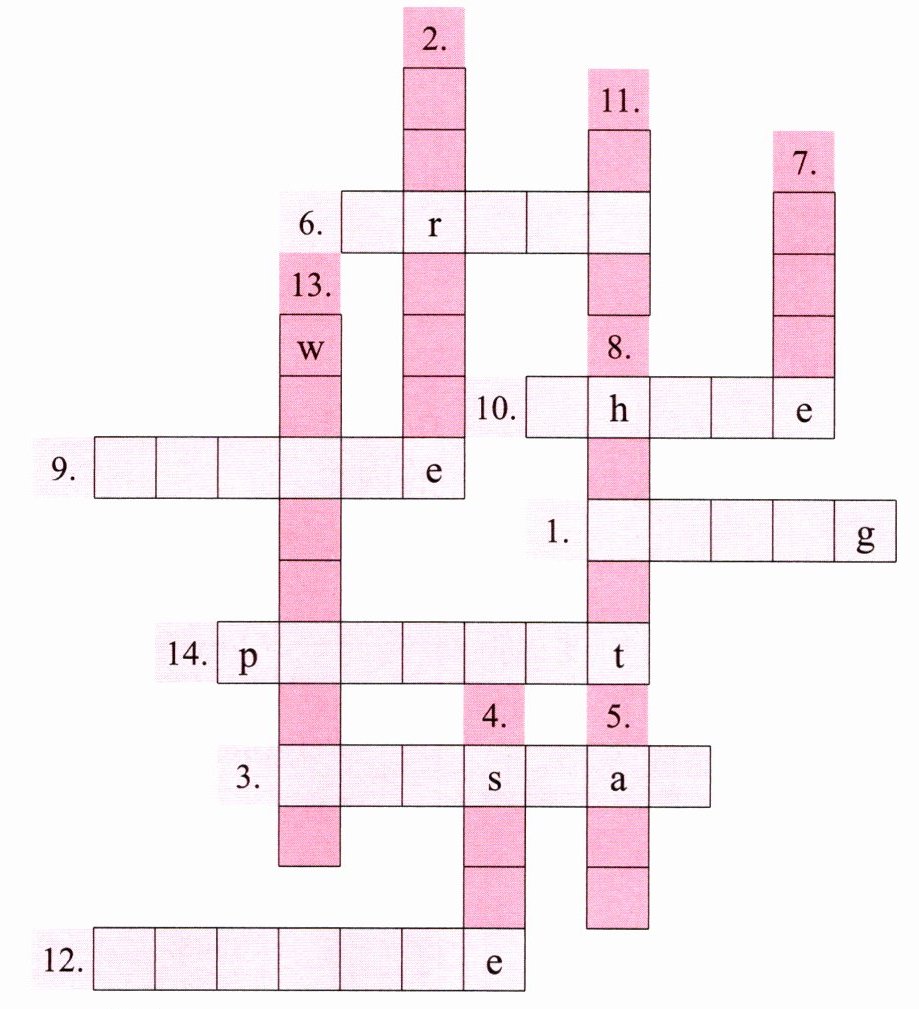
一、纵横填空。根据英语释义补全方框中的单词。
1. in the middle of sb / sth
2. surprising, in a way that is difficult to understand
3. different from what is usual
4. how large or small a person or thing is
5. either of the two long parts of the upper body
6. a part inside the head that tells you to do things, to think, etc.
7. any of the hard parts of the body of a human or an animal
8. the organ in the chest that sends blood around the body
9. become different
10. the looks of sth or sb
11. coloured liquid for writing, drawing and printing
12. make things and sell them
13. very good and enjoyable
14. make sure that sb / sth is safe
1. in the middle of sb / sth
2. surprising, in a way that is difficult to understand
3. different from what is usual
4. how large or small a person or thing is
5. either of the two long parts of the upper body
6. a part inside the head that tells you to do things, to think, etc.
7. any of the hard parts of the body of a human or an animal
8. the organ in the chest that sends blood around the body
9. become different
10. the looks of sth or sb
11. coloured liquid for writing, drawing and printing
12. make things and sell them
13. very good and enjoyable
14. make sure that sb / sth is safe
答案
第7课时
一
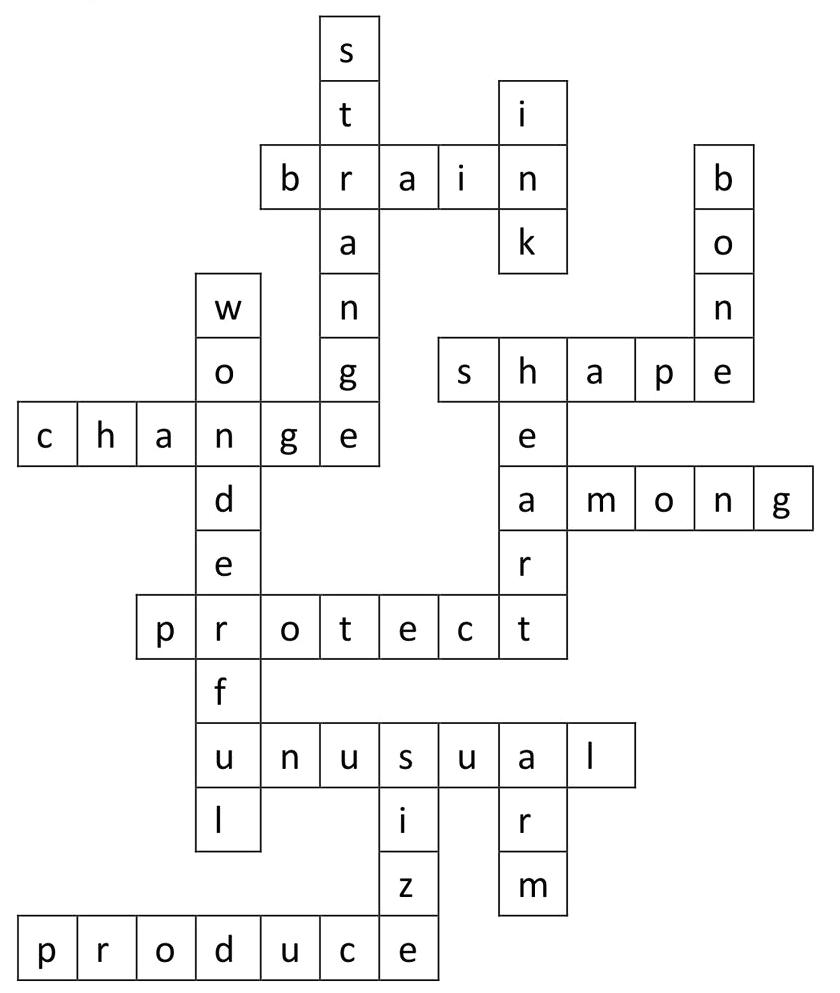
解析
翻译:
一、纵横填空。根据英语释义补全方框中的单词。
1. 在某人/某物的中间
2. 令人惊讶的,难以理解的
3. 与平常不同
4. 人或事物的大小
5. 上肢的两个长部分之一
6. 头部内指挥你做事、思考等的部分
7. 人或动物身体的任何坚硬部分
8. 胸部将血液输送到全身的器官
9. 变得不同
10. 某物或某人的样子
11. 用于书写、绘画和印刷的有色液体
12. 制造东西并出售它们
13. 非常好且令人愉快的
14. 确保某人/某物是安全的
一、纵横填空。根据英语释义补全方框中的单词。
1. 在某人/某物的中间
2. 令人惊讶的,难以理解的
3. 与平常不同
4. 人或事物的大小
5. 上肢的两个长部分之一
6. 头部内指挥你做事、思考等的部分
7. 人或动物身体的任何坚硬部分
8. 胸部将血液输送到全身的器官
9. 变得不同
10. 某物或某人的样子
11. 用于书写、绘画和印刷的有色液体
12. 制造东西并出售它们
13. 非常好且令人愉快的
14. 确保某人/某物是安全的
二、根据课文内容(P65)回答问题。
1. What does the writer think of the octopus?
2. Why does the writer think so?
3. How many kinds of octopuses are there?
4. What's the size of an octopus?
5. What do octopuses look like?
6. Why can octopuses do many things at the same time?
7. Why can octopuses fit into small places?
8. How many hearts does an octopus have?
9. What special abilities do octopuses have?
10. What will an octopus probably do when a shark runs after it?
11. Why does the writer think it's important to study amazing animals?
12. What do you think of octopuses? What do you want to say to them?
13. How did the writer write the passage?
1. What does the writer think of the octopus?
It's amazing, strange and unusual.
2. Why does the writer think so?
Because octopuses have very unusual bodies and special abilities.
3. How many kinds of octopuses are there?
Around 300.
4. What's the size of an octopus?
From around 2.5 centimetres long to over 9 metres long.
5. What do octopuses look like?
They have eight arms.
6. Why can octopuses do many things at the same time?
Because their brain is in both their head and arms.
7. Why can octopuses fit into small places?
Because they do not have any bones!
8. How many hearts does an octopus have?
Three.
9. What special abilities do octopuses have?
Change how they look; produce ink and keep it inside their body; grow their lost arm back.
10. What will an octopus probably do when a shark runs after it?
It will produce ink to make the water cloudy.
11. Why does the writer think it's important to study amazing animals?
Because we can learn about the animals, wonderful nature and the importance of protecting them.
12. What do you think of octopuses? What do you want to say to them?
(符合题意即可)
13. How did the writer write the passage?
By sharing facts.
答案
二、
1. It's amazing, strange and unusual.
2. Because octopuses have very unusual bodies and special abilities.
3. Around 300.
4. From around 2.5 centimetres long to over 9 metres long.
5. They have eight arms.
6. Because their brain is in both their head and arms.
7. Because they do not have any bones!
8. Three.
9. Change how they look; produce ink and keep it inside their body; grow their lost arm back.
10. It will produce ink to make the water cloudy.
11. Because we can learn about the animals, wonderful nature and the importance of protecting them.
12. (符合题意即可)
13. By sharing facts.
1. It's amazing, strange and unusual.
2. Because octopuses have very unusual bodies and special abilities.
3. Around 300.
4. From around 2.5 centimetres long to over 9 metres long.
5. They have eight arms.
6. Because their brain is in both their head and arms.
7. Because they do not have any bones!
8. Three.
9. Change how they look; produce ink and keep it inside their body; grow their lost arm back.
10. It will produce ink to make the water cloudy.
11. Because we can learn about the animals, wonderful nature and the importance of protecting them.
12. (符合题意即可)
13. By sharing facts.
解析
翻译:
二、根据课文内容(第65页)回答问题。
1. 作者认为章鱼怎么样?
它令人惊叹、奇特且与众不同。
2. 作者为什么这么认为?
因为章鱼有着非常与众不同的身体和特殊的能力。
3. 有多少种章鱼?
大约300种。
4. 章鱼的体型有多大?
从大约2.5厘米长到9米多长。
5. 章鱼长什么样?
它们有八条腕足。
6. 为什么章鱼能同时做很多事情?
因为它们的大脑既在头部也在腕足里。
7. 为什么章鱼能钻进小地方?
因为它们没有骨头!
8. 一只章鱼有几颗心脏?
三颗。
9. 章鱼有哪些特殊能力?
改变自身外观;产生墨汁并将其储存在体内;重新长出丢失的腕足。
10. 当鲨鱼追赶章鱼时,章鱼可能会做什么?
它会释放墨汁使水变得浑浊。
11. 作者为什么认为研究令人惊叹的动物很重要?
因为我们可以了解这些动物、奇妙的大自然以及保护它们的重要性。
12. 你觉得章鱼怎么样?你想对它们说什么?
(符合题意即可)
13. 作者是如何写这篇文章的?
通过分享事实。
二、根据课文内容(第65页)回答问题。
1. 作者认为章鱼怎么样?
它令人惊叹、奇特且与众不同。
2. 作者为什么这么认为?
因为章鱼有着非常与众不同的身体和特殊的能力。
3. 有多少种章鱼?
大约300种。
4. 章鱼的体型有多大?
从大约2.5厘米长到9米多长。
5. 章鱼长什么样?
它们有八条腕足。
6. 为什么章鱼能同时做很多事情?
因为它们的大脑既在头部也在腕足里。
7. 为什么章鱼能钻进小地方?
因为它们没有骨头!
8. 一只章鱼有几颗心脏?
三颗。
9. 章鱼有哪些特殊能力?
改变自身外观;产生墨汁并将其储存在体内;重新长出丢失的腕足。
10. 当鲨鱼追赶章鱼时,章鱼可能会做什么?
它会释放墨汁使水变得浑浊。
11. 作者为什么认为研究令人惊叹的动物很重要?
因为我们可以了解这些动物、奇妙的大自然以及保护它们的重要性。
12. 你觉得章鱼怎么样?你想对它们说什么?
(符合题意即可)
13. 作者是如何写这篇文章的?
通过分享事实。
