

 登录
登录
九、动物们和人们感知世界的方式有何不同呢?阅读文本,完成下列任务。

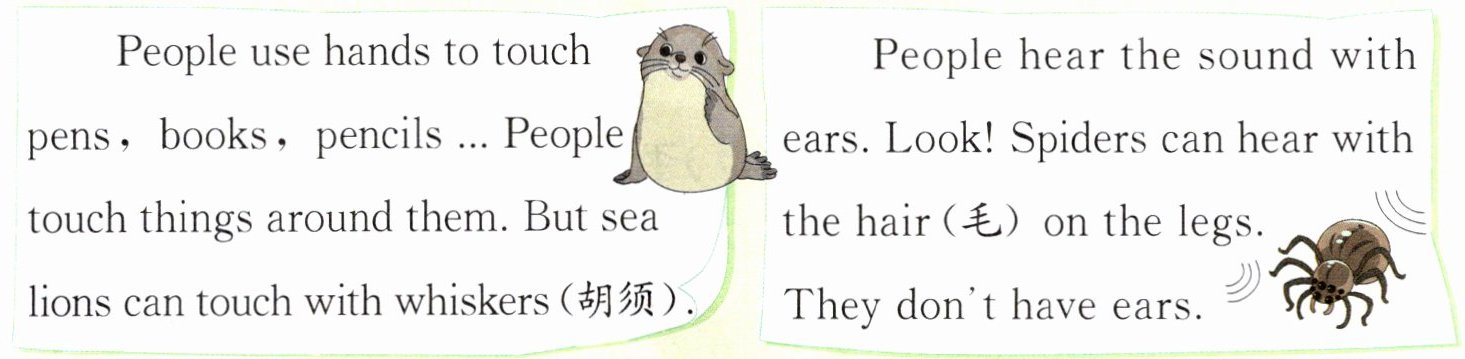
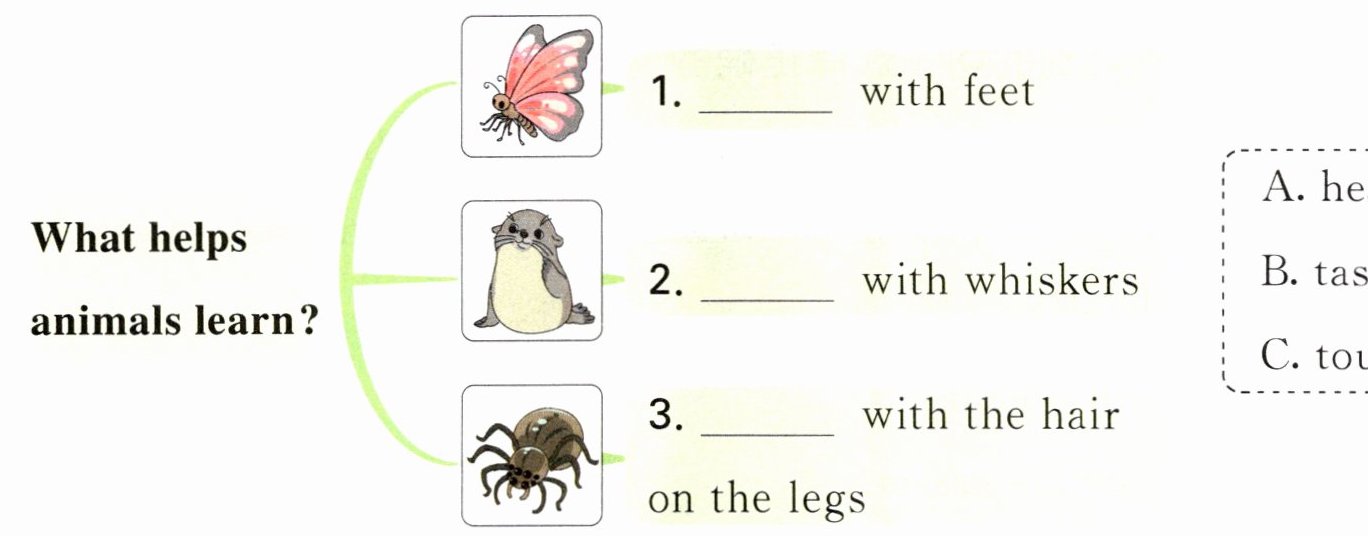
任务一:阅读文本,选择正确的选项完成思维导图。
A. hear
B. taste
C. touch
任务二:阅读文本,判断句子正(T)误(F)。
()1. Spiders have two ears.
()2. We may(可能) read the text(文本) in an animal book.
任务一:阅读文本,选择正确的选项完成思维导图。
A. hear
B. taste
C. touch
任务二:阅读文本,判断句子正(T)误(F)。
()1. Spiders have two ears.
()2. We may(可能) read the text(文本) in an animal book.
答案
九、任务一:1.B 2.C 3.A
任务二:1.F 2.T
解析
任务一:
1. 依据:Well,a butterfly tastes with its feet.
分析:蝴蝶用脚尝东西,故选B。
2. 依据:But sea lions can touch with whiskers.
分析:海狮可以用胡须触摸,故选C。
3. 依据:Spiders can hear with the hair on the legs.
分析:蜘蛛可以用腿上的毛听,故选A。
任务二:
1. 句意:蜘蛛有两只耳朵。
依据:They don't have ears.
分析:蜘蛛没有耳朵,故为F。
2. 句意:我们可能在一本动物书上读到这个文本。
分析:文本介绍了三种不同的动物感知世界的方式,符合动物书的内容,故为T。
任务二:1.F 2.T
解析
任务一:
1. 依据:Well,a butterfly tastes with its feet.
分析:蝴蝶用脚尝东西,故选B。
2. 依据:But sea lions can touch with whiskers.
分析:海狮可以用胡须触摸,故选C。
3. 依据:Spiders can hear with the hair on the legs.
分析:蜘蛛可以用腿上的毛听,故选A。
任务二:
1. 句意:蜘蛛有两只耳朵。
依据:They don't have ears.
分析:蜘蛛没有耳朵,故为F。
2. 句意:我们可能在一本动物书上读到这个文本。
分析:文本介绍了三种不同的动物感知世界的方式,符合动物书的内容,故为T。
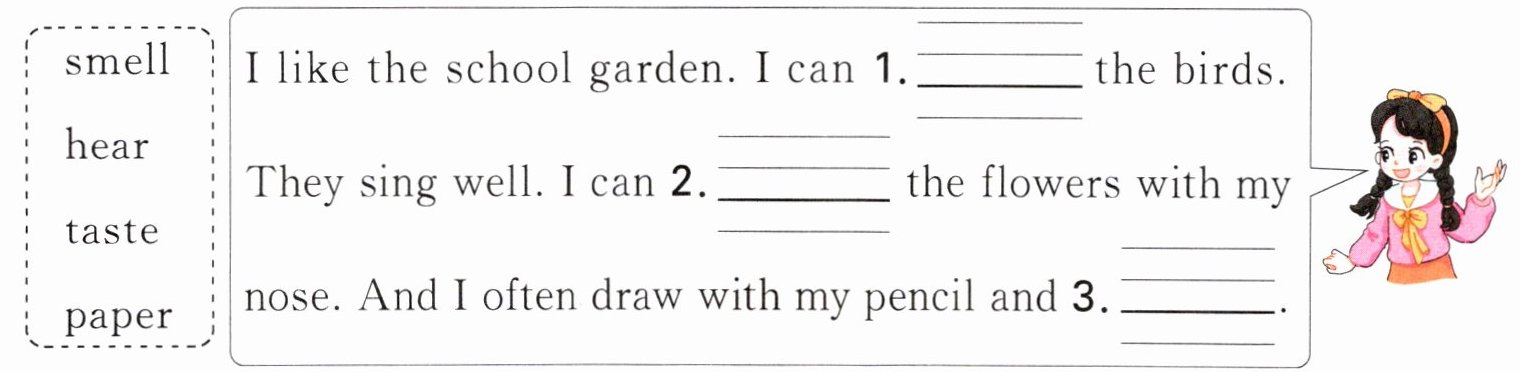
十、Mary很喜欢学校的花园。读一读,选词补全介绍。(有多余项)
smell
hear
taste
paper
smell
hear
taste
paper
答案
十、1.hear 2.smell 3.paper
解析
1. 句意:我能__________鸟。它们唱得很好。
分析:需要“听”鸟叫声,故写hear。
2. 句意:我能用我的鼻子__________花。
分析:需要用鼻子“闻”花,故写smell。
3. 句意:而且我经常用我的铅笔和__________画画。
分析:画画需要用到“纸”,故写paper。
解析
1. 句意:我能__________鸟。它们唱得很好。
分析:需要“听”鸟叫声,故写hear。
2. 句意:我能用我的鼻子__________花。
分析:需要用鼻子“闻”花,故写smell。
3. 句意:而且我经常用我的铅笔和__________画画。
分析:画画需要用到“纸”,故写paper。
