

 登录
登录
一、写出下列单词中画线部分的音标
1. lake, face
2. afraid, rain
3. day, away
4. talk, walk
5. raw, saw
1. lake, face
/eɪ/
2. afraid, rain
/eɪ/
3. day, away
/eɪ/
4. talk, walk
/ɔ:/
5. raw, saw
/ɔ:/
答案
1./eɪ/ 2./eɪ/ 3./eɪ/ 4./ɔ:/ 5./ɔ:/
解析
【分析】
本题要求写出每组单词中画线部分的共同音标,解题思路是先分别确定每组单词中画线字母/字母组合的发音,再找出它们相同的音标。需准确记忆常见元音字母及字母组合的发音规则,尤其是开音节、字母组合的发音规律。
【解析】
1. 单词lake中画线字母a在开音节中发/eɪ/,face中画线字母a同样发/eɪ/,故共同音标为/eɪ/;
2. afraid中画线字母组合ai发/eɪ/,rain中画线字母组合ai也发/eɪ/,故共同音标为/eɪ/;
3. day中画线字母组合ay发/eɪ/,away中画线字母组合ay也发/eɪ/,故共同音标为/eɪ/;
4. talk中画线字母组合al发/ɔ:/,walk中画线字母组合al也发/ɔ:/,故共同音标为/ɔ:/;
5. raw中画线字母组合aw发/ɔ:/,saw中画线字母组合aw也发/ɔ:/,故共同音标为/ɔ:/。
【答案】
1./eɪ/ 2./eɪ/ 3./eɪ/ 4./ɔ:/ 5./ɔ:/
【知识点】
英语元音发音规则、字母及字母组合的音标
【点评】
本题考查常见字母及字母组合的发音,属于英语语音基础题,需学生熟练掌握基础发音规律,适合巩固语音知识。
【难度系数】
0.4
本题要求写出每组单词中画线部分的共同音标,解题思路是先分别确定每组单词中画线字母/字母组合的发音,再找出它们相同的音标。需准确记忆常见元音字母及字母组合的发音规则,尤其是开音节、字母组合的发音规律。
【解析】
1. 单词lake中画线字母a在开音节中发/eɪ/,face中画线字母a同样发/eɪ/,故共同音标为/eɪ/;
2. afraid中画线字母组合ai发/eɪ/,rain中画线字母组合ai也发/eɪ/,故共同音标为/eɪ/;
3. day中画线字母组合ay发/eɪ/,away中画线字母组合ay也发/eɪ/,故共同音标为/eɪ/;
4. talk中画线字母组合al发/ɔ:/,walk中画线字母组合al也发/ɔ:/,故共同音标为/ɔ:/;
5. raw中画线字母组合aw发/ɔ:/,saw中画线字母组合aw也发/ɔ:/,故共同音标为/ɔ:/。
【答案】
1./eɪ/ 2./eɪ/ 3./eɪ/ 4./ɔ:/ 5./ɔ:/
【知识点】
英语元音发音规则、字母及字母组合的音标
【点评】
本题考查常见字母及字母组合的发音,属于英语语音基础题,需学生熟练掌握基础发音规律,适合巩固语音知识。
【难度系数】
0.4
二、圈出下列句子中非重读的单词,
并按句子重音规则朗读句子
1. —What animal do you like?
—Rabbits. Because they are lovely.
2. —Look! Here comes a baby dog!
—Oh, it's lovely. Let's go and take a
photo with it.
并按句子重音规则朗读句子
1. —What animal do you like?
—Rabbits. Because they are lovely.
2. —Look! Here comes a baby dog!
—Oh, it's lovely. Let's go and take a
photo with it.
答案
1.—What animal do you like?
—Rabbits. Because they are lovely.
2.—Look! Here comes a baby dog!
—Oh, it's lovely. Let's go and take a photo
with it.
—Rabbits. Because they are lovely.
2.—Look! Here comes a baby dog!
—Oh, it's lovely. Let's go and take a photo
with it.
解析
【分析】首先明确英语句子重音的核心规则:实词(名词、实义动词、形容词、副词、感叹词、疑问词等)通常需要重读,虚词(助动词、人称代词、连词、介词、冠词、be动词等)一般非重读。解题时,先识别每个句子中的实词和虚词,再确定非重读单词,最后按规则完成标注。
【解析】根据英语句子重音规则,逐个句子确定非重读单词:
1. 问句“What animal do you like?”中,非重读单词为do、you;答句“Because they are lovely.”中,非重读单词为Because、they、are。
2. 第一句“Look! Here comes a baby dog!”中,非重读单词为a;答句“Oh, it's lovely. Let's go and take a photo with it.”中,非重读单词为it's、and、a、with、it。
【答案】1.—What animal do you like?—Rabbits. Because they are lovely. 2.—Look! Here comes a baby dog!—Oh, it's lovely. Let's go and take a photo with it.
【知识点】英语句子重音规则;实词与虚词的区分
【点评】本题考查英语口语朗读的基础规则,核心是区分实词与虚词的重读差异,掌握该规则有助于提升英语朗读的自然度,属于基础应用类题目。
【难度系数】0.5
【解析】根据英语句子重音规则,逐个句子确定非重读单词:
1. 问句“What animal do you like?”中,非重读单词为do、you;答句“Because they are lovely.”中,非重读单词为Because、they、are。
2. 第一句“Look! Here comes a baby dog!”中,非重读单词为a;答句“Oh, it's lovely. Let's go and take a photo with it.”中,非重读单词为it's、and、a、with、it。
【答案】1.—What animal do you like?—Rabbits. Because they are lovely. 2.—Look! Here comes a baby dog!—Oh, it's lovely. Let's go and take a photo with it.
【知识点】英语句子重音规则;实词与虚词的区分
【点评】本题考查英语口语朗读的基础规则,核心是区分实词与虚词的重读差异,掌握该规则有助于提升英语朗读的自然度,属于基础应用类题目。
【难度系数】0.5
一、两人一组,根据图片及语境提示
进行对话
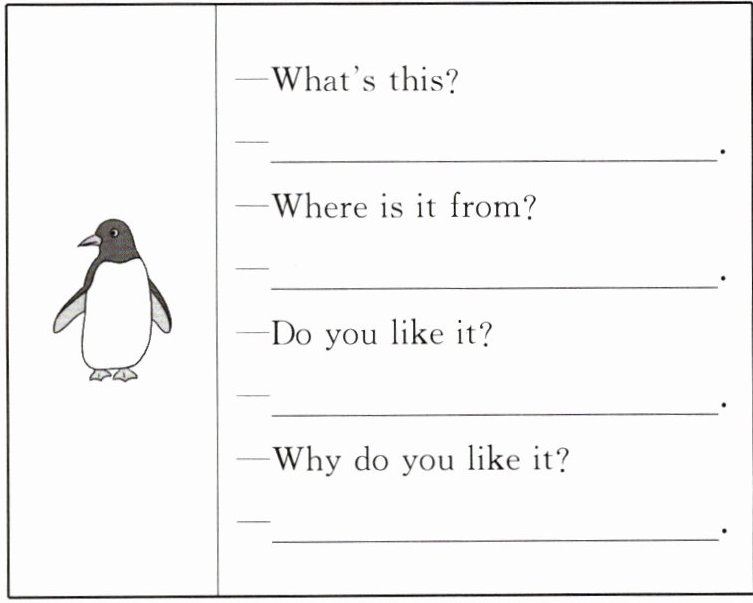
进行对话
答案
It's a penguin; It's from Antarctica; Yes, I
do; Because it is cute/lovely/cool ...
do; Because it is cute/lovely/cool ...
解析
【分析】这是一道结合图片补全英语对话的题目,需根据图片内容(企鹅)和每个问句的类型作答:1. 问句“What's this?”询问事物,需用“It's + 事物名称”回答;2. 问句“Where is it from?”询问来源,需说明企鹅的来源地;3. 一般疑问句“Do you like it?”的肯定回答为“Yes, I do”;4. 问句“Why do you like it?”需用Because引导的句子说明喜欢的理由。
【解析】1. 针对“What's this?”,图片是企鹅,故回答“It's a penguin”;2. 针对“Where is it from?”,企鹅来自南极洲,故回答“It's from Antarctica”;3. 针对一般疑问句“Do you like it?”,肯定回答为“Yes, I do”;4. 针对“Why do you like it?”,用Because引出合理理由,如“Because it is cute”。
【答案】It's a penguin; It's from Antarctica; Yes, I do; Because it is cute
【知识点】英语日常交际用语、特殊疑问句答语、一般疑问句答语
【点评】本题结合图片考查基础英语对话的运用,贴近生活,重点考查日常问答的句式掌握,是英语学习中的基础题型。
【难度系数】0.2
【解析】1. 针对“What's this?”,图片是企鹅,故回答“It's a penguin”;2. 针对“Where is it from?”,企鹅来自南极洲,故回答“It's from Antarctica”;3. 针对一般疑问句“Do you like it?”,肯定回答为“Yes, I do”;4. 针对“Why do you like it?”,用Because引出合理理由,如“Because it is cute”。
【答案】It's a penguin; It's from Antarctica; Yes, I do; Because it is cute
【知识点】英语日常交际用语、特殊疑问句答语、一般疑问句答语
【点评】本题结合图片考查基础英语对话的运用,贴近生活,重点考查日常问答的句式掌握,是英语学习中的基础题型。
【难度系数】0.2
二、看图,完成对话
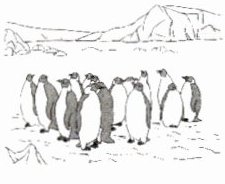
1.
A: Why do penguins often
B: Because it's too cold in Antarctica.
They do so to
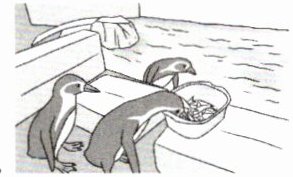
2.
A:
B: I think they eat fish and small sea
animals.
重难点探究
—The penguin is my favourite animal.
What's your favourite animal, Fu Xing?
企鹅是我最喜欢的动物。你最喜欢的
动物是什么,付星?
—I like penguins too. 我也喜欢企鹅。
剖析 句中 the penguin 和 penguins 均
可用来表示“企鹅”这一类动物。
—Wild animals are our friends.
野生动物是我们的朋友。
—Yes, they are. But the tiger is in
danger of dying out.
是的。但是老虎已濒临灭绝。
拓展 可数名词表示“一类”事物,通常
用三种方式表达:

跟踪练习
①大象是力量和智慧的象征。
of strength and wisdom.
②老师是学生学习的指路明灯。
light for students in their studies.
③花朵能让任何房间都变得亮丽起来。
up any room.
1.
A: Why do penguins often
stand
close
together
?B: Because it's too cold in Antarctica.
They do so to
keep
themselves
warm
.2.
A:
What
do
penguins
eat
?B: I think they eat fish and small sea
animals.
重难点探究
—The penguin is my favourite animal.
What's your favourite animal, Fu Xing?
企鹅是我最喜欢的动物。你最喜欢的
动物是什么,付星?
—I like penguins too. 我也喜欢企鹅。
剖析 句中 the penguin 和 penguins 均
可用来表示“企鹅”这一类动物。
—Wild animals are our friends.
野生动物是我们的朋友。
—Yes, they are. But the tiger is in
danger of dying out.
是的。但是老虎已濒临灭绝。
拓展 可数名词表示“一类”事物,通常
用三种方式表达:
跟踪练习
①大象是力量和智慧的象征。
The
elephant
is a symbolof strength and wisdom.
②老师是学生学习的指路明灯。
The
teacher
is a guidinglight for students in their studies.
③花朵能让任何房间都变得亮丽起来。
Flowers
can
brightenup any room.
答案
1. stand close together; keep themselves warm
2. What do penguins eat
【跟踪练习】
①The elephant ②The teacher
③Flowers can
2. What do penguins eat
【跟踪练习】
①The elephant ②The teacher
③Flowers can
解析
【分析】
本题需结合对话语境、常识及可数名词表一类的用法来填空。第1题根据答语“南极太冷”,推断企鹅的行为及目的;第2题根据答语“吃的东西”推断问句;跟踪练习需运用“the+可数名词单数表一类”的知识点,注意主谓一致。
【解析】
1. 第一空:结合常识,企鹅在寒冷的南极会挤在一起,故填stand close together;第二空:挤在一起的目的是保暖,故填keep themselves warm。
2. 答语说明吃的食物,问句应询问企鹅的食物,故填What do penguins eat。
跟踪练习:①用“the+可数名词单数”表一类,填The elephant;②同理填The teacher;③后面动词原形,主语用复数,填Flowers can。
【答案】
1. stand close together; keep themselves warm
2. What do penguins eat
【跟踪练习】
①The elephant ②The teacher ③Flowers can
【知识点】
日常情景对话、可数名词的用法
【点评】
本题结合生活常识与知识点,考察对话填空和名词用法,难度适中,需准确理解语境和语法规则。
【难度系数】
0.6
本题需结合对话语境、常识及可数名词表一类的用法来填空。第1题根据答语“南极太冷”,推断企鹅的行为及目的;第2题根据答语“吃的东西”推断问句;跟踪练习需运用“the+可数名词单数表一类”的知识点,注意主谓一致。
【解析】
1. 第一空:结合常识,企鹅在寒冷的南极会挤在一起,故填stand close together;第二空:挤在一起的目的是保暖,故填keep themselves warm。
2. 答语说明吃的食物,问句应询问企鹅的食物,故填What do penguins eat。
跟踪练习:①用“the+可数名词单数”表一类,填The elephant;②同理填The teacher;③后面动词原形,主语用复数,填Flowers can。
【答案】
1. stand close together; keep themselves warm
2. What do penguins eat
【跟踪练习】
①The elephant ②The teacher ③Flowers can
【知识点】
日常情景对话、可数名词的用法
【点评】
本题结合生活常识与知识点,考察对话填空和名词用法,难度适中,需准确理解语境和语法规则。
【难度系数】
0.6
