

 登录
登录
B 热考内容 本土文化
KEY→P46
范畴:人与社会 主题:传统饮食 体裁:说明文 难度:★★★★ 建议用时:7分钟 评价: /10
阅读短文,在空白处填入一个适当的单词,或用括号内所给单词的正确形式填空。
Do you like eating Yunnan Cross-the-bridge Rice Noodles? It's one of the most popular 1.
There are many stories about its invention. One story goes that a young man was preparing 2.
One day, she found her chicken soup was still hot and the rice noodles tasted better with the soup. She was very 5.
The cooking method 8.
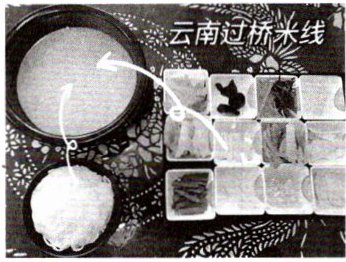
Nowadays, the soup is served at $85\ °\mathrm{C}~90\ °\mathrm{C}$. There are also plates of meat and fresh vegetables, 10.
KEY→P46
范畴:人与社会 主题:传统饮食 体裁:说明文 难度:★★★★ 建议用时:7分钟 评价: /10
阅读短文,在空白处填入一个适当的单词,或用括号内所给单词的正确形式填空。
Do you like eating Yunnan Cross-the-bridge Rice Noodles? It's one of the most popular 1.
dishes
(dish) in China. It becomes a must-try snack in Kunming.There are many stories about its invention. One story goes that a young man was preparing 2.
for
an important exam on an island and his wife brought his favourite rice noodles for him every day. But the rice noodles always 3. got
(get) cold on the way. So she often asked 4. herself
(she) how to make her husband eat delicious rice noodles.One day, she found her chicken soup was still hot and the rice noodles tasted better with the soup. She was very 5.
cheerful
(cheer) and had a clever idea: pour boiling soup into 6. a
pot with oil, and keep rice noodles, meat and fresh vegetables separately. After she arrived, she mixed 7. them
(they) together and her husband got hot and delicious rice noodles.The cooking method 8.
quickly
(quick) became popular. As the wife had to cross a bridge to take it to her husband, local people 9. named
(name) the dish "cross-the-bridge rice noodles".Nowadays, the soup is served at $85\ °\mathrm{C}~90\ °\mathrm{C}$. There are also plates of meat and fresh vegetables, 10.
and
even some special seasoning will probably be added. Just drop your favourites into the soup, and then mix them with the rice noodles. Remember to blow gently when you try the dish.答案
B
本文围绕云南过桥米线展开,介绍其如今受到全国关注,还讲述了它的发明故事以及现在的食用相关情况。
1. dishes 根据前文one of可知,此处是“one of +形容词最高级+名词复数”结构。
2. for 此处使用固定短语prepare for,意为“为……做准备”。
3. got 句意:但是米线在途中总是变凉。根据上下文时态可知,此处也需用一般过去时。
4. herself 此处要用动词短语ask oneself,意为“自问”,本句主语是she,前后人称需要一致。
5. cheerful 句意:她很高兴,有了一个聪明的主意。根据空格前的系动词was可知,其后需要接形容词作表语。
6. a 把沸汤倒入一口带油的锅里。此处应该用不定冠词来修饰名词pot,pot以辅音音素开头,故此处答案应该填不定冠词a。
7. them 根据上下文理解可知,她把沸汤倒入带油的锅中,把米线、肉和新鲜蔬菜分开放,在她到达目的地以后,再把汤、米线、肉和新鲜蔬菜混合起来,此处应该用代词来指代“汤、米线、肉和新鲜蔬菜”这些东西,作动词mixed的宾语。
8. quickly 句意:这种烹饪方法迅速流行起来。根据句意理解可知,此处应该用副词来修饰动词became。
9. named 过桥米线是这道菜的名字,所以此处应该是当地人把这道菜命名为“过桥米线”。
10. and 前后是并列结构,故此处答案应该填连词and。
本文围绕云南过桥米线展开,介绍其如今受到全国关注,还讲述了它的发明故事以及现在的食用相关情况。
1. dishes 根据前文one of可知,此处是“one of +形容词最高级+名词复数”结构。
2. for 此处使用固定短语prepare for,意为“为……做准备”。
3. got 句意:但是米线在途中总是变凉。根据上下文时态可知,此处也需用一般过去时。
4. herself 此处要用动词短语ask oneself,意为“自问”,本句主语是she,前后人称需要一致。
5. cheerful 句意:她很高兴,有了一个聪明的主意。根据空格前的系动词was可知,其后需要接形容词作表语。
6. a 把沸汤倒入一口带油的锅里。此处应该用不定冠词来修饰名词pot,pot以辅音音素开头,故此处答案应该填不定冠词a。
7. them 根据上下文理解可知,她把沸汤倒入带油的锅中,把米线、肉和新鲜蔬菜分开放,在她到达目的地以后,再把汤、米线、肉和新鲜蔬菜混合起来,此处应该用代词来指代“汤、米线、肉和新鲜蔬菜”这些东西,作动词mixed的宾语。
8. quickly 句意:这种烹饪方法迅速流行起来。根据句意理解可知,此处应该用副词来修饰动词became。
9. named 过桥米线是这道菜的名字,所以此处应该是当地人把这道菜命名为“过桥米线”。
10. and 前后是并列结构,故此处答案应该填连词and。
C
KEY→P46
范畴:人与自我 主题:学校生活 体裁:记叙文 难度:★★★★ 建议用时:7分钟 评价:/10
阅读短文,从方框中选择适当的单词或短语并用其正确形式填空,使短文通顺、意思完整,每个单词或短语限用一次。
invite you quiet agree think about
“I don’t want to go, Mr Brown. I’m afraid,” Millie told her teacher.
Millie was a very 1.
“I know it seems difficult for you, but it’ll help you build up 4.
英语嗨吧
with become time much go into
The next day on, Millie 6.
Finally, Monday came. Millie bravely walked to the front of the class 9.
From that day on, Millie’s life changed a lot. At the age of 23, she 10.
KEY→P46
范畴:人与自我 主题:学校生活 体裁:记叙文 难度:★★★★ 建议用时:7分钟 评价:/10
阅读短文,从方框中选择适当的单词或短语并用其正确形式填空,使短文通顺、意思完整,每个单词或短语限用一次。
invite you quiet agree think about
“I don’t want to go, Mr Brown. I’m afraid,” Millie told her teacher.
Millie was a very 1.
quiet
girl. She always sat at the back of the classroom, reading or taking notes. Every Monday morning, there was a special show in her class. And Mr Brown 2. invited
one student to give a talk about his or her dream. He hoped that Millie could have a try the next week. But she didn’t 3. agree
.“I know it seems difficult for you, but it’ll help you build up 4.
your
confidence. Don’t be afraid! I’ll give you a day 5. to think about
it,” Mr Brown said.英语嗨吧
with become time much go into
The next day on, Millie 6.
went into
Mr Brown’s office. He was glad that she would try. He red-penciled her article of the talk and taught her some ways. He asked Millie to practise 7. more
, and imagine that she spoke in front of her class. So Millie practised speaking behind the door of her bedroom all the 8. time
.Finally, Monday came. Millie bravely walked to the front of the class 9.
without
any notes. Her wonderful talk brought everyone a great surprise.From that day on, Millie’s life changed a lot. At the age of 23, she 10.
became
an anchor(主持人). When people saw her on TV, they found it hard to believe she was once a shy(害羞的) girl.答案
C
本文主要讲述了一个害羞的女孩米莉在布朗老师的鼓励下勇敢自信地在全班面前演讲的励志故事。
1. quiet 根据文末最后一句中的she was once a shy girl可知,人们很难相信米莉曾经是一个害羞的女孩。由此推断,米莉一开始应该是个文静而害羞的女孩,故此处答案应该填形容词quiet。
2. invited 此处谈论的是布朗先生每周一早上邀请一个学生作有关梦想的演讲,此处用固定动词短语invite sb. to do sth.,意思是“邀请某人做某事”,上下文时态是一般过去时,故此处答案应该填过去式invited。
3. agree 根据文中第一句“I don't want to go, Mr Brown.”可知,米莉害怕演讲,由此推知,当布朗先生邀请她下周试一试时,她应该是不同意的,didn't是助动词的否定形式,后面动词要用原形,故此处答案应该填agree。
4. your 根据前文中的help you可知,演讲能够帮助她树立自信心,前后人称需要一致,此处用形容词性物主代词your来修饰名词confidence。
5. to think about 根据句意理解可知,此处应该接动词不定式表示目的,故此处答案应填to think about。
6. went into 根据后句理解可知,米莉告知布朗先生她将试一试时,他很开心,帮她修改演讲稿并教她一些演讲方法,由此可知,米莉应该是进了布朗先生的办公室,上下文时态是一般过去时,故此处答案应填went into。
7. more 此处应该是布朗先生鼓励米莉多多训练,所以用短语practise more,意思是“多训练”。
8. time 此处用固定短语all the time,意思是“一直,总是”。
9. without 根据空格后面的any可知,此处需要用介词without表示否定。
10. became 句意:23岁时她成为一个主持人。动词become是“变成,成为”的意思,上下文时态是一般过去时,故此处答案应该填过去式became。
本文主要讲述了一个害羞的女孩米莉在布朗老师的鼓励下勇敢自信地在全班面前演讲的励志故事。
1. quiet 根据文末最后一句中的she was once a shy girl可知,人们很难相信米莉曾经是一个害羞的女孩。由此推断,米莉一开始应该是个文静而害羞的女孩,故此处答案应该填形容词quiet。
2. invited 此处谈论的是布朗先生每周一早上邀请一个学生作有关梦想的演讲,此处用固定动词短语invite sb. to do sth.,意思是“邀请某人做某事”,上下文时态是一般过去时,故此处答案应该填过去式invited。
3. agree 根据文中第一句“I don't want to go, Mr Brown.”可知,米莉害怕演讲,由此推知,当布朗先生邀请她下周试一试时,她应该是不同意的,didn't是助动词的否定形式,后面动词要用原形,故此处答案应该填agree。
4. your 根据前文中的help you可知,演讲能够帮助她树立自信心,前后人称需要一致,此处用形容词性物主代词your来修饰名词confidence。
5. to think about 根据句意理解可知,此处应该接动词不定式表示目的,故此处答案应填to think about。
6. went into 根据后句理解可知,米莉告知布朗先生她将试一试时,他很开心,帮她修改演讲稿并教她一些演讲方法,由此可知,米莉应该是进了布朗先生的办公室,上下文时态是一般过去时,故此处答案应填went into。
7. more 此处应该是布朗先生鼓励米莉多多训练,所以用短语practise more,意思是“多训练”。
8. time 此处用固定短语all the time,意思是“一直,总是”。
9. without 根据空格后面的any可知,此处需要用介词without表示否定。
10. became 句意:23岁时她成为一个主持人。动词become是“变成,成为”的意思,上下文时态是一般过去时,故此处答案应该填过去式became。
