

 登录
Word bank
Pluto /ˈpluːtəʊ/ n. 冥王星
solar system 太阳系
dwarf planet 矮行星
declare /dɪˈkleə(r)/ v. 宣告
object /ˈɒbdʒɪkt/ n. 物体
liquid /ˈlɪkwɪd/ n. 液体
Exploring space
Chang'e Goes to the Moon: A Long-Ago Dream Comes True
Read & answer: What makes the old Chang'e flying dream come true?
“Chang'e Flying to the Moon” is an old Chinese story. Ancient people loved to imagine the Moon. Today, Chinese scientists work hard and make this old dream come true. China's Moon Programme (also called the “Chang'e Programme”) started in 2004. It has three big goals: to orbit the Moon, to land on the Moon and to return to Earth. It writes a great story for China's space programme.
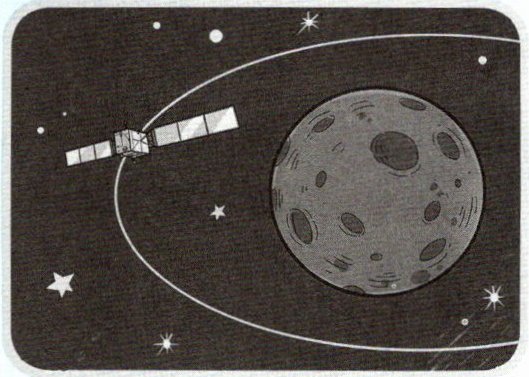
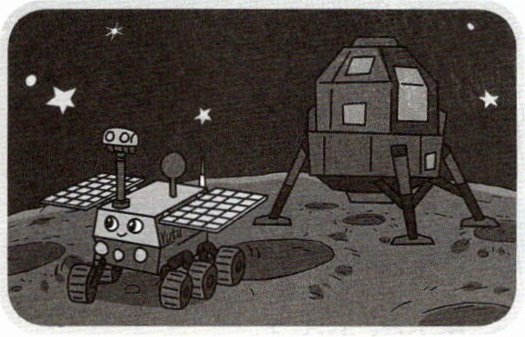
In 2007, Chang'e-1 flew to the Moon. It went around the Moon and took the first picture of the whole Moon. It was China's first step to explore the Moon. In 2013, Chang'e-3 landed on the Moon softly with Yutu (玉兔), China's first lunar rover. They explored the Moon's surface. In 2019, Chang'e-4 was the first in the world to land on the far side of the Moon. It found new things about the Moon.
In 2020, Chang'e-5 completed the “return” mission of China's lunar programme. It carried 1,731 grams of lunar soil back to Earth. It was the first lunar sample retrieval by humans in 44 years. In 2024, Chang'e-6 collected lunar soil from the far side of the Moon and brought it home, marking the world's first lunar sample return from the Moon's far side.
From old story to science, Chinese scientists work hard for every step of exploring the Moon. In the future, China will build a station on the Moon. We will also send people to the Moon. Exploration never stops. The universe has many secrets for us to find.
Ⅰ. Read and tick or cross. 读一读,判断对(√)错(×)。
(
(
(
(
(
Ⅱ. Read and fill in the blanks. 读一读,填空。
China’s Chang’e Programme started in 1.
2007: Chang’e-1 flew around the Moon and took a 2.
2013: Chang’e-3 landed on the Moon with 3.
2019: Chang’e-4 landed on the 4.
2020: Chang’e-5 brought 1,731 grams of lunar 5.
2024: Chang’e-6 collected soil from the far side of the Moon.
Future: China will build a lunar 6.
Pluto /ˈpluːtəʊ/ n. 冥王星
solar system 太阳系
dwarf planet 矮行星
declare /dɪˈkleə(r)/ v. 宣告
object /ˈɒbdʒɪkt/ n. 物体
liquid /ˈlɪkwɪd/ n. 液体
Exploring space
Chang'e Goes to the Moon: A Long-Ago Dream Comes True
Read & answer: What makes the old Chang'e flying dream come true?
“Chang'e Flying to the Moon” is an old Chinese story. Ancient people loved to imagine the Moon. Today, Chinese scientists work hard and make this old dream come true. China's Moon Programme (also called the “Chang'e Programme”) started in 2004. It has three big goals: to orbit the Moon, to land on the Moon and to return to Earth. It writes a great story for China's space programme.
In 2007, Chang'e-1 flew to the Moon. It went around the Moon and took the first picture of the whole Moon. It was China's first step to explore the Moon. In 2013, Chang'e-3 landed on the Moon softly with Yutu (玉兔), China's first lunar rover. They explored the Moon's surface. In 2019, Chang'e-4 was the first in the world to land on the far side of the Moon. It found new things about the Moon.
In 2020, Chang'e-5 completed the “return” mission of China's lunar programme. It carried 1,731 grams of lunar soil back to Earth. It was the first lunar sample retrieval by humans in 44 years. In 2024, Chang'e-6 collected lunar soil from the far side of the Moon and brought it home, marking the world's first lunar sample return from the Moon's far side.
From old story to science, Chinese scientists work hard for every step of exploring the Moon. In the future, China will build a station on the Moon. We will also send people to the Moon. Exploration never stops. The universe has many secrets for us to find.
Ⅰ. Read and tick or cross. 读一读,判断对(√)错(×)。
(
×
) 1. The Chang'e Programme began in 2002.(
√
) 2. Chang'e-4 is the world's first probe to land on the far side of the Moon.(
×
) 3. Chang'e-5 brought back soil from the Moon's far side.(
√
) 4. Humans didn't get new Moon soil for 44 years before Chang'e-5.(
×
) 5. China will stop the Moon exploration in the future.Ⅱ. Read and fill in the blanks. 读一读,填空。
China’s Chang’e Programme started in 1.
2004
.2007: Chang’e-1 flew around the Moon and took a 2.
picture
of the whole Moon.2013: Chang’e-3 landed on the Moon with 3.
Yutu
.2019: Chang’e-4 landed on the 4.
far
side of the Moon for the first time in the world.2020: Chang’e-5 brought 1,731 grams of lunar 5.
soil
back to Earth.2024: Chang’e-6 collected soil from the far side of the Moon.
Future: China will build a lunar 6.
station
and send humans to the Moon.答案
1. × 2. √ 3. × 4. √ 5. ×
1. 2004 2. picture 3. Yutu 4. far 5. soil 6. station
解析
【分析】
本题为英语阅读理解的细节类题目,解题思路是:1. 对于判断正误题,先明确每个小题的关键词(如年份、探测器名称、事件),再回到原文定位对应内容,对比题目表述与原文是否一致,一致则正确,不一致则错误;2. 对于填空题,根据题目中的时间线索,定位原文对应年份的探月事件,提取所需名词填空。核心是“原文定位”,避免主观臆断。
【解析】
Ⅰ. 判断正误解析
1. 原文明确“嫦娥工程(Chang'e Programme)始于2004年”,题目说始于2002年,表述错误,故打×;
2. 原文提到“2019年嫦娥四号是世界首个登陆月球背面的探测器”,题目表述正确,故打√;
3. 原文说明嫦娥五号带回的是月球土壤,而月球背面采样是2024年嫦娥六号的任务,题目表述错误,故打×;
4. 原文指出“嫦娥五号是人类44年来首次月球采样返回”,说明嫦娥五号之前44年人类未获取新的月球土壤,题目表述正确,故打√;
5. 原文提到未来中国会继续开展月球探索(建月球站、送人类登月),不会停止,题目表述错误,故打×。
Ⅱ. 填空解析
1. 定位原文“China's Moon Programme... started in 2004”,填2004;
2. 定位原文“Chang'e-1... took the first picture of the whole Moon”,填picture;
3. 定位原文“Chang'e-3 landed on the Moon softly with Yutu”,填Yutu;
4. 定位原文“land on the far side of the Moon”,填far;
5. 定位原文“carried 1,731 grams of lunar soil back to Earth”,填soil;
6. 定位原文“China will build a station on the Moon”,填station。
【答案】
Ⅰ. 1.× 2.√ 3.× 4.√ 5.×
Ⅱ. 1.2004 2.picture 3.Yutu 4.far 5.soil 6.station
【知识点】
英语阅读理解(细节理解),英语词汇填空
【点评】
本题围绕中国探月工程的时间线与事件展开,考查学生的阅读细节定位能力,所有答案均可在原文中直接找到,难度较低,适合巩固基础阅读技能。
【难度系数】
0.8
