

 登录
登录
二、阅读理解(每小题 2 分,满分 30 分)
A
Can you imagine(想象)a sea of sand three times bigger than India? It is the Sahara Desert, the largest desert in the world. It covers 11 countries in North Africa and is over 9 million square kilometres. That’s more than 30% of Africa.
In the Sahara, temperatures are very different during the day and at night. It is much hotter during the day than at night. During the day, the hottest time is between 2 p.m. and 4 p.m., when the temperature rises to 33°C. But it is very cold at night. The coldest time is at 4 a.m., when the temperature falls to - 1°C.
How to stay alive in the Sahara Desert? Marco Rivera, our survival expert, has some tips.
First, take warm clothes and a blanket. During the day, cover your body, head and face. Clothes protect you from the sun and keep water in your body. You will also need a warm blanket at night. It can get cold very quickly. Second, try to drink some water at least once every hour. You need your water to last as long as possible. Drink only what you need. Third, try to close your mouth and not to talk. When you talk, you lose water from your body. Last, eat as little as you can, because if you eat, you will get thirsty and drink all of your water more quickly. You can live for three weeks with no food, but you can only live for three days without water.
(
A. telling stories
B. listing numbers
C. giving examples
D. making a survey(调查)
(
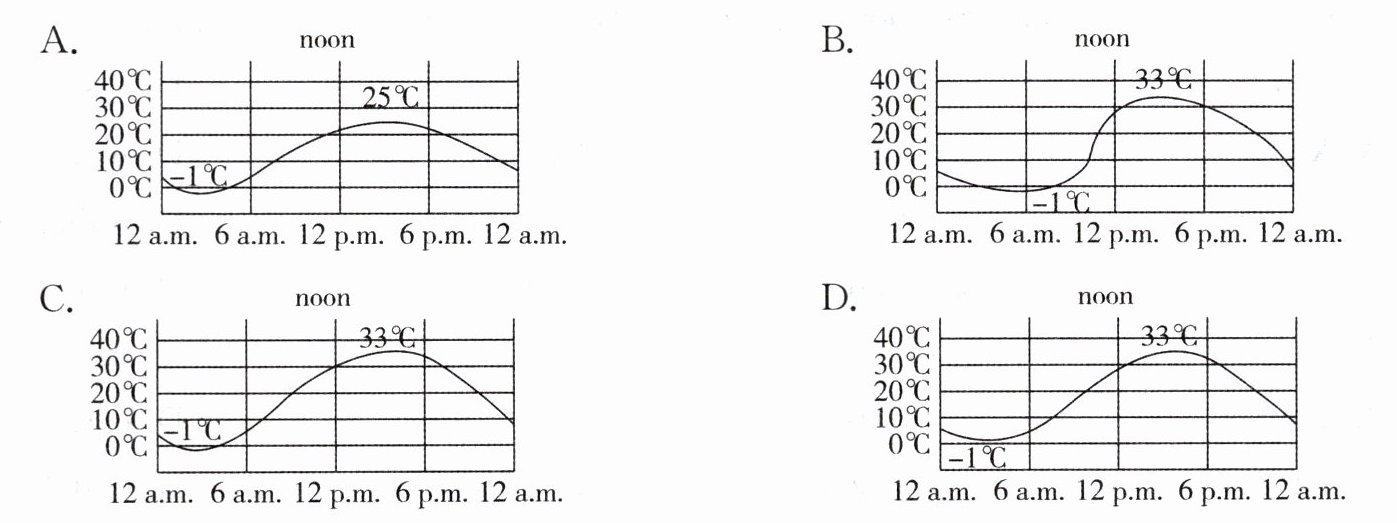
(
A. The Sahara Desert covers 9 countries in North Africa.
B. In the Sahara Desert, you can talk and eat as usual.
C. In the Sahara Desert, you don’t need a warm blanket at night.
D. In the Sahara Desert, water is more important than food.
(
A. It mainly introduces the Sahara Desert.
B. It mainly introduces the area of the Sahara Desert.
C. It mainly introduces the temperature of the Sahara Desert.
D. It mainly introduces how to stay alive in the Sahara Desert.
(
A. Someone studying geography.
B. Someone studying history.
C. Someone who is good at taking photos.
D. Someone who is interested in biology.
A
Can you imagine(想象)a sea of sand three times bigger than India? It is the Sahara Desert, the largest desert in the world. It covers 11 countries in North Africa and is over 9 million square kilometres. That’s more than 30% of Africa.
In the Sahara, temperatures are very different during the day and at night. It is much hotter during the day than at night. During the day, the hottest time is between 2 p.m. and 4 p.m., when the temperature rises to 33°C. But it is very cold at night. The coldest time is at 4 a.m., when the temperature falls to - 1°C.
How to stay alive in the Sahara Desert? Marco Rivera, our survival expert, has some tips.
First, take warm clothes and a blanket. During the day, cover your body, head and face. Clothes protect you from the sun and keep water in your body. You will also need a warm blanket at night. It can get cold very quickly. Second, try to drink some water at least once every hour. You need your water to last as long as possible. Drink only what you need. Third, try to close your mouth and not to talk. When you talk, you lose water from your body. Last, eat as little as you can, because if you eat, you will get thirsty and drink all of your water more quickly. You can live for three weeks with no food, but you can only live for three days without water.
(
B
)16. The writer introduces the topic in Paragraph 1 by .A. telling stories
B. listing numbers
C. giving examples
D. making a survey(调查)
(
C
)17. According to Paragraph 2, which of the following is TRUE?(
D
)18. What can we know from the passage?A. The Sahara Desert covers 9 countries in North Africa.
B. In the Sahara Desert, you can talk and eat as usual.
C. In the Sahara Desert, you don’t need a warm blanket at night.
D. In the Sahara Desert, water is more important than food.
(
A
)19. What is the main idea of the passage?A. It mainly introduces the Sahara Desert.
B. It mainly introduces the area of the Sahara Desert.
C. It mainly introduces the temperature of the Sahara Desert.
D. It mainly introduces how to stay alive in the Sahara Desert.
(
A
)20. Who would be interested in reading this passage most?A. Someone studying geography.
B. Someone studying history.
C. Someone who is good at taking photos.
D. Someone who is interested in biology.
答案
【文章大意】本文是一篇说明文,主要介绍了撒哈拉沙漠的气候特点以及有关撒哈拉沙漠的四条生存法则。
16. B 写作手法题。根据“It covers 11 countries in North Africa and is over 9 million square kilometres. That's more than 30% of Africa.”可知,作者通过列数据来开篇。故选 B。
17. C 图示理解题。根据“In the Sahara, temperatures are very different during the day and at night... But it is very cold at night. The coldest time is at 4 a.m., when the temperature falls to -1°C.”可知,在撒哈拉沙漠中,下午 2 点到 4 点,是最热的时间,温度高达 33 摄氏度。但在晚上,最冷的时间是在凌晨 4 点,温度降到了零下 1 摄氏度。因此选项 C 是正确的。故选 C。
18. D 推理判断题。根据“You can live for three weeks with no food, but you can only live for three days without water.”可推知,在撒哈拉沙漠,水比食物更重要。故选 D。
19. A 主旨大意题。通读全文可知,本文主要介绍了撒哈拉沙漠的气候特点以及有关撒哈拉沙漠的四条生存法则,即主要介绍了撒哈拉沙漠。故选 A。
20. A 推理判断题。通读全文可知,本文主要介绍了撒哈拉沙漠的气候特点以及有关撒哈拉沙漠的四条生存法则,故学习地理的人会对文章感兴趣。故选 A。
16. B 写作手法题。根据“It covers 11 countries in North Africa and is over 9 million square kilometres. That's more than 30% of Africa.”可知,作者通过列数据来开篇。故选 B。
17. C 图示理解题。根据“In the Sahara, temperatures are very different during the day and at night... But it is very cold at night. The coldest time is at 4 a.m., when the temperature falls to -1°C.”可知,在撒哈拉沙漠中,下午 2 点到 4 点,是最热的时间,温度高达 33 摄氏度。但在晚上,最冷的时间是在凌晨 4 点,温度降到了零下 1 摄氏度。因此选项 C 是正确的。故选 C。
18. D 推理判断题。根据“You can live for three weeks with no food, but you can only live for three days without water.”可推知,在撒哈拉沙漠,水比食物更重要。故选 D。
19. A 主旨大意题。通读全文可知,本文主要介绍了撒哈拉沙漠的气候特点以及有关撒哈拉沙漠的四条生存法则,即主要介绍了撒哈拉沙漠。故选 A。
20. A 推理判断题。通读全文可知,本文主要介绍了撒哈拉沙漠的气候特点以及有关撒哈拉沙漠的四条生存法则,故学习地理的人会对文章感兴趣。故选 A。
解析
【分析】
我们可以逐题梳理解题思路:
1. 第16题是写作手法题,先定位第一段内容,找出段落里出现的各类量化表述,判断作者开篇引入话题的方式,排除不符合的选项即可。
2. 第17题是图文匹配题,先从第二段提取两个核心温度信息:最低温-1℃出现在凌晨4点,最高温33℃出现在下午2-4点,再对照四个选项的横轴时间、温度数值,匹配完全符合描述的图像。
3. 第18题是细节判断题,逐个核对选项和原文内容,把和原文描述矛盾的选项直接排除,剩下的就是正确答案。
4. 第19题主旨大意题,通读全文,判断每个选项的覆盖范围,排除只概括部分段落内容的片面选项,选出能覆盖全文所有内容的选项。
5. 第20题推理判断题,结合文章的主题属性,判断哪类人群的研究方向和撒哈拉沙漠的介绍内容最匹配,选出最合理的答案。
【解析】
16. 第一段中出现了“three times bigger than India”“11 countries”“over 9 million square kilometres”“more than 30% of Africa”大量具体数据,作者是通过罗列数字的方式引出撒哈拉沙漠的话题,讲故事、举例子、做调查的描述均不符合第一段的写作手法,因此选B。
17. 根据第二段内容,两个关键信息:①最冷时刻为凌晨4点,气温-1℃,该时间点在横轴的午夜12a.m.和早上6a.m.之间;②最热时段为下午2点到4点,气温33℃,该时间点在横轴的中午12p.m.和下午6p.m.之间。A最高温仅25℃不符合33℃的描述,错误;B最低温出现在6a.m.,不符合凌晨4点最冷的设定,错误;C的温度变化完全匹配原文描述,正确;D最低温位置不符合凌晨4点最冷的设定,错误。
18. 逐一核对选项:A选项原文说明撒哈拉覆盖北非11个国家,不是9个,错误;B选项原文要求在沙漠里少说话、尽量少吃东西,不能像往常一样正常交谈进食,错误;C选项原文明确提到夜间需要保暖毛毯,错误;D选项原文说明没有食物可以存活三周,没有水只能存活三天,可推知水比食物更重要,正确。
19. 全文既介绍了撒哈拉沙漠的面积范围,也介绍了它的昼夜温差特点,还补充了沙漠生存技巧,整体都是围绕撒哈拉沙漠展开介绍,B仅讲面积、C仅讲温度、D仅讲生存技巧都过于片面,只有A能完整概括全文主旨。
20. 本文介绍的是世界最大沙漠撒哈拉的相关地理属性和生存常识,属于地理学科相关内容,因此学习地理的人群会对这篇文章最感兴趣,其余选项的人群适配度都很低。
【答案】
16.B 17.C 18.D 19.A 20.A
【知识点】
阅读理解细节查找,阅读理解主旨大意,图文信息匹配
【点评】
这篇说明文题型覆盖全面,既考察了初中英语阅读常见的写作手法判断、细节核对、主旨归纳题型,还加入了温度曲线图的跨学科匹配考点,要求学生精准定位原文信息,排除片面干扰项,同时完成文本描述和图像信息的对应转换,能有效锻炼学生的信息提取能力和跨场景知识运用能力。
【难度系数】
0.7
我们可以逐题梳理解题思路:
1. 第16题是写作手法题,先定位第一段内容,找出段落里出现的各类量化表述,判断作者开篇引入话题的方式,排除不符合的选项即可。
2. 第17题是图文匹配题,先从第二段提取两个核心温度信息:最低温-1℃出现在凌晨4点,最高温33℃出现在下午2-4点,再对照四个选项的横轴时间、温度数值,匹配完全符合描述的图像。
3. 第18题是细节判断题,逐个核对选项和原文内容,把和原文描述矛盾的选项直接排除,剩下的就是正确答案。
4. 第19题主旨大意题,通读全文,判断每个选项的覆盖范围,排除只概括部分段落内容的片面选项,选出能覆盖全文所有内容的选项。
5. 第20题推理判断题,结合文章的主题属性,判断哪类人群的研究方向和撒哈拉沙漠的介绍内容最匹配,选出最合理的答案。
【解析】
16. 第一段中出现了“three times bigger than India”“11 countries”“over 9 million square kilometres”“more than 30% of Africa”大量具体数据,作者是通过罗列数字的方式引出撒哈拉沙漠的话题,讲故事、举例子、做调查的描述均不符合第一段的写作手法,因此选B。
17. 根据第二段内容,两个关键信息:①最冷时刻为凌晨4点,气温-1℃,该时间点在横轴的午夜12a.m.和早上6a.m.之间;②最热时段为下午2点到4点,气温33℃,该时间点在横轴的中午12p.m.和下午6p.m.之间。A最高温仅25℃不符合33℃的描述,错误;B最低温出现在6a.m.,不符合凌晨4点最冷的设定,错误;C的温度变化完全匹配原文描述,正确;D最低温位置不符合凌晨4点最冷的设定,错误。
18. 逐一核对选项:A选项原文说明撒哈拉覆盖北非11个国家,不是9个,错误;B选项原文要求在沙漠里少说话、尽量少吃东西,不能像往常一样正常交谈进食,错误;C选项原文明确提到夜间需要保暖毛毯,错误;D选项原文说明没有食物可以存活三周,没有水只能存活三天,可推知水比食物更重要,正确。
19. 全文既介绍了撒哈拉沙漠的面积范围,也介绍了它的昼夜温差特点,还补充了沙漠生存技巧,整体都是围绕撒哈拉沙漠展开介绍,B仅讲面积、C仅讲温度、D仅讲生存技巧都过于片面,只有A能完整概括全文主旨。
20. 本文介绍的是世界最大沙漠撒哈拉的相关地理属性和生存常识,属于地理学科相关内容,因此学习地理的人群会对这篇文章最感兴趣,其余选项的人群适配度都很低。
【答案】
16.B 17.C 18.D 19.A 20.A
【知识点】
阅读理解细节查找,阅读理解主旨大意,图文信息匹配
【点评】
这篇说明文题型覆盖全面,既考察了初中英语阅读常见的写作手法判断、细节核对、主旨归纳题型,还加入了温度曲线图的跨学科匹配考点,要求学生精准定位原文信息,排除片面干扰项,同时完成文本描述和图像信息的对应转换,能有效锻炼学生的信息提取能力和跨场景知识运用能力。
【难度系数】
0.7
