

 登录
登录
B
Coral reefs are often called the "rain forests of the sea". They are beautiful, colorful underwater structures built by tiny animals called corals.
These reefs are home to an incredible variety of fish, sea plants, and other creatures. In fact, they support about 25% of all marine life, while covering less than 1% of the ocean floor. This makes them one of the most important ecosystems on Earth.
However, coral reefs are in great danger. Pollution, climate change, and harmful fishing practices are causing them to bleach and die. When corals die, the whole ecosystem that depends on them suffers.
▲ So scientists are working hard to study and protect reefs. They remind us that exploration is not just about finding new things, but also about understanding and protecting the delicate balance of nature.
(
A. Because they are full of life, like rain forests.
B. Because they are made of plants.
C. Because they are found near rain forests.
D. Because they are always wet.
(
A. A kind of coral.
B. A type of fish.
C. A community of living things and their environment.
D. A scientific research method.
(
A. They are too small.
B. No one is interested in them.
C. They are being damaged by human activities.
D. They are moving to other places.
(
A. This is why we must stop fishing in the ocean completely.
B. Therefore, many people are now trying to visit coral reefs.
C. For example, some reefs are even growing larger every year.
D. That's why protecting coral reefs has become so important.
Coral reefs are often called the "rain forests of the sea". They are beautiful, colorful underwater structures built by tiny animals called corals.
These reefs are home to an incredible variety of fish, sea plants, and other creatures. In fact, they support about 25% of all marine life, while covering less than 1% of the ocean floor. This makes them one of the most important ecosystems on Earth.
However, coral reefs are in great danger. Pollution, climate change, and harmful fishing practices are causing them to bleach and die. When corals die, the whole ecosystem that depends on them suffers.
▲ So scientists are working hard to study and protect reefs. They remind us that exploration is not just about finding new things, but also about understanding and protecting the delicate balance of nature.
(
A
)5. Why are coral reefs called the"rain forests of the sea"?A. Because they are full of life, like rain forests.
B. Because they are made of plants.
C. Because they are found near rain forests.
D. Because they are always wet.
(
C
)6. What does the underlined word "ecosystems" in Paragraph 2 mean?A. A kind of coral.
B. A type of fish.
C. A community of living things and their environment.
D. A scientific research method.
(
C
)7. What is the main problem facing coral reefs today?A. They are too small.
B. No one is interested in them.
C. They are being damaged by human activities.
D. They are moving to other places.
(
D
)8. Which sentence can be put in the "▲"?A. This is why we must stop fishing in the ocean completely.
B. Therefore, many people are now trying to visit coral reefs.
C. For example, some reefs are even growing larger every year.
D. That's why protecting coral reefs has become so important.
答案
5.A 6.C 7.C 8.D
解析
【分析】
这是一篇科普类说明文阅读理解,解题时我们可以按照先通读全文把握核心内容,再针对每个题干回原文定位线索的思路来解题:
1. 第5题询问珊瑚礁被称为“海洋雨林”的原因,我们回到原文第二段找描述珊瑚礁特征的内容,对应它极高的生物多样性特点匹配选项;
2. 第6题是词义猜测题,结合划线词前后文提到的“大量海洋生物生存、珊瑚死亡后整个依附的体系都会受损”的描述,推断这个词汇的含义,排除明显不符合语境的错误选项;
3. 第7题找珊瑚礁面临的主要问题,直接定位第三段介绍珊瑚礁濒危原因的内容,对应选项匹配;
4. 第8题是句子还原题,要梳理空前和空后的逻辑关系:空前讲珊瑚礁受损会带来严重危害,空后讲科学家主动开展保护工作,选出能承上启下、逻辑通顺的过渡句即可。
【解析】
5. 原文第二段明确说明珊瑚礁是大量鱼类、海洋植物和其他生物的家园,支撑了约25%的海洋生命,和陆地雨林一样拥有极高的生物多样性、充满各类生命,对应A选项;B选项错误,珊瑚礁是由珊瑚这种小动物构建的,并非由植物组成;C选项原文完全没有提到珊瑚礁的位置靠近雨林;D选项“一直是湿润的”完全不是它被称为海洋雨林的原因。
6. 划线词ecosystems前文描述珊瑚礁区域生存着海量不同的海洋生物,这些生物和它们所处的海洋环境共同构成的整体就是生态系统,对应C选项“生物和它们所处环境构成的群落”;A“一种珊瑚”、B“一种鱼类”、D“一种科研方法”都完全不符合上下文语境。
7. 原文第三段提到污染、气候变化、有害捕捞行为这些都属于人类活动带来的负面影响,正在破坏珊瑚礁导致它们白化死亡,对应C选项;A“它们体积太小”、B“没人对它们感兴趣”、D“它们正在迁移到其他区域”在原文中均无对应表述。
8. 空前内容说明珊瑚礁濒危、珊瑚死亡会让整个依附它的生态系统受损,空后内容说明科学家正在努力研究、保护珊瑚礁,D选项“这就是为什么保护珊瑚礁变得如此重要”刚好承接前文的危害描述,自然引出后文的保护行动,逻辑完全通顺;A选项“必须完全禁止海洋捕鱼”表述过于绝对,不符合原文内容;B选项“很多人现在尝试参观珊瑚礁”和后文的保护行动逻辑不衔接;C选项“部分珊瑚礁甚至每年都在变大”和前文提到的珊瑚礁濒危的内容完全矛盾。
【答案】
5.A 6.C 7.C 8.D
【知识点】
阅读理解细节查找,词义猜测,阅读逻辑补全
【点评】
本题属于难度适中的科普类阅读题,大部分题目都可以通过直接定位原文信息得到答案,主要考察学生快速抓取文本关键信息、结合上下文推断词义、梳理行文逻辑的能力,少数学生容易在第8题的逻辑衔接上出错,只要理清前后文的因果关联就能轻松选出正确答案。
【难度系数】
0.7
这是一篇科普类说明文阅读理解,解题时我们可以按照先通读全文把握核心内容,再针对每个题干回原文定位线索的思路来解题:
1. 第5题询问珊瑚礁被称为“海洋雨林”的原因,我们回到原文第二段找描述珊瑚礁特征的内容,对应它极高的生物多样性特点匹配选项;
2. 第6题是词义猜测题,结合划线词前后文提到的“大量海洋生物生存、珊瑚死亡后整个依附的体系都会受损”的描述,推断这个词汇的含义,排除明显不符合语境的错误选项;
3. 第7题找珊瑚礁面临的主要问题,直接定位第三段介绍珊瑚礁濒危原因的内容,对应选项匹配;
4. 第8题是句子还原题,要梳理空前和空后的逻辑关系:空前讲珊瑚礁受损会带来严重危害,空后讲科学家主动开展保护工作,选出能承上启下、逻辑通顺的过渡句即可。
【解析】
5. 原文第二段明确说明珊瑚礁是大量鱼类、海洋植物和其他生物的家园,支撑了约25%的海洋生命,和陆地雨林一样拥有极高的生物多样性、充满各类生命,对应A选项;B选项错误,珊瑚礁是由珊瑚这种小动物构建的,并非由植物组成;C选项原文完全没有提到珊瑚礁的位置靠近雨林;D选项“一直是湿润的”完全不是它被称为海洋雨林的原因。
6. 划线词ecosystems前文描述珊瑚礁区域生存着海量不同的海洋生物,这些生物和它们所处的海洋环境共同构成的整体就是生态系统,对应C选项“生物和它们所处环境构成的群落”;A“一种珊瑚”、B“一种鱼类”、D“一种科研方法”都完全不符合上下文语境。
7. 原文第三段提到污染、气候变化、有害捕捞行为这些都属于人类活动带来的负面影响,正在破坏珊瑚礁导致它们白化死亡,对应C选项;A“它们体积太小”、B“没人对它们感兴趣”、D“它们正在迁移到其他区域”在原文中均无对应表述。
8. 空前内容说明珊瑚礁濒危、珊瑚死亡会让整个依附它的生态系统受损,空后内容说明科学家正在努力研究、保护珊瑚礁,D选项“这就是为什么保护珊瑚礁变得如此重要”刚好承接前文的危害描述,自然引出后文的保护行动,逻辑完全通顺;A选项“必须完全禁止海洋捕鱼”表述过于绝对,不符合原文内容;B选项“很多人现在尝试参观珊瑚礁”和后文的保护行动逻辑不衔接;C选项“部分珊瑚礁甚至每年都在变大”和前文提到的珊瑚礁濒危的内容完全矛盾。
【答案】
5.A 6.C 7.C 8.D
【知识点】
阅读理解细节查找,词义猜测,阅读逻辑补全
【点评】
本题属于难度适中的科普类阅读题,大部分题目都可以通过直接定位原文信息得到答案,主要考察学生快速抓取文本关键信息、结合上下文推断词义、梳理行文逻辑的能力,少数学生容易在第8题的逻辑衔接上出错,只要理清前后文的因果关联就能轻松选出正确答案。
【难度系数】
0.7
C
①Nature exploration has three important steps.
② First, it starts with curiosity—wanting to know the secrets, like what causes the Northern Lights or why some birds fly thousands of miles every year. This sense of wonder drives us to look closer and ask questions about the world around us, whether we are in a forest, by the sea, or simply in our own backyard.
③Second, it uses scientific methods to find answers. Scientists observe, guess, test, and share their findings with others. This process can completely change our understanding, just like the discovery of feathered dinosaurs did, showing us that what we once believed might not be entirely true.
④Finally, true exploration leads to responsibility. When we understand how wonderful and delicate nature is, like the rainforest or the oceans, we want to protect it. Exploration is not just about taking knowledge; it's also about giving care, respecting all forms of life, and making sure future generations can also enjoy and learn from nature.
⑤In a word, the spirit of exploration includes not only the courage to discover but also the wisdom to protect our shared home.
(
A. Testing a hypothesis.
B. Sharing findings.
C. Having curiosity.
D. Protecting the environment.
(
A. Strong and powerful.
B. Ugly and boring.
C. Far away and unknown.
D. Easily harmed or broken.
(
A. Scientists already know all of nature's secrets.
B. Exploration is only about finding new things.
C. Understanding nature can make us want to protect it.
D. The Northern Lights are not a real natural phenomenon.
(
①Nature exploration has three important steps.
② First, it starts with curiosity—wanting to know the secrets, like what causes the Northern Lights or why some birds fly thousands of miles every year. This sense of wonder drives us to look closer and ask questions about the world around us, whether we are in a forest, by the sea, or simply in our own backyard.
③Second, it uses scientific methods to find answers. Scientists observe, guess, test, and share their findings with others. This process can completely change our understanding, just like the discovery of feathered dinosaurs did, showing us that what we once believed might not be entirely true.
④Finally, true exploration leads to responsibility. When we understand how wonderful and delicate nature is, like the rainforest or the oceans, we want to protect it. Exploration is not just about taking knowledge; it's also about giving care, respecting all forms of life, and making sure future generations can also enjoy and learn from nature.
⑤In a word, the spirit of exploration includes not only the courage to discover but also the wisdom to protect our shared home.
(
C
)9. What is the first step of nature exploration according to the passage?A. Testing a hypothesis.
B. Sharing findings.
C. Having curiosity.
D. Protecting the environment.
(
D
)10. What does the underlined word "delicate" in Paragraph 4 mean?A. Strong and powerful.
B. Ugly and boring.
C. Far away and unknown.
D. Easily harmed or broken.
(
C
)11. What can we infer from the passage?A. Scientists already know all of nature's secrets.
B. Exploration is only about finding new things.
C. Understanding nature can make us want to protect it.
D. The Northern Lights are not a real natural phenomenon.
(
A
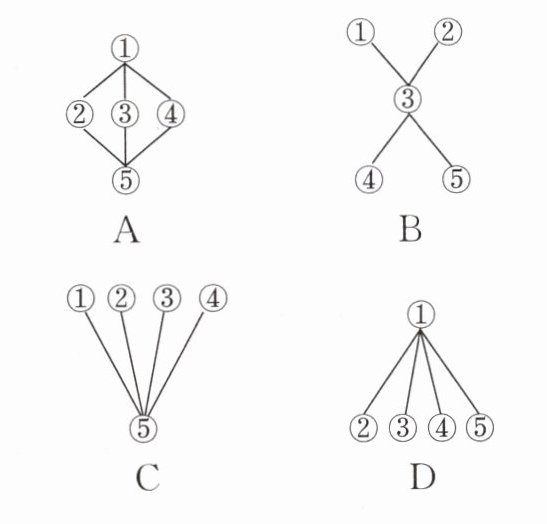
)12. Which of the following shows the structure of the passage?答案
9.C 10.D 11.C 12.A
解析
【分析】
这是一篇说明文类阅读理解题,解题思路可以按题目顺序逐一推进:
1. 细节题先精准定位题干对应的原文位置,直接匹配答案;
2. 词义猜测题结合划线词所在句的上下文逻辑,通过后文给出的提示信息推断单词含义;
3. 推理判断题将每个选项和原文内容逐一比对,排除明显不符合原文表述的错误选项,锁定正确答案;
4. 篇章结构题先梳理每一段的核心作用,判断段落之间的逻辑关系,再和给出的四个结构图逐一匹配,选出符合的选项。
梳理后可知本文是典型的总-分-总结构:首段总起点明自然探索有三个重要步骤,中间三段分别介绍三个步骤,尾段总结全文升华主旨。
【解析】
9. 细节理解题:定位原文第②段首句“First, it starts with curiosity—wanting to know the secrets”,明确自然探索的第一步是拥有好奇心。选项A、B属于第二步科学方法中的环节,选项D属于第三步的内容,均不符合题意,因此选C。
10. 词义猜测题:划线词“delicate”出现在第④段,后文提到我们需要保护雨林、海洋等自然环境,说明自然的属性是脆弱、容易受到破坏的。选项A“强壮有力”、B“丑陋无聊”、C“遥远未知”均和语境不符,选项D“容易受伤或破碎”完全匹配delicate的词义,因此选D。
11. 推理判断题:逐一比对选项:
选项A:“科学家已经知晓自然的所有秘密”和原文提到探索是为了探寻未知自然奥秘的表述矛盾,错误;
选项B:“探索只关乎发现新事物”和尾段提到探索还包含保护家园的智慧的表述矛盾,错误;
选项D:“极光不是真实的自然现象”和第②段提到人们好奇极光的成因的表述矛盾,错误;
选项C:“了解自然会让我们想要保护它”完全对应第④段“When we understand how wonderful and delicate nature is... we want to protect it”的表述,正确。
12. 篇章结构题:梳理段落功能:
第①段:总起全文,点明自然探索有三个重要步骤;
第②、③、④段:三个并列段落,分别介绍自然探索的三个步骤;
第⑤段:总结全文,升华主旨,说明探索精神兼具发现的勇气和保护的智慧。
该结构是典型的“总-分-总”,和图A的结构完全匹配,其余结构图均不符合该逻辑,因此选A。
【答案】
9.C 10.D 11.C 12.A
【知识点】
细节信息查找,词义猜测,篇章结构分析
【点评】
本题属于中等难度的说明文阅读,覆盖了阅读理解常见的四类考点,既考察学生快速定位原文信息的能力,也要求学生结合上下文逻辑进行合理推断,最后一题的篇章结构梳理需要学生跳出单句内容,从整体层面把握文章的写作逻辑,对学生的文本宏观理解能力有一定的考察作用。
【难度系数】
0.7
这是一篇说明文类阅读理解题,解题思路可以按题目顺序逐一推进:
1. 细节题先精准定位题干对应的原文位置,直接匹配答案;
2. 词义猜测题结合划线词所在句的上下文逻辑,通过后文给出的提示信息推断单词含义;
3. 推理判断题将每个选项和原文内容逐一比对,排除明显不符合原文表述的错误选项,锁定正确答案;
4. 篇章结构题先梳理每一段的核心作用,判断段落之间的逻辑关系,再和给出的四个结构图逐一匹配,选出符合的选项。
梳理后可知本文是典型的总-分-总结构:首段总起点明自然探索有三个重要步骤,中间三段分别介绍三个步骤,尾段总结全文升华主旨。
【解析】
9. 细节理解题:定位原文第②段首句“First, it starts with curiosity—wanting to know the secrets”,明确自然探索的第一步是拥有好奇心。选项A、B属于第二步科学方法中的环节,选项D属于第三步的内容,均不符合题意,因此选C。
10. 词义猜测题:划线词“delicate”出现在第④段,后文提到我们需要保护雨林、海洋等自然环境,说明自然的属性是脆弱、容易受到破坏的。选项A“强壮有力”、B“丑陋无聊”、C“遥远未知”均和语境不符,选项D“容易受伤或破碎”完全匹配delicate的词义,因此选D。
11. 推理判断题:逐一比对选项:
选项A:“科学家已经知晓自然的所有秘密”和原文提到探索是为了探寻未知自然奥秘的表述矛盾,错误;
选项B:“探索只关乎发现新事物”和尾段提到探索还包含保护家园的智慧的表述矛盾,错误;
选项D:“极光不是真实的自然现象”和第②段提到人们好奇极光的成因的表述矛盾,错误;
选项C:“了解自然会让我们想要保护它”完全对应第④段“When we understand how wonderful and delicate nature is... we want to protect it”的表述,正确。
12. 篇章结构题:梳理段落功能:
第①段:总起全文,点明自然探索有三个重要步骤;
第②、③、④段:三个并列段落,分别介绍自然探索的三个步骤;
第⑤段:总结全文,升华主旨,说明探索精神兼具发现的勇气和保护的智慧。
该结构是典型的“总-分-总”,和图A的结构完全匹配,其余结构图均不符合该逻辑,因此选A。
【答案】
9.C 10.D 11.C 12.A
【知识点】
细节信息查找,词义猜测,篇章结构分析
【点评】
本题属于中等难度的说明文阅读,覆盖了阅读理解常见的四类考点,既考察学生快速定位原文信息的能力,也要求学生结合上下文逻辑进行合理推断,最后一题的篇章结构梳理需要学生跳出单句内容,从整体层面把握文章的写作逻辑,对学生的文本宏观理解能力有一定的考察作用。
【难度系数】
0.7
