

 登录
登录
六、补全对话。
A:Why are you unhappy today, Paul?
B:1.
A:Yes, I'd love to. 2.
B:First, I'm always afraid of speaking Chinese in public.
A:Don't be shy! 3.
B:You're right. I'll try that way. 4.
A:I often read Chinese stories and novels to improve my reading. It's a good way to read aloud or retell a story.
B:Thank you for your advice. But I'm still …
A:Cheer up! 5.
B:Sounds great! I want to join it, too.
A:Why are you unhappy today, Paul?
B:1.
Because I did badly in the Chinese exam
. It's hard for me to learn Chinese. Would you like to help me with it?A:Yes, I'd love to. 2.
What's your problem
?B:First, I'm always afraid of speaking Chinese in public.
A:Don't be shy! 3.
You should be brave and believe in yourself
.B:You're right. I'll try that way. 4.
How do you improve your reading
?A:I often read Chinese stories and novels to improve my reading. It's a good way to read aloud or retell a story.
B:Thank you for your advice. But I'm still …
A:Cheer up! 5.
Why not join the Chinese language club
? I have been in the Chinese language club for two years.B:Sounds great! I want to join it, too.
答案
1. Because I did badly in the Chinese exam/Because I failed the Chinese exam/... 2. What's your problem/... 3. You should be brave and believe in yourself/You should try to practice speaking it with your friends every day/... 4. How do you improve your reading/... 5. Why not join the Chinese language club/What about joining the Chinese language club/...
一、从方框中选择适当的词并用其正确形式填空。
|partner|speed|increase|review|pronounce|
1. As an English learner, I have trouble
2. I am a slow reader. I don't know how
3. To improve my English, I practice with some of my
4. At yesterday's meeting, I controlled the
5. Don't make too much noise. Your brother
|partner|speed|increase|review|pronounce|
1. As an English learner, I have trouble
pronouncing
some difficult words.2. I am a slow reader. I don't know how
to increase
my reading speed.3. To improve my English, I practice with some of my
partners
in the morning.4. At yesterday's meeting, I controlled the
speed
of speaking to make myself heard clearly.5. Don't make too much noise. Your brother
is reviewing
his lessons now.答案
1. pronouncing 2. to increase 3. partners 4. speed 5. is reviewing
二、根据语境填空,每空一词。
1. It's very common to make mistakes
2. Linda is worried because she doesn't know
3. Her friend visited her
4. You can ask your parents
5. You can find a partner to practice English
1. It's very common to make mistakes
in
spelling.2. Linda is worried because she doesn't know
how
to spell the word.3. Her friend visited her
from
time to time when she was in hospital.4. You can ask your parents
for
some suggestions.5. You can find a partner to practice English
with
.答案
1. in 2. how 3. from 4. for 5. with
三、阅读理解。
A tree has roots. People have roots too. If you get to the root of a problem, you will solve it. It's the same thing with words. Dig deeply into a big, unfamiliar word and you will understand where it came from.
As readers, especially those reading in a second language, we need to deal with the text as if we were detectives (侦探) looking for information to unlock the unknown. Like any good detective arriving on the crime scene, the first thing to do when meeting a new and difficult word is to judge the situation, to look at everything that is known and see if it helps us to understand what it means.
As you know, prefixes (前缀) and suffixes (后缀) can be added to the beginning or end of words to change the meaning. Know them, and you will have the word building power. But root words are the key. Take time to learn a few of these, put them in your memory, and you will become a master word detective.
Let's look at one common root word used in English. “Alter” from the Latin word means “other”. When you meet this root word, you know that the bigger word has something to do with “other”. Examine the word “alternate”. Can you find the Latin root in it?
- If you and your friend like to eat out, first you pay and the other pays the next time. You are alternating paying.
- If you go to the movies on alternate Saturdays, you go on one Saturday, but not the other Saturday.
- If you have no alternative, you have no other choice.
Learn as many root words as possible in the language you are studying. Then use your “rooting for words” skills. Like any new skill, practice and hard work are always paid back.
(
A. The situation.
B. The crime scene.
C. A new and difficult word.
D. Everything that is known.
(
A. They each pay half.
B. Jim pays every time.
C. They take turns paying.
D. Their parents pay for them.
(
A. By giving a fact.
B. By taking an example.
C. By telling a story.
D. By having a discussion.
(
A. My brother is my senior by two years.
B. He was ill so he was absent from school.
C. A criminal was sentenced to death by law.
D. 60 students were present at the sports meeting.
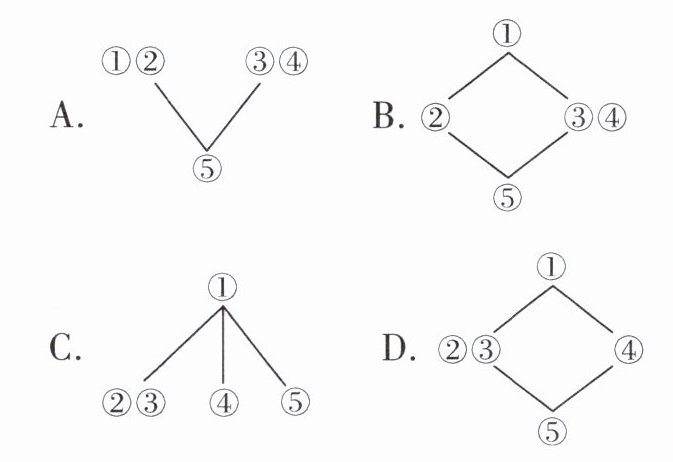
(
A. ①② ③④ ⑤
B. ① ② ③④ ⑤
C. ① ②③ ④ ⑤
D. ②③ ① ④ ⑤
A tree has roots. People have roots too. If you get to the root of a problem, you will solve it. It's the same thing with words. Dig deeply into a big, unfamiliar word and you will understand where it came from.
As readers, especially those reading in a second language, we need to deal with the text as if we were detectives (侦探) looking for information to unlock the unknown. Like any good detective arriving on the crime scene, the first thing to do when meeting a new and difficult word is to judge the situation, to look at everything that is known and see if it helps us to understand what it means.
As you know, prefixes (前缀) and suffixes (后缀) can be added to the beginning or end of words to change the meaning. Know them, and you will have the word building power. But root words are the key. Take time to learn a few of these, put them in your memory, and you will become a master word detective.
Let's look at one common root word used in English. “Alter” from the Latin word means “other”. When you meet this root word, you know that the bigger word has something to do with “other”. Examine the word “alternate”. Can you find the Latin root in it?
- If you and your friend like to eat out, first you pay and the other pays the next time. You are alternating paying.
- If you go to the movies on alternate Saturdays, you go on one Saturday, but not the other Saturday.
- If you have no alternative, you have no other choice.
Learn as many root words as possible in the language you are studying. Then use your “rooting for words” skills. Like any new skill, practice and hard work are always paid back.
(
C
) 1. What does the underlined word “it” in Paragraph 2 refer to?A. The situation.
B. The crime scene.
C. A new and difficult word.
D. Everything that is known.
(
C
) 2. If Jim and Lily go to the movies, which one below is “alternating paying”?A. They each pay half.
B. Jim pays every time.
C. They take turns paying.
D. Their parents pay for them.
(
B
) 3. How does the author explain his ideas about root words?A. By giving a fact.
B. By taking an example.
C. By telling a story.
D. By having a discussion.
(
A
) 4. “Sen” from the Latin word means “old”. Which word uses this Latin root?A. My brother is my senior by two years.
B. He was ill so he was absent from school.
C. A criminal was sentenced to death by law.
D. 60 students were present at the sports meeting.
(
B
) 5. Which of the following shows the structure (结构) of the passage? (① = Paragraph 1, ② = Paragraph 2...)A. ①② ③④ ⑤
B. ① ② ③④ ⑤
C. ① ②③ ④ ⑤
D. ②③ ① ④ ⑤
答案
1—5 CCBAB
