

 登录
登录
一、完形填空
Niejiazhuang Village in Weifang is famous for coloured clay sculpture (雕塑) handicraft. The Weifang government(政府) asks local people 1 traditional handicraft and make more money to get rid of poverty (脱贫).
Nie Peng is a young villager in Niejiazhuang. He loves clay sculpture handicraft. He began learning it 2 his father when he was a child. He leads(带领) lots of young craftspeople in and near his 3 to make coloured clay sculptures and the handicraft becomes a(n) 4 way for local people to make money.
The 5 is a typical (有代表性的) subject for coloured clay sculptures. Nie started to learn to make clay tigers 6 2010, the Year of the Tiger. Over these years, he has seen the development(发展) of the art form. At first, the clay tigers were all in the same small 7 . Now there are tigers of different sizes and the largest can be over two metres tall. The tigers were pink and green in the past, 8 now they become more colourful.
Today Nie cares for the future of clay sculpture handicraft and encourages(鼓励) young craftspeople to create more 9 . He 10 hopes that the sculpture handicraft will be passed down to the next generation (一代人).
( ) 1. A. to learn B. learning C. learns D. learn
( ) 2. A. with B. by C. from D. to
( ) 3. A. town B. village C. city D. capital
( ) 4. A. tiring B. hard C. important D. lucky
( ) 5. A. rabbit B. lion C. monkey D. tiger
( ) 6. A. at B. on C. in D. /
( ) 7. A. size B. name C. colour D. shape
( ) 8. A. so B. and C. but D. if
( ) 9. A. tigers B. people C. clay D. works
( ) 10. A. really B. quickly C. sadly D. carefully
Niejiazhuang Village in Weifang is famous for coloured clay sculpture (雕塑) handicraft. The Weifang government(政府) asks local people 1 traditional handicraft and make more money to get rid of poverty (脱贫).
Nie Peng is a young villager in Niejiazhuang. He loves clay sculpture handicraft. He began learning it 2 his father when he was a child. He leads(带领) lots of young craftspeople in and near his 3 to make coloured clay sculptures and the handicraft becomes a(n) 4 way for local people to make money.
The 5 is a typical (有代表性的) subject for coloured clay sculptures. Nie started to learn to make clay tigers 6 2010, the Year of the Tiger. Over these years, he has seen the development(发展) of the art form. At first, the clay tigers were all in the same small 7 . Now there are tigers of different sizes and the largest can be over two metres tall. The tigers were pink and green in the past, 8 now they become more colourful.
Today Nie cares for the future of clay sculpture handicraft and encourages(鼓励) young craftspeople to create more 9 . He 10 hopes that the sculpture handicraft will be passed down to the next generation (一代人).
( ) 1. A. to learn B. learning C. learns D. learn
( ) 2. A. with B. by C. from D. to
( ) 3. A. town B. village C. city D. capital
( ) 4. A. tiring B. hard C. important D. lucky
( ) 5. A. rabbit B. lion C. monkey D. tiger
( ) 6. A. at B. on C. in D. /
( ) 7. A. size B. name C. colour D. shape
( ) 8. A. so B. and C. but D. if
( ) 9. A. tigers B. people C. clay D. works
( ) 10. A. really B. quickly C. sadly D. carefully
答案
一、1-5 ACBCD 6-10 CACDA
二、阅读理解
China is called the kingdom of fans(扇子). Fans are everywhere in our daily life. But how much do you know about them?
It is said that fans were first used to cool the air during the Shang dynasty. At that time, they were made of feathers, bamboo or silk. Some of them were round, while others were square.
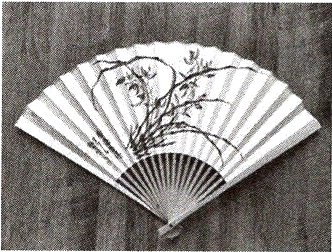
Folding(折叠的) paper fans first became popular during the Song dynasty. There were usually beautiful pictures on the fans. Some were mountains and rivers, and others were flowers and animals. Many people, including(包括) Su Dongpo, a poet of Song dynasty, and Tang Bohu, a scholar(学者) of the Ming dynasty, even painted and wrote poems on fans. This made the fans become artworks. Many rich (富有的) and important people liked holding fans.
Today, fans are popular gifts. During the 2008 Beijing Olympic Games, folding fans were given to leaders(领导人) and officers from other countries, as well as the audience (观众). While they were having their fans to get cool air, they were also experiencing(体验) Chinese culture.
( ) 1. What can we learn about fans from the passage?
A. During the Shang dynasty, fans were mainly made of feathers, paper or silk.
B. Many rich people liked to paint and write poems on fans.
C. Fans can help people learn about Chinese culture.
D. Folding fans were artworks during the Shang dynasty.
( ) 2. When did folding fans first become popular?
A. During the Shang dynasty. B. During the Song dynasty.
C. During the Tang dynasty. D. In 2008.
( ) 3. What couldn't people see on fans in the Song dynasty?
A. Mountains. B. Animals. C. Buildings. D. Flowers.
( ) 4. What's the passage mainly about?
A. The history of fans. B. The shapes of fans.
C. When fans became popular. D. Why fans became popular.
China is called the kingdom of fans(扇子). Fans are everywhere in our daily life. But how much do you know about them?
It is said that fans were first used to cool the air during the Shang dynasty. At that time, they were made of feathers, bamboo or silk. Some of them were round, while others were square.
Folding(折叠的) paper fans first became popular during the Song dynasty. There were usually beautiful pictures on the fans. Some were mountains and rivers, and others were flowers and animals. Many people, including(包括) Su Dongpo, a poet of Song dynasty, and Tang Bohu, a scholar(学者) of the Ming dynasty, even painted and wrote poems on fans. This made the fans become artworks. Many rich (富有的) and important people liked holding fans.
Today, fans are popular gifts. During the 2008 Beijing Olympic Games, folding fans were given to leaders(领导人) and officers from other countries, as well as the audience (观众). While they were having their fans to get cool air, they were also experiencing(体验) Chinese culture.
( ) 1. What can we learn about fans from the passage?
A. During the Shang dynasty, fans were mainly made of feathers, paper or silk.
B. Many rich people liked to paint and write poems on fans.
C. Fans can help people learn about Chinese culture.
D. Folding fans were artworks during the Shang dynasty.
( ) 2. When did folding fans first become popular?
A. During the Shang dynasty. B. During the Song dynasty.
C. During the Tang dynasty. D. In 2008.
( ) 3. What couldn't people see on fans in the Song dynasty?
A. Mountains. B. Animals. C. Buildings. D. Flowers.
( ) 4. What's the passage mainly about?
A. The history of fans. B. The shapes of fans.
C. When fans became popular. D. Why fans became popular.
答案
二、1-4 CBCA
