

 登录
登录
Ⅲ. 阅读短文,根据其内容完成任务。
If you travel to Fujian Province, you'll see special round or square buildings—they're called Fujian Earth Buildings. They are a wonderful example of how people live in harmony with nature, using local materials to build safe and comfortable homes.
Long ago, people in Fujian's mountains faced problems like wild animals and strong winds. They followed nature's laws and used local soil, wood and stones to build. The thick earth walls kept the inside warm in winter and cool in summer—working with nature's own way. The round shape also helped protect them from strong winds.
These earth buildings worked with nature. Inside, there was a small sunny yard where families grew vegetables and kept chickens. This made it easy to get fresh food without wasting resources.
Today, Fujian Earth Buildings still play an important role. Some have stood for over a hundred years, and many families still live in them. They also attract visitors from all over China who come to learn about this ancient wisdom. More students now understand the cultural meaning behind these buildings—how people can survive and live well by respecting nature. This way of building is not just old houses; it is a cultural heritage that shows a wise way to live in harmony with our environment.
任务一:根据短文内容,先将右边的信息填入图片相应的位置,再选出其作用。
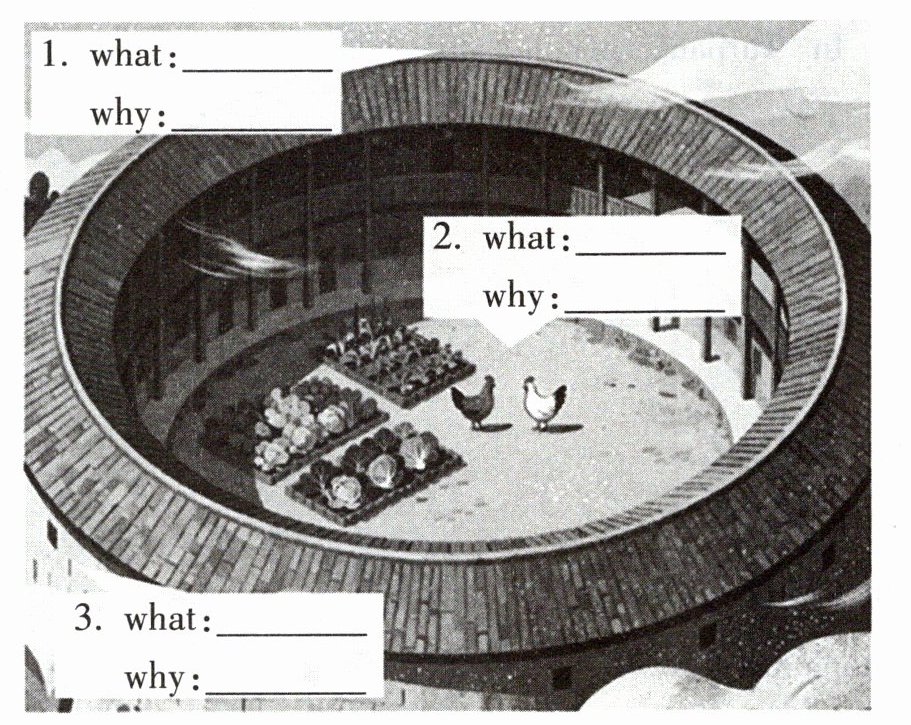
what:
round shape
thick earth walls
samall sunny yard
why:
A. to stop strong winds from blowing them down
B. to keep the inside warm in winter and cool in summer
C. to grow green vegetables and keep chickens
任务二:根据短文内容,回答问题。
4. What do you think is the smartest part? Why?
5. What can we learn from these earth buildings?
If you travel to Fujian Province, you'll see special round or square buildings—they're called Fujian Earth Buildings. They are a wonderful example of how people live in harmony with nature, using local materials to build safe and comfortable homes.
Long ago, people in Fujian's mountains faced problems like wild animals and strong winds. They followed nature's laws and used local soil, wood and stones to build. The thick earth walls kept the inside warm in winter and cool in summer—working with nature's own way. The round shape also helped protect them from strong winds.
These earth buildings worked with nature. Inside, there was a small sunny yard where families grew vegetables and kept chickens. This made it easy to get fresh food without wasting resources.
Today, Fujian Earth Buildings still play an important role. Some have stood for over a hundred years, and many families still live in them. They also attract visitors from all over China who come to learn about this ancient wisdom. More students now understand the cultural meaning behind these buildings—how people can survive and live well by respecting nature. This way of building is not just old houses; it is a cultural heritage that shows a wise way to live in harmony with our environment.
任务一:根据短文内容,先将右边的信息填入图片相应的位置,再选出其作用。
what:
round shape
thick earth walls
samall sunny yard
why:
A. to stop strong winds from blowing them down
B. to keep the inside warm in winter and cool in summer
C. to grow green vegetables and keep chickens
任务二:根据短文内容,回答问题。
4. What do you think is the smartest part? Why?
The smartest part is that the round shape and thick earth walls kept the inside warm in winter and cool in summer, and stopped strong winds.
5. What can we learn from these earth buildings?
We can learn to use local materials like soil and stones to build homes that work with nature for safety and comfort.
答案
任务一:1. what:round shape why:to stop strong winds from blowing them down
2. what:small sunny yard why:to grow vegetables and keep chickens
3. what:thick earth walls why:to keep the inside warm in winter and cool in summer
任务二:
4. The smartest part is that the round shape and thick earth walls kept the inside warm in winter and cool in summer, and stopped strong winds.
5. We can learn to use local materials like soil and stones to build homes that work with nature for safety and comfort.
2. what:small sunny yard why:to grow vegetables and keep chickens
3. what:thick earth walls why:to keep the inside warm in winter and cool in summer
任务二:
4. The smartest part is that the round shape and thick earth walls kept the inside warm in winter and cool in summer, and stopped strong winds.
5. We can learn to use local materials like soil and stones to build homes that work with nature for safety and comfort.
解析
【分析】
解题思路分为两步:
1. 完成任务一:先通读短文,定位每个建筑特征(round shape、thick earth walls、small sunny yard)对应的功能描述,再结合图片场景匹配对应内容:图片1是建筑的圆形外观,对应round shape;图片2是建筑内部的庭院,对应small sunny yard;图片3是建筑的墙体,对应thick earth walls,再将对应的功能填入why处。
2. 完成任务二:第4题需要从短文中提炼土楼最具智慧的设计点,并结合其作用说明原因;第5题需要总结短文传递的核心理念,即人类与自然和谐共处的智慧。
【解析】
任务一:
1. 从短文第二段“The round shape also helped protect them from strong winds.”可知,round shape的作用是抵御强风,对应why的内容为to stop strong winds from blowing them down。
2. 从短文第三段“Inside, there was a small sunny yard where families grew vegetables and kept chickens.”可知,small sunny yard的作用是种植蔬菜和养鸡,对应why的内容为to grow vegetables and keep chickens。
3. 从短文第二段“The thick earth walls kept the inside warm in winter and cool in summer—working with nature's own way.”可知,thick earth walls的作用是调节室内温度,对应why的内容为to keep the inside warm in winter and cool in summer。
任务二:
4. 结合短文对土楼设计的描述,圆形结构和厚土墙的设计兼顾了防风和调节温度的功能,是最具智慧的部分,据此整理回答。
5. 从短文最后一段“how people can survive and live well by respecting nature”以及前文对材料使用的描述,可总结出我们能学到的是利用当地材料,与自然和谐共处的生存智慧。
【答案】
任务一:
1. what:round shape why:to stop strong winds from blowing them down
2. what:small sunny yard why:to grow vegetables and keep chickens
3. what:thick earth walls why:to keep the inside warm in winter and cool in summer
任务二:
4. The smartest part is that the round shape and thick earth walls kept the inside warm in winter and cool in summer, and stopped strong winds.
5. We can learn to use local materials like soil and stones to build homes that work with nature for safety and comfort.
【知识点】
信息匹配、文本信息提取、主旨概括
【点评】
本题考查学生对文本细节的提取能力和主旨概括能力,需要结合文本内容与图片场景完成匹配,同时理解土楼所体现的人与自然和谐共处的智慧,既考查对细节的把控,也考查对核心理念的提炼。
【难度系数】
0.6
解题思路分为两步:
1. 完成任务一:先通读短文,定位每个建筑特征(round shape、thick earth walls、small sunny yard)对应的功能描述,再结合图片场景匹配对应内容:图片1是建筑的圆形外观,对应round shape;图片2是建筑内部的庭院,对应small sunny yard;图片3是建筑的墙体,对应thick earth walls,再将对应的功能填入why处。
2. 完成任务二:第4题需要从短文中提炼土楼最具智慧的设计点,并结合其作用说明原因;第5题需要总结短文传递的核心理念,即人类与自然和谐共处的智慧。
【解析】
任务一:
1. 从短文第二段“The round shape also helped protect them from strong winds.”可知,round shape的作用是抵御强风,对应why的内容为to stop strong winds from blowing them down。
2. 从短文第三段“Inside, there was a small sunny yard where families grew vegetables and kept chickens.”可知,small sunny yard的作用是种植蔬菜和养鸡,对应why的内容为to grow vegetables and keep chickens。
3. 从短文第二段“The thick earth walls kept the inside warm in winter and cool in summer—working with nature's own way.”可知,thick earth walls的作用是调节室内温度,对应why的内容为to keep the inside warm in winter and cool in summer。
任务二:
4. 结合短文对土楼设计的描述,圆形结构和厚土墙的设计兼顾了防风和调节温度的功能,是最具智慧的部分,据此整理回答。
5. 从短文最后一段“how people can survive and live well by respecting nature”以及前文对材料使用的描述,可总结出我们能学到的是利用当地材料,与自然和谐共处的生存智慧。
【答案】
任务一:
1. what:round shape why:to stop strong winds from blowing them down
2. what:small sunny yard why:to grow vegetables and keep chickens
3. what:thick earth walls why:to keep the inside warm in winter and cool in summer
任务二:
4. The smartest part is that the round shape and thick earth walls kept the inside warm in winter and cool in summer, and stopped strong winds.
5. We can learn to use local materials like soil and stones to build homes that work with nature for safety and comfort.
【知识点】
信息匹配、文本信息提取、主旨概括
【点评】
本题考查学生对文本细节的提取能力和主旨概括能力,需要结合文本内容与图片场景完成匹配,同时理解土楼所体现的人与自然和谐共处的智慧,既考查对细节的把控,也考查对核心理念的提炼。
【难度系数】
0.6
