

 登录
登录
D Look, read and write (看图,完成对话)
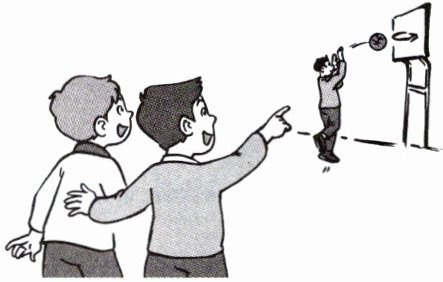
1 A: Look! What is Jack doing?
B: He's
A: Yes. He's very
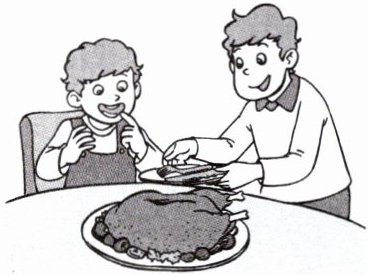
2 A: Wow, the turkey
I can't
B: Here's your knife and fork.
A: Thank you, Mike.
1 A: Look! What is Jack doing?
B: He's
playing
basketball
. He playswell
.A: Yes. He's very
good
at basketball.2 A: Wow, the turkey
smells
nice.I can't
wait
!B: Here's your knife and fork.
A: Thank you, Mike.
答案
D 1 playing basketball, well, good
2 smells, wait
2 smells, wait
解析
【解析】
1. 根据问句“What is Jack doing?”,需用现在进行时结构“be+动词现在分词”,故填playing basketball;play是动词,用副词well修饰;“be good at”是固定搭配,意为“擅长”,所以最后一空填good。
2. 描述火鸡闻起来很香,smell作为感官动词,主语the turkey是第三人称单数,故填smells;“I can't wait”是固定表达,意为“我迫不及待了”,所以第二空填wait。
【答案】
1. playing basketball; well; good
2. smells; wait
【知识点】
现在进行时结构、固定短语搭配、感官动词用法
【点评】
本题结合图片语境,考查现在进行时、固定短语及感官动词在日常对话中的运用,助力学生提升语境理解与语言运用能力。
【难度系数】
0.7
1. 根据问句“What is Jack doing?”,需用现在进行时结构“be+动词现在分词”,故填playing basketball;play是动词,用副词well修饰;“be good at”是固定搭配,意为“擅长”,所以最后一空填good。
2. 描述火鸡闻起来很香,smell作为感官动词,主语the turkey是第三人称单数,故填smells;“I can't wait”是固定表达,意为“我迫不及待了”,所以第二空填wait。
【答案】
1. playing basketball; well; good
2. smells; wait
【知识点】
现在进行时结构、固定短语搭配、感官动词用法
【点评】
本题结合图片语境,考查现在进行时、固定短语及感官动词在日常对话中的运用,助力学生提升语境理解与语言运用能力。
【难度系数】
0.7
E Read and answer (阅读短文,回答问题)
Mike usually eats with a knife and fork. He uses (使用) the knife to cut food and the fork to pick up food. He holds the knife in his right hand and the fork in his left hand. He never plays with the knife or the fork at the table. He never points at others with them either. When he cuts food with the knife, he tries not to make noise.
Mike sometimes eats with chopsticks. He can use chopsticks very well. He holds the chopsticks in his right hand.
1 What does Mike usually eat with?
2 What does Mike use to pick up food?
3 Does Mike hold the knife in his right hand?
4 Does Mike hold the chopsticks in his left hand?
Mike usually eats with a knife and fork. He uses (使用) the knife to cut food and the fork to pick up food. He holds the knife in his right hand and the fork in his left hand. He never plays with the knife or the fork at the table. He never points at others with them either. When he cuts food with the knife, he tries not to make noise.
Mike sometimes eats with chopsticks. He can use chopsticks very well. He holds the chopsticks in his right hand.
1 What does Mike usually eat with?
He usually eats with a knife and fork.
2 What does Mike use to pick up food?
He uses the fork.
3 Does Mike hold the knife in his right hand?
Yes, he does.
4 Does Mike hold the chopsticks in his left hand?
No, he doesn't.
答案
E 1 He usually eats with a knife and fork.
2 He uses the fork.
3 Yes, he does.
4 No, he doesn't.
2 He uses the fork.
3 Yes, he does.
4 No, he doesn't.
解析
【解析】
首先通读短文,明确短文内容为Mike的用餐习惯。然后针对每个问题,在文中定位对应关键信息,提取准确内容作答:
1. 根据短文第一句“Mike usually eats with a knife and fork.”可得出答案;
2. 根据“He uses the knife to cut food and the fork to pick up food.”可知答案;
3. 根据“He holds the knife in his right hand and the fork in his left hand.”可知此处为肯定回答;
4. 根据“He holds the chopsticks in his right hand.”可知此处为否定回答。
【答案】
1. He usually eats with a knife and fork.
2. He uses the fork.
3. Yes, he does.
4. No, he doesn't.
【知识点】
细节信息查找、一般疑问句回答、一般现在时应用
【点评】
本题为英语基础阅读理解题,主要考查学生对短文细节信息的捕捉能力,题目均为原文可直接定位的内容,学生只需准确找到对应语句即可作答。
【难度系数】
0.9
首先通读短文,明确短文内容为Mike的用餐习惯。然后针对每个问题,在文中定位对应关键信息,提取准确内容作答:
1. 根据短文第一句“Mike usually eats with a knife and fork.”可得出答案;
2. 根据“He uses the knife to cut food and the fork to pick up food.”可知答案;
3. 根据“He holds the knife in his right hand and the fork in his left hand.”可知此处为肯定回答;
4. 根据“He holds the chopsticks in his right hand.”可知此处为否定回答。
【答案】
1. He usually eats with a knife and fork.
2. He uses the fork.
3. Yes, he does.
4. No, he doesn't.
【知识点】
细节信息查找、一般疑问句回答、一般现在时应用
【点评】
本题为英语基础阅读理解题,主要考查学生对短文细节信息的捕捉能力,题目均为原文可直接定位的内容,学生只需准确找到对应语句即可作答。
【难度系数】
0.9
