

 登录
登录
一、朗读下面的单词,在横线上写出每组单词中粗体部分的音标。
1. cloud cookie cabbage could
2. face city rice bicycle
3. duck luck pick sock
4. danger huge encourage passenger
5. relax excuse six box
1. cloud cookie cabbage could
2. face city rice bicycle
3. duck luck pick sock
4. danger huge encourage passenger
5. relax excuse six box
答案
1. /k/ 2. /s/ 3. /k/ 4. /dʒ/ 5. /ks/
解析
1. 分析单词cloud, cookie, cabbage, could,粗体部分均为字母"c",发音为/k/。
2. 分析单词face, city, rice, bicycle,粗体部分均为字母"c"(在i/e前),发音为/s/。
3. 分析单词duck, luck, pick, sock,粗体部分均为字母组合"ck",发音为/k/。
4. 分析单词danger, huge, encourage, passenger,粗体部分均为字母"g"(在e/u前),发音为/dʒ/。
5. 分析单词relax, excuse, six, box,粗体部分均为字母"x",发音为/ks/。
2. 分析单词face, city, rice, bicycle,粗体部分均为字母"c"(在i/e前),发音为/s/。
3. 分析单词duck, luck, pick, sock,粗体部分均为字母组合"ck",发音为/k/。
4. 分析单词danger, huge, encourage, passenger,粗体部分均为字母"g"(在e/u前),发音为/dʒ/。
5. 分析单词relax, excuse, six, box,粗体部分均为字母"x",发音为/ks/。
二、朗读下面方框中的单词,将粗体部分发音相同的单词正确归类。
helped called cleaned wanted
asked loved washed enjoyed
visited watched danced planted
needed finished started played
climbed painted
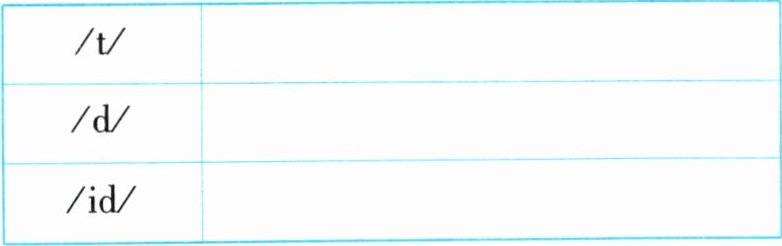
| /t/ |
| /d/ |
| /id/ |
通过上面的练习,我们可以发现以下规律:
1. 以清辅音结尾的单词加上 - ed 后,读。
2. 以浊辅音结尾的单词加上 - ed 后,读。
3. 以元音结尾的单词加上 - ed 后,读。
4. 以 /t/、/d/ 结尾的单词加上 - ed 后,读。
helped called cleaned wanted
asked loved washed enjoyed
visited watched danced planted
needed finished started played
climbed painted
| /t/ |
| /d/ |
| /id/ |
通过上面的练习,我们可以发现以下规律:
1. 以清辅音结尾的单词加上 - ed 后,读。
2. 以浊辅音结尾的单词加上 - ed 后,读。
3. 以元音结尾的单词加上 - ed 后,读。
4. 以 /t/、/d/ 结尾的单词加上 - ed 后,读。
答案
/t/: helped, asked, washed, watched, danced, finished
/d/: called, cleaned, loved, enjoyed, played, climbed
/id/: wanted, visited, planted, needed, started, painted
1. /t/
2. /d/
3. /d/
4. /ɪd/
/d/: called, cleaned, loved, enjoyed, played, climbed
/id/: wanted, visited, planted, needed, started, painted
1. /t/
2. /d/
3. /d/
4. /ɪd/
解析
先确定每个单词中-ed的发音。helped(/t/)、called(/d/)、cleaned(/d/)、wanted(/ɪd/)、asked(/t/)、loved(/d/)、washed(/t/)、enjoyed(/d/)、visited(/ɪd/)、watched(/t/)、danced(/t/)、planted(/ɪd/)、needed(/ɪd/)、finished(/t/)、started(/ɪd/)、played(/d/)、climbed(/d/)、painted(/ɪd/)。然后根据发音归类。规律部分根据发音规则填写。
三、根据汉语意思翻译下列句子,每空一词。
1. 我们参加学校旅行,去了废水处理厂。
We went on a to the .
2. 贝蒂过去常常和朋友们去剧院看演出。
Betty to the to watch shows with her friends.
3. 我认为得到干净的水并不容易。
I don't think get clean water.
4. 迈克去年对机器人感兴趣。
Mike robots last year.
5. 细菌通常太小看不见。
Germs are usually small .
1. 我们参加学校旅行,去了废水处理厂。
We went on a to the .
2. 贝蒂过去常常和朋友们去剧院看演出。
Betty to the to watch shows with her friends.
3. 我认为得到干净的水并不容易。
I don't think get clean water.
4. 迈克去年对机器人感兴趣。
Mike robots last year.
5. 细菌通常太小看不见。
Germs are usually small .
答案
1. school trip; wastewater plant
2. used to go; theater
3. it is easy to
4. was interested in
5. too; to see
2. used to go; theater
3. it is easy to
4. was interested in
5. too; to see
解析
1. "学校旅行"译为"school trip","废水处理厂"译为"wastewater plant"。
2. "过去常常做某事"用"used to do sth","剧院"译为"theater"。
3. "it is easy to do sth"表示"做某事容易",否定前移后为"don't think it is easy to"。
4. "对……感兴趣"译为"be interested in",last year提示用一般过去时,主语Mike为第三人称单数,be动词用was。
5. "太……而不能……"用"too...to...","看见"译为"see"。
2. "过去常常做某事"用"used to do sth","剧院"译为"theater"。
3. "it is easy to do sth"表示"做某事容易",否定前移后为"don't think it is easy to"。
4. "对……感兴趣"译为"be interested in",last year提示用一般过去时,主语Mike为第三人称单数,be动词用was。
5. "太……而不能……"用"too...to...","看见"译为"see"。
四、根据材料内容,从下面五个选项中选出能填入文中空缺处的最佳选项,使文章意思通顺、内容完整。
Bill had a nice weekend. He went to the beach with his parents. 1. They all seemed very excited. Bill had fun playing volleyball with his father on the beach and swimming in the sea. When they got tired, they took a rest and drank some water. 2. They felt quite relaxed.
When they got ready to go home, Bill's mother saw a little girl crying sadly on the beach. She went to the girl and asked, "Can I know your name, little girl? What's wrong with you?" The girl answered, "I am Lily. 3. "
After hearing that, Bill and his mother took Lily to the security office (保安室). 4. She was Lily's mother. She was very happy when she saw her daughter. She thanked Bill and his mother for their help.
Bill helped the little girl, so he was very excited on the way home. 5. He will never forget the experience.
A. I can't find my mother.
B. He thought it was a great trip.
C. Minutes later, a woman came into the office.
D. They saw many people when they got there.
E. They stayed there for about two hours.
Bill had a nice weekend. He went to the beach with his parents. 1. They all seemed very excited. Bill had fun playing volleyball with his father on the beach and swimming in the sea. When they got tired, they took a rest and drank some water. 2. They felt quite relaxed.
When they got ready to go home, Bill's mother saw a little girl crying sadly on the beach. She went to the girl and asked, "Can I know your name, little girl? What's wrong with you?" The girl answered, "I am Lily. 3. "
After hearing that, Bill and his mother took Lily to the security office (保安室). 4. She was Lily's mother. She was very happy when she saw her daughter. She thanked Bill and his mother for their help.
Bill helped the little girl, so he was very excited on the way home. 5. He will never forget the experience.
A. I can't find my mother.
B. He thought it was a great trip.
C. Minutes later, a woman came into the office.
D. They saw many people when they got there.
E. They stayed there for about two hours.
答案
1. D
2. E
3. A
4. C
5. B
解析
1. 第一空描述到达海滩后的情景,选项D“他们到达时看到许多人”与后句“他们都很兴奋”衔接合理。
2. 第二空需说明他们休息后的活动时长,选项E“他们在那里待了大约两小时”符合时间顺序。
3. 第三空为小女孩的回答,选项A“我找不到妈妈”直接解释了她哭泣的原因。
4. 第四空需衔接保安室场景,选项C“几分钟后一位女士进来”符合后续“她是女孩母亲”的逻辑。
5. 第五空需总结比尔的心情,选项B“他认为这是一次很棒的旅行”与前句“兴奋”及末句“不会忘记”呼应。
