

 登录
登录
Ⅰ. Complete the rules with the verbs given. Use Don't appropriately.
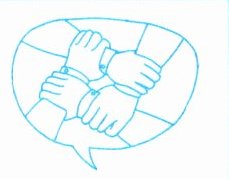
Group work rules
1.
2.
3.
4.
Group work rules
1.
Listen
(listen) to your members carefully.2.
Share
(share) your ideas during the discussion.3.
Don't give up
(give up) if things become difficult.4.
Don't forget
(forget) to say "please" to your members.答案
Ⅰ. 1. Listen 2. Share 3. Don't give up 4. Don't forget
解析
【分析】
首先,这道题考查祈使句在小组合作规则中的运用。解题时需先结合小组规则的语境,判断每个句子是正向的要求还是需要禁止的行为:
1. 对于正向的、需要遵守的规则,使用肯定祈使句,直接以动词原形开头;
2. 对于负面的、不允许做的行为,使用否定祈使句,在动词(短语)前加“Don't”。
接下来逐个分析每个句子:
第1、2题是小组合作中需要做到的正向要求,所以用肯定祈使句;
第3、4题是小组合作中不能做的行为,所以用否定祈使句,添加“Don't”。
【解析】
1. 本句是小组合作的正向规则,要求认真倾听组员发言,用肯定祈使句,动词用原形,故填Listen。
2. 本句是正向规则,要求讨论时分享想法,肯定祈使句,动词用原形,故填Share。
3. 根据语境,遇到困难时不能放弃,需要用否定祈使句,在动词短语前加“Don't”,故填Don't give up。
4. 语境要求不能忘记对组员说“请”,需用否定祈使句,在动词前加“Don't”,故填Don't forget。
【答案】
1. Listen
2. Share
3. Don't give up
4. Don't forget
【知识点】
祈使句的用法;肯定祈使句;否定祈使句
【点评】
本题结合小组合作规则的实际场景,考查祈使句的肯定与否定形式的运用,需要学生结合语境判断规则的正向或负向要求,掌握祈使句的基本结构,是对基础语法点在实际语境中运用的考查。
【难度系数】
0.8
首先,这道题考查祈使句在小组合作规则中的运用。解题时需先结合小组规则的语境,判断每个句子是正向的要求还是需要禁止的行为:
1. 对于正向的、需要遵守的规则,使用肯定祈使句,直接以动词原形开头;
2. 对于负面的、不允许做的行为,使用否定祈使句,在动词(短语)前加“Don't”。
接下来逐个分析每个句子:
第1、2题是小组合作中需要做到的正向要求,所以用肯定祈使句;
第3、4题是小组合作中不能做的行为,所以用否定祈使句,添加“Don't”。
【解析】
1. 本句是小组合作的正向规则,要求认真倾听组员发言,用肯定祈使句,动词用原形,故填Listen。
2. 本句是正向规则,要求讨论时分享想法,肯定祈使句,动词用原形,故填Share。
3. 根据语境,遇到困难时不能放弃,需要用否定祈使句,在动词短语前加“Don't”,故填Don't give up。
4. 语境要求不能忘记对组员说“请”,需用否定祈使句,在动词前加“Don't”,故填Don't forget。
【答案】
1. Listen
2. Share
3. Don't give up
4. Don't forget
【知识点】
祈使句的用法;肯定祈使句;否定祈使句
【点评】
本题结合小组合作规则的实际场景,考查祈使句的肯定与否定形式的运用,需要学生结合语境判断规则的正向或负向要求,掌握祈使句的基本结构,是对基础语法点在实际语境中运用的考查。
【难度系数】
0.8
Ⅱ. Complete the instructions with the proper form of the words in the box. Then answer the questions.
choose daily housework able clean
Do you know how to use a robot to help with 1.
▲ Turn on the robot and wait for it to make a sound.
▲ 2.
▲ Set the robot free and watch it start cleaning!
▲ Turn off the robot and 3.
▲ Store the robot in a safe and dry place.
This robot is your 4.
6. Do you like this robot? Why or why not?
choose daily housework able clean
Do you know how to use a robot to help with 1.
housework
? Here are some simple steps:▲ Turn on the robot and wait for it to make a sound.
▲ 2.
Choose
a task and speak clearly, so the robot can understand you.▲ Set the robot free and watch it start cleaning!
▲ Turn off the robot and 3.
clean
it.▲ Store the robot in a safe and dry place.
This robot is your 4.
daily
helper, so take care of it. Hope it helps and you will be 5.able
to have a better life.6. Do you like this robot? Why or why not?
One possible version: Yes, I do. It can help me do housework.
答案
Ⅱ. 1. housework 2. Choose 3. clean 4. daily 5. able
6. One possible version: Yes, I do. It can help me do housework.
6. One possible version: Yes, I do. It can help me do housework.
解析
【分析】
这是一道词汇运用与开放性问答结合的题目。首先处理选词填空部分,我们需要结合每个空的语境和单词的词性、形式来选择合适的词:
1. 第一空前面是help with,with是介词,后接名词,结合语境“用机器人帮忙做什么”,box里的housework(家务)符合语义;
2. 第二空所在句子是祈使句,需要动词原形开头,结合“a task”(一项任务),choose(选择)符合“选择任务”的语境,注意首字母大写;
3. 第三空和前面的Turn off并列,都是祈使句的动作,需要动词原形,结合“Turn off the robot”,后面应该是清理机器人,所以用clean;
4. 第四空修饰名词helper,需要形容词,daily(日常的)符合“日常助手”的语义;
5. 第五空是固定搭配be able to,所以填able;
第6题是开放性问题,只需结合机器人的作用给出合理的喜欢或不喜欢的理由即可。
【解析】
1. 第一空:help with后接名词,根据语境“用机器人帮忙做家务”,应填housework;
2. 第二空:本句为祈使句,需用动词原形开头,结合“选择一项任务”的语义,应填Choose(首字母大写);
3. 第三空:与“Turn off the robot”并列,祈使句用动词原形,结合关闭机器人后要清理它的逻辑,应填clean;
4. 第四空:修饰名词helper,需用形容词,“日常助手”符合语境,应填daily;
5. 第五空:固定搭配be able to表示“能够”,符合语义,应填able;
6. 开放性问题,给出合理回答即可,示例:Yes, I do. It can help me do housework.
【答案】
Ⅱ. 1. housework 2. Choose 3. clean 4. daily 5. able
6. One possible version: Yes, I do. It can help me do housework.
【知识点】
固定搭配(be able to)、祈使句用法、形容词作定语
【点评】
本题考查词汇在语境中的灵活运用,涵盖了介词后接名词、祈使句结构、固定搭配等基础语法点,同时通过开放性问题考察学生的语言表达能力,贴近生活实际,能有效检验学生对基础词汇和语法的掌握情况。
【难度系数】
0.8
这是一道词汇运用与开放性问答结合的题目。首先处理选词填空部分,我们需要结合每个空的语境和单词的词性、形式来选择合适的词:
1. 第一空前面是help with,with是介词,后接名词,结合语境“用机器人帮忙做什么”,box里的housework(家务)符合语义;
2. 第二空所在句子是祈使句,需要动词原形开头,结合“a task”(一项任务),choose(选择)符合“选择任务”的语境,注意首字母大写;
3. 第三空和前面的Turn off并列,都是祈使句的动作,需要动词原形,结合“Turn off the robot”,后面应该是清理机器人,所以用clean;
4. 第四空修饰名词helper,需要形容词,daily(日常的)符合“日常助手”的语义;
5. 第五空是固定搭配be able to,所以填able;
第6题是开放性问题,只需结合机器人的作用给出合理的喜欢或不喜欢的理由即可。
【解析】
1. 第一空:help with后接名词,根据语境“用机器人帮忙做家务”,应填housework;
2. 第二空:本句为祈使句,需用动词原形开头,结合“选择一项任务”的语义,应填Choose(首字母大写);
3. 第三空:与“Turn off the robot”并列,祈使句用动词原形,结合关闭机器人后要清理它的逻辑,应填clean;
4. 第四空:修饰名词helper,需用形容词,“日常助手”符合语境,应填daily;
5. 第五空:固定搭配be able to表示“能够”,符合语义,应填able;
6. 开放性问题,给出合理回答即可,示例:Yes, I do. It can help me do housework.
【答案】
Ⅱ. 1. housework 2. Choose 3. clean 4. daily 5. able
6. One possible version: Yes, I do. It can help me do housework.
【知识点】
固定搭配(be able to)、祈使句用法、形容词作定语
【点评】
本题考查词汇在语境中的灵活运用,涵盖了介词后接名词、祈使句结构、固定搭配等基础语法点,同时通过开放性问题考察学生的语言表达能力,贴近生活实际,能有效检验学生对基础词汇和语法的掌握情况。
【难度系数】
0.8
Ⅲ. Read and answer the questions.
Learning English can be fun with games like Simon Says.
First, choose someone to be Simon. This person will give instructions to the other players. The key is to listen for "Simon says" at the start of each instruction. For example, if Simon says, "Simon says, touch your nose!", you should touch your nose. But if Simon just says "Touch your nose" without "Simon says", you shouldn't act. If you follow the instruction without "Simon says", you're out of the game! If you want to win the game, you should be the
last player. And then you become Simon for the next round.
Simon Says is a fun way to practise your listening skills. Also, it's great for learning grammar during the game. What's more, you can play it anywhere with friends. It's a way to move around, laugh and have a good time together.
Besides, there are many other fun language games. While you're learning English, just enjoy fun!
(
(
A. Jump.
B. Stand.
C. Say "Jump!"
D. Say "Simon says, jump!"
(
A. We can only play the game inside the room.
B. We can improve our reading skills while playing.
C. The loser of a round is Simon for the next round.
D. English learners can learn English as well as have fun.
4. Do you like the game Simon Says? Why or why not?
Learning English can be fun with games like Simon Says.
First, choose someone to be Simon. This person will give instructions to the other players. The key is to listen for "Simon says" at the start of each instruction. For example, if Simon says, "Simon says, touch your nose!", you should touch your nose. But if Simon just says "Touch your nose" without "Simon says", you shouldn't act. If you follow the instruction without "Simon says", you're out of the game! If you want to win the game, you should be the
last player. And then you become Simon for the next round.
Simon Says is a fun way to practise your listening skills. Also, it's great for learning grammar during the game. What's more, you can play it anywhere with friends. It's a way to move around, laugh and have a good time together.
Besides, there are many other fun language games. While you're learning English, just enjoy fun!
(
B
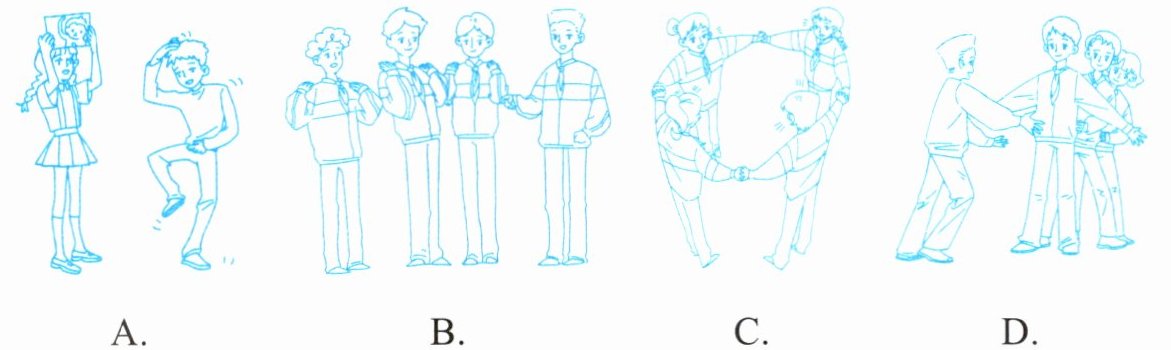
)1. Which of the following pictures shows Simon Says?(
A
)2. How will you act if you hear the instruction "Simon says, jump!"?A. Jump.
B. Stand.
C. Say "Jump!"
D. Say "Simon says, jump!"
(
D
)3. What can we learn about Simon Says from the passage?A. We can only play the game inside the room.
B. We can improve our reading skills while playing.
C. The loser of a round is Simon for the next round.
D. English learners can learn English as well as have fun.
4. Do you like the game Simon Says? Why or why not?
One possible version: Yes, I like it, because I can not only have fun, but also learn and practise English.
答案
Ⅲ. 1. B 2. A 3. D
4. One possible version: Yes, I like it, because I can not only have fun, but also learn and practise English.
4. One possible version: Yes, I like it, because I can not only have fun, but also learn and practise English.
解析
【分析】
这是一道关于“Simon Says”游戏的阅读理解题,解题时需要先通读文章,明确游戏规则和相关特点,再逐一对应题目作答:
1. 第1题:要结合Simon Says的游戏核心——有一个人作为Simon发指令,其他人根据指令是否有“Simon says”来做动作,对比四张图片,找出符合这一形式的图。
2. 第2题:根据文章里的规则,当指令开头有“Simon says”时,需要按照指令做动作,直接对应选项即可。
3. 第3题:需要逐个分析选项,和原文内容对比,排除不符合的选项,选出正确的描述。
4. 第4题:是开放性题目,结合文章里游戏的好处,比如能学英语又能玩得开心,合理表达自己的喜好和原因即可。
【解析】
1. 第1题:Simon Says游戏需要有一名玩家作为Simon发布指令,其他玩家根据指令行动。观察图片:
A图是两人各自做不同动作,没有指令发布者,不符合;
B图是一名类似Simon的人给其他玩家发指令,其他人做出对应动作,符合游戏形式;
C图是玩家围成圈自主互动,没有Simon指令环节,不符合;
D图是玩家拉扯,和游戏规则无关,不符合。所以选B。
2. 第2题:根据文章中“The key is to listen for 'Simon says' at the start of each instruction. For example, if Simon says, 'Simon says, touch your nose!', you should touch your nose.”可知,当指令开头有“Simon says”时,要按照指令做动作,所以听到“Simon says, jump!”应该跳,选A。
3. 第3题:
A选项:文中提到“you can play it anywhere with friends”,不是只能在室内,错误;
B选项:文中说“Simon Says is a fun way to practise your listening skills”,不是提高阅读技能,错误;
C选项:文中说“If you want to win the game, you should be the last player. And then you become Simon for the next round.”是赢的人当下一轮Simon,不是输的人,错误;
D选项:文中提到游戏能练习听力、学语法,还能玩得开心,符合“English learners can learn English as well as have fun”,正确。所以选D。
4. 第4题:这是开放性题目,可结合游戏的优势作答,比如:Yes, I like it, because I can not only have fun, but also learn and practise English.
【答案】
1. B
2. A
3. D
4. One possible version: Yes, I like it, because I can not only have fun, but also learn and practise English.
【知识点】
1. 细节理解
2. 规则运用
3. 开放表达
【点评】
本题围绕趣味英语游戏展开,既考查学生对文章细节的捕捉理解能力,也结合实际语言场景,开放性题目能锻炼学生语言组织表达能力,让学生体会英语学习的趣味性。
【难度系数】
0.7
这是一道关于“Simon Says”游戏的阅读理解题,解题时需要先通读文章,明确游戏规则和相关特点,再逐一对应题目作答:
1. 第1题:要结合Simon Says的游戏核心——有一个人作为Simon发指令,其他人根据指令是否有“Simon says”来做动作,对比四张图片,找出符合这一形式的图。
2. 第2题:根据文章里的规则,当指令开头有“Simon says”时,需要按照指令做动作,直接对应选项即可。
3. 第3题:需要逐个分析选项,和原文内容对比,排除不符合的选项,选出正确的描述。
4. 第4题:是开放性题目,结合文章里游戏的好处,比如能学英语又能玩得开心,合理表达自己的喜好和原因即可。
【解析】
1. 第1题:Simon Says游戏需要有一名玩家作为Simon发布指令,其他玩家根据指令行动。观察图片:
A图是两人各自做不同动作,没有指令发布者,不符合;
B图是一名类似Simon的人给其他玩家发指令,其他人做出对应动作,符合游戏形式;
C图是玩家围成圈自主互动,没有Simon指令环节,不符合;
D图是玩家拉扯,和游戏规则无关,不符合。所以选B。
2. 第2题:根据文章中“The key is to listen for 'Simon says' at the start of each instruction. For example, if Simon says, 'Simon says, touch your nose!', you should touch your nose.”可知,当指令开头有“Simon says”时,要按照指令做动作,所以听到“Simon says, jump!”应该跳,选A。
3. 第3题:
A选项:文中提到“you can play it anywhere with friends”,不是只能在室内,错误;
B选项:文中说“Simon Says is a fun way to practise your listening skills”,不是提高阅读技能,错误;
C选项:文中说“If you want to win the game, you should be the last player. And then you become Simon for the next round.”是赢的人当下一轮Simon,不是输的人,错误;
D选项:文中提到游戏能练习听力、学语法,还能玩得开心,符合“English learners can learn English as well as have fun”,正确。所以选D。
4. 第4题:这是开放性题目,可结合游戏的优势作答,比如:Yes, I like it, because I can not only have fun, but also learn and practise English.
【答案】
1. B
2. A
3. D
4. One possible version: Yes, I like it, because I can not only have fun, but also learn and practise English.
【知识点】
1. 细节理解
2. 规则运用
3. 开放表达
【点评】
本题围绕趣味英语游戏展开,既考查学生对文章细节的捕捉理解能力,也结合实际语言场景,开放性题目能锻炼学生语言组织表达能力,让学生体会英语学习的趣味性。
【难度系数】
0.7
