

 登录
登录
2. 根据句意,选择合适的单词填空。
(1) Mary (have/has) some noodles for breakfast.
(2) You (must/mustn’t) look at the traffic lights and wait for the green man. You (must/mustn’t) play football on the road.
(3) The lion was (sadly/angry) and wanted to (eat/help) the mouse.
(4) Wang Bing always puts his things in order. His room is clean and (messy/tidy).
(5) Mike gets up (at/in) seven thirty (at/in) the morning.
(1) Mary (have/has) some noodles for breakfast.
(2) You (must/mustn’t) look at the traffic lights and wait for the green man. You (must/mustn’t) play football on the road.
(3) The lion was (sadly/angry) and wanted to (eat/help) the mouse.
(4) Wang Bing always puts his things in order. His room is clean and (messy/tidy).
(5) Mike gets up (at/in) seven thirty (at/in) the morning.
答案
(1) has
(2) must, mustn’t
(3) angry, eat
(4) tidy
(5) at, in
(2) must, mustn’t
(3) angry, eat
(4) tidy
(5) at, in
解析
(1) 主语Mary为第三人称单数,动词用第三人称单数形式has。
(2) 根据交通规则"必须看红绿灯等绿灯",故填must;"禁止在马路上踢足球",故填mustn't。
(3) 形容词作表语,根据句意"狮子很生气",故填angry;"想吃老鼠",故填eat。
(4) 根据前句"东西摆放有序",房间应"整洁",故填tidy。
(5) 具体时间点用at,在早上用in。
(2) 根据交通规则"必须看红绿灯等绿灯",故填must;"禁止在马路上踢足球",故填mustn't。
(3) 形容词作表语,根据句意"狮子很生气",故填angry;"想吃老鼠",故填eat。
(4) 根据前句"东西摆放有序",房间应"整洁",故填tidy。
(5) 具体时间点用at,在早上用in。
3. 看图,完成对话。
(1) A: How can I cross the busy ?
B: First, you look for a zebra crossing.
A: Anything else?
B: Then, you look at the traffic and wait for the .
A: Thank you!
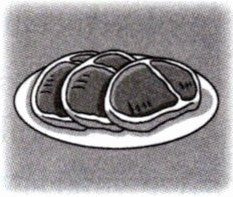
(2) A: What you for dinner?
B: I often have some and . Sometimes I have some rice. What you?
A: I often have some meat, vegetables and fruits.
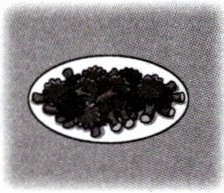
B: You have a .
(1) A: How can I cross the busy ?
B: First, you look for a zebra crossing.
A: Anything else?
B: Then, you look at the traffic and wait for the .
A: Thank you!
(2) A: What you for dinner?
B: I often have some and . Sometimes I have some rice. What you?
A: I often have some meat, vegetables and fruits.
B: You have a .
答案
(1) road; should; should; lights; green light
(2) do; have; meat; vegetables; about; balanced diet
(2) do; have; meat; vegetables; about; balanced diet
解析
(1) 图中显示过马路场景,第一空填“road”;“应该”用“should”;“交通灯”是“traffic lights”;“绿灯”是“green light”。
(2) 询问晚餐吃什么用“What do you have for dinner?”;图中有肉和蔬菜,填“meat”“vegetables”;“What about you?”是固定表达;“均衡的饮食”是“balanced diet”。
(2) 询问晚餐吃什么用“What do you have for dinner?”;图中有肉和蔬菜,填“meat”“vegetables”;“What about you?”是固定表达;“均衡的饮食”是“balanced diet”。
1. 为了成为一名好学生,我们该怎样做呢?试着写一写吧!
答案
To be a good student, we should:
1. Work hard at our lessons.
2. Help classmates.
3. Obey school rules.
4. Be polite to teachers.
1. Work hard at our lessons.
2. Help classmates.
3. Obey school rules.
4. Be polite to teachers.
2. 采访一下你的同学和好朋友,如何做一名好学生?完成下面的句子。
A good student .
A good student .
A good student .
A good student .
A good student .
A good student .
答案
A good student listens carefully in class.
A good student finishes homework on time.
A good student helps classmates.
A good student finishes homework on time.
A good student helps classmates.
