

 登录
登录
3 Read Li Yue’s travel blog. 阅读李悦的旅行博客。
Savouring the Three-Course Tea in Yunnan:
A cultural experience
Yunnan has always fascinated me — a land of diverse ethnic cultures and beautiful landscapes. During my visit in a quiet Bai village, I discovered a remarkable local tradition: the Three-Course Tea of the Bai ethnic group.
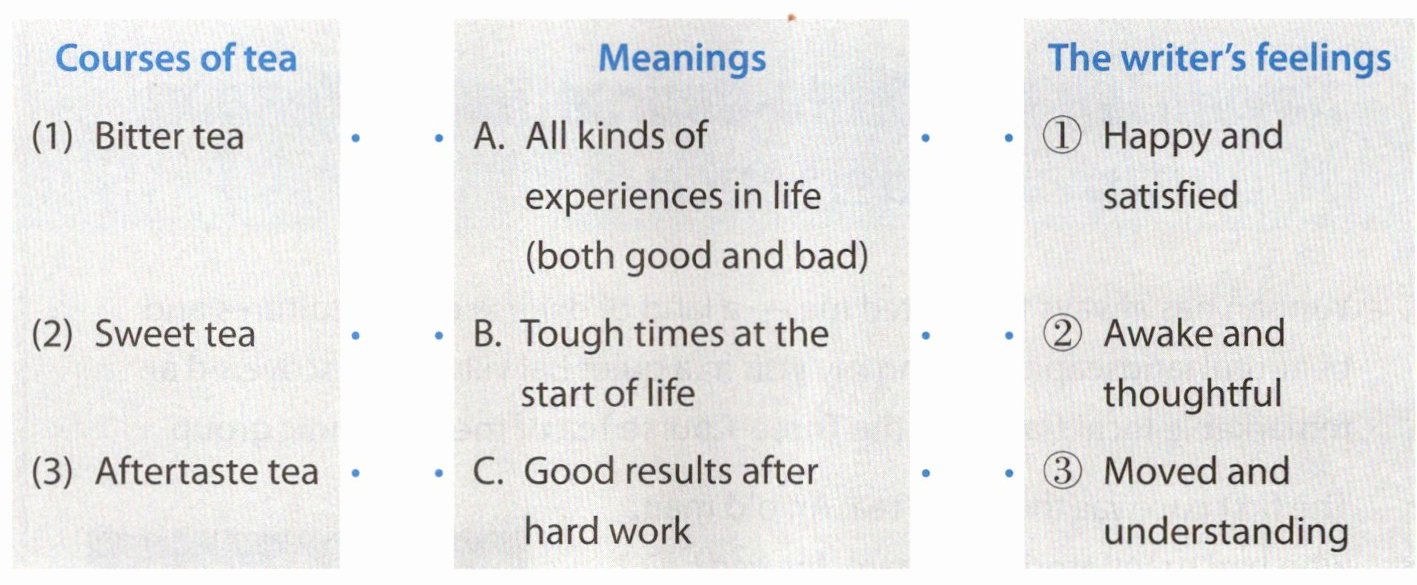
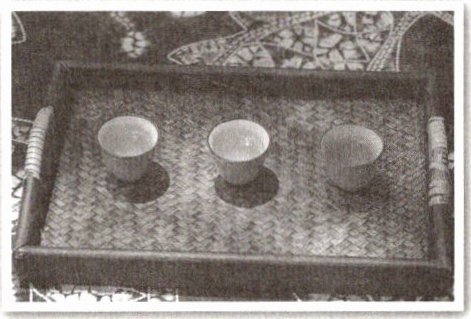
The first cup was the bitter tea. An old man, who had many stories to share, brewed (沏) the tea in a traditional pot. He handed me a small cup and said, “This bitter tea is like the beginning of life. We all have to go through tough times.” I took a small sip. The bitter taste was strong, but it woke me up — difficulties in life help us grow.
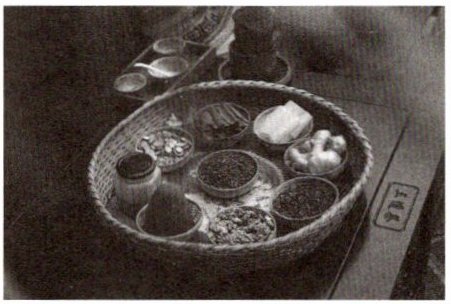
Next came the sweet tea. Its light smell filled the room, and its warm, gentle sweetness brought a smile to my face. The old man explained that it stood for the sweet rewards of hard work, like joy after a long, tiring journey.
The last cup was the aftertaste tea. Made with various herbs and spices, it had a rich flavour that stayed on my tongue. It carries the meaning of reflecting on life’s journey. Just as the tea leaves a long, gentle taste, it reminds us to cherish our memories and lessons. The old man sat beside me and told his story. He learned wood carving from his father. When he was young, it was hard to learn — he even hurt his hands sometimes. That was like the bitter tea. But he kept going and taught young people. Some came to love it — that was the sweet tea. Now he still passes on the old skills and enjoys the peace and meaning of his life’s work. This is just like the aftertaste tea: calm, meaningful, and full of lasting sweetness.
When I left the village, I took home more than tea memories — I gained a true appreciation for the Bai people’s wisdom and kindness.
3-1 Match the courses of tea with their meanings and the writer’s feelings. 将每道茶与其含义及作者的感受连线配对。
3-2 Choose the best answer. 选择最恰当的答案。
(1) Why has Yunnan always fascinated the writer?
A. Because it has many modern cities.
B. It has wonderful sights and colourful cultures.
C. It is well-known for several kinds of tea.
D. Because it is famous for wood carving all over the world.
(2) Why did the old man say his wood carving experience was like the bitter tea?
A. Because he disliked wood carving when he was young.
B. Because learning wood carving was hard and he even got hurt sometimes.
C. Because no one wanted to learn wood carving from him.
D. Because his father forced him to learn wood carving.
(3) What can we infer from the old man’s story about the sweet tea?
A. The sweet tea is the most popular drink in the Bai village.
B. The sweet tea carries deep feelings for home and family.
C. Keeping and passing on skills can bring great joy.
D. The sweet tea is mainly for young people to drink.
(4) What is the last cup of tea like according to the blog?
A. Peaceful and valuable.
B. Sweet and soft.
C. Bitter and strong.
D. Easy and light.
(5) What can we infer from the blog about the Three-Course Tea?
A. It is mainly prepared to welcome tourists to the Bai village.
B. Its cultural meaning is not as important as its special taste.
C. It can be experienced in the old man’s simple home.
D. It carries the Bai people’s wisdom and life philosophy.
3-3 Design two English slogans for the Bai people’s Three-Course Tea. Keep them simple and easy to understand. 为白族三道茶设计两句英文宣传语,要求简洁易懂。
e.g. Three cups of tea, a life of wisdom.
(1)
(2)
3-4 Answer the question. 回答问题。
Which cup of tea is like your life now? Give the reasons.
Savouring the Three-Course Tea in Yunnan:
A cultural experience
Yunnan has always fascinated me — a land of diverse ethnic cultures and beautiful landscapes. During my visit in a quiet Bai village, I discovered a remarkable local tradition: the Three-Course Tea of the Bai ethnic group.
The first cup was the bitter tea. An old man, who had many stories to share, brewed (沏) the tea in a traditional pot. He handed me a small cup and said, “This bitter tea is like the beginning of life. We all have to go through tough times.” I took a small sip. The bitter taste was strong, but it woke me up — difficulties in life help us grow.
Next came the sweet tea. Its light smell filled the room, and its warm, gentle sweetness brought a smile to my face. The old man explained that it stood for the sweet rewards of hard work, like joy after a long, tiring journey.
The last cup was the aftertaste tea. Made with various herbs and spices, it had a rich flavour that stayed on my tongue. It carries the meaning of reflecting on life’s journey. Just as the tea leaves a long, gentle taste, it reminds us to cherish our memories and lessons. The old man sat beside me and told his story. He learned wood carving from his father. When he was young, it was hard to learn — he even hurt his hands sometimes. That was like the bitter tea. But he kept going and taught young people. Some came to love it — that was the sweet tea. Now he still passes on the old skills and enjoys the peace and meaning of his life’s work. This is just like the aftertaste tea: calm, meaningful, and full of lasting sweetness.
When I left the village, I took home more than tea memories — I gained a true appreciation for the Bai people’s wisdom and kindness.
3-1 Match the courses of tea with their meanings and the writer’s feelings. 将每道茶与其含义及作者的感受连线配对。
3-2 Choose the best answer. 选择最恰当的答案。
(1) Why has Yunnan always fascinated the writer?
A. Because it has many modern cities.
B. It has wonderful sights and colourful cultures.
C. It is well-known for several kinds of tea.
D. Because it is famous for wood carving all over the world.
(2) Why did the old man say his wood carving experience was like the bitter tea?
A. Because he disliked wood carving when he was young.
B. Because learning wood carving was hard and he even got hurt sometimes.
C. Because no one wanted to learn wood carving from him.
D. Because his father forced him to learn wood carving.
(3) What can we infer from the old man’s story about the sweet tea?
A. The sweet tea is the most popular drink in the Bai village.
B. The sweet tea carries deep feelings for home and family.
C. Keeping and passing on skills can bring great joy.
D. The sweet tea is mainly for young people to drink.
(4) What is the last cup of tea like according to the blog?
A. Peaceful and valuable.
B. Sweet and soft.
C. Bitter and strong.
D. Easy and light.
(5) What can we infer from the blog about the Three-Course Tea?
A. It is mainly prepared to welcome tourists to the Bai village.
B. Its cultural meaning is not as important as its special taste.
C. It can be experienced in the old man’s simple home.
D. It carries the Bai people’s wisdom and life philosophy.
3-3 Design two English slogans for the Bai people’s Three-Course Tea. Keep them simple and easy to understand. 为白族三道茶设计两句英文宣传语,要求简洁易懂。
e.g. Three cups of tea, a life of wisdom.
(1)
Three teas, one meaningful life.
(2)
Taste Three-Course Tea, know life’s wisdom.
3-4 Answer the question. 回答问题。
Which cup of tea is like your life now? Give the reasons.
The sweet tea is like my life now. I have been working hard on my English lately, reciting words every morning and doing reading exercises after school.
Last week, I did well in the test, which made me really happy. This sweet moment is just like the sweet tea — it comes after all my hard work,
and I truly feel the joy of harvest from my efforts.
答案
3-1
(1) B ② (2) C ① (3) A ③
3-2
(1) B (2) B (3) C (4) A (5) D
3-3
(Answers may vary.)
(1) Three teas, one meaningful life.
(2) Taste Three-Course Tea, know life’s wisdom.
3-4
(Answers may vary.)
The sweet tea is like my life now. I have been working hard on my English lately, reciting words every morning and doing reading exercises after school. Last week, I did well in the test, which made me really happy. This sweet moment is just like the sweet tea — it comes after all my hard work, and I truly feel the joy of harvest from my efforts.
(1) B ② (2) C ① (3) A ③
3-2
(1) B (2) B (3) C (4) A (5) D
3-3
(Answers may vary.)
(1) Three teas, one meaningful life.
(2) Taste Three-Course Tea, know life’s wisdom.
3-4
(Answers may vary.)
The sweet tea is like my life now. I have been working hard on my English lately, reciting words every morning and doing reading exercises after school. Last week, I did well in the test, which made me really happy. This sweet moment is just like the sweet tea — it comes after all my hard work, and I truly feel the joy of harvest from my efforts.
解析
【分析】
本题是关于白族三道茶的英语阅读理解题,包含配对、单项选择、标语设计、开放回答四类题型。解题思路如下:
1. 3-1配对题:需回到原文对应段落,分别查找三道茶(苦茶、甜茶、回味茶)的含义,将茶与对应含义、作者感受匹配;
2. 3-2选择题:每道题需定位原文对应语句,通过细节理解、推理判断选出正确答案;
3. 3-3标语设计:结合三道茶蕴含的人生哲理,用简洁易懂的英文创作,符合示例的结构特点;
4. 3-4开放题:结合自身生活经历,对应三道茶的内涵,说明选择的理由,言之有理即可。
【解析】
3-1:根据原文,苦茶对应“人生初期的艰难”,甜茶对应“努力后的甜蜜回报”,回味茶对应“反思人生旅程”,匹配结果为苦茶→B,甜茶→C,回味茶→A;
3-2:
(1) 定位原文第一段“Yunnan has always fascinated me — a land of diverse ethnic cultures and beautiful landscapes.”,可知云南因多元民族文化和美景吸引作者,选B;
(2) 定位原文第四段“When he was young, it was hard to learn — he even hurt his hands sometimes. That was like the bitter tea.”,可知老人学木雕时艰难且受伤,对应苦茶,选B;
(3) 甜茶代表努力后的喜悦,结合老人传承木雕的经历,可知传承技能能带来快乐,选C;
(4) 最后一杯是回味茶,原文描述其“calm, meaningful”,对应选项A;
(5) 全文体现白族的智慧和生活哲学,选D;
3-3:结合三道茶的文化意义,设计简洁标语,如“Three teas, one meaningful life.”“Taste Three-Course Tea, know life’s wisdom.”;
3-4:选择甜茶,结合自身努力学习英语后取得好成绩的经历,对应甜茶“努力后收获喜悦”的含义,理由合理。
【答案】
3-1:(1) B ② (2) C ① (3) A ③;
3-2:(1) B (2) B (3) C (4) A (5) D;
3-3:(1) Three teas, one meaningful life. (2) Taste Three-Course Tea, know life’s wisdom.;
3-4:The sweet tea is like my life now. I have been working hard on my English lately, reciting words every morning and doing reading exercises after school. Last week, I did well in the test, which made me really happy. This sweet moment is just like the sweet tea — it comes after all my hard work, and I truly feel the joy of harvest from my efforts.
【知识点】
英语阅读理解、文化常识
【点评】
本题融合民族文化与语言考查,题型多样,既考查学生的阅读细节定位能力,又兼顾语言运用和开放性思维,能引导学生了解白族文化内涵。
【难度系数】
0.7
本题是关于白族三道茶的英语阅读理解题,包含配对、单项选择、标语设计、开放回答四类题型。解题思路如下:
1. 3-1配对题:需回到原文对应段落,分别查找三道茶(苦茶、甜茶、回味茶)的含义,将茶与对应含义、作者感受匹配;
2. 3-2选择题:每道题需定位原文对应语句,通过细节理解、推理判断选出正确答案;
3. 3-3标语设计:结合三道茶蕴含的人生哲理,用简洁易懂的英文创作,符合示例的结构特点;
4. 3-4开放题:结合自身生活经历,对应三道茶的内涵,说明选择的理由,言之有理即可。
【解析】
3-1:根据原文,苦茶对应“人生初期的艰难”,甜茶对应“努力后的甜蜜回报”,回味茶对应“反思人生旅程”,匹配结果为苦茶→B,甜茶→C,回味茶→A;
3-2:
(1) 定位原文第一段“Yunnan has always fascinated me — a land of diverse ethnic cultures and beautiful landscapes.”,可知云南因多元民族文化和美景吸引作者,选B;
(2) 定位原文第四段“When he was young, it was hard to learn — he even hurt his hands sometimes. That was like the bitter tea.”,可知老人学木雕时艰难且受伤,对应苦茶,选B;
(3) 甜茶代表努力后的喜悦,结合老人传承木雕的经历,可知传承技能能带来快乐,选C;
(4) 最后一杯是回味茶,原文描述其“calm, meaningful”,对应选项A;
(5) 全文体现白族的智慧和生活哲学,选D;
3-3:结合三道茶的文化意义,设计简洁标语,如“Three teas, one meaningful life.”“Taste Three-Course Tea, know life’s wisdom.”;
3-4:选择甜茶,结合自身努力学习英语后取得好成绩的经历,对应甜茶“努力后收获喜悦”的含义,理由合理。
【答案】
3-1:(1) B ② (2) C ① (3) A ③;
3-2:(1) B (2) B (3) C (4) A (5) D;
3-3:(1) Three teas, one meaningful life. (2) Taste Three-Course Tea, know life’s wisdom.;
3-4:The sweet tea is like my life now. I have been working hard on my English lately, reciting words every morning and doing reading exercises after school. Last week, I did well in the test, which made me really happy. This sweet moment is just like the sweet tea — it comes after all my hard work, and I truly feel the joy of harvest from my efforts.
【知识点】
英语阅读理解、文化常识
【点评】
本题融合民族文化与语言考查,题型多样,既考查学生的阅读细节定位能力,又兼顾语言运用和开放性思维,能引导学生了解白族文化内涵。
【难度系数】
0.7
