

 登录
登录
(一)连词成句。
1. in the park, play, I, basketball, often,on Saturdays (.)
2. on the weekend, do, what, you, often, do (?)
1. in the park, play, I, basketball, often,on Saturdays (.)
2. on the weekend, do, what, you, often, do (?)
答案
1. I often play basketball in the park on Saturdays.
2. What do you often do on the weekend?
2. What do you often do on the weekend?
解析
1. 这是陈述句,按照英语陈述句语序排列:主语I放在句首,频度副词often放在主语之后、动作谓语之前,动作短语为play basketball,之后依次接地点状语in the park、时间状语on Saturdays,句末用句号。
2. 这是特殊疑问句,特殊疑问词what放在句首,之后接助动词do,再接主语you,频度副词often放在主语之后、实义动词之前,实义动词为do,最后接时间状语on the weekend,句末用问号。
2. 这是特殊疑问句,特殊疑问词what放在句首,之后接助动词do,再接主语you,频度副词often放在主语之后、实义动词之前,实义动词为do,最后接时间状语on the weekend,句末用问号。
(二)选择正确的词填空。
I'm Miaomiao. I'd like to introduce my 1. ( day/weekend ). On Saturday, my brother and I can get up a little late. We eat 2. ( dinner/breakfast ) and then do homework. 3. ( On/In ) the afternoon, we 4. ( go/do ) some housework. We are 5. ( helpful /hard-working ) at home. On Sunday, I play the 6. ( pipa/basketball ). After lunch,my family 7. ( eat/have ) tea and chat together. I have a good time on the weekend.
I'm Miaomiao. I'd like to introduce my 1. ( day/weekend ). On Saturday, my brother and I can get up a little late. We eat 2. ( dinner/breakfast ) and then do homework. 3. ( On/In ) the afternoon, we 4. ( go/do ) some housework. We are 5. ( helpful /hard-working ) at home. On Sunday, I play the 6. ( pipa/basketball ). After lunch,my family 7. ( eat/have ) tea and chat together. I have a good time on the weekend.
答案
1. weekend 2. breakfast 3. In 4. do 5. helpful 6. pipa 7. have
解析
1. 根据后文分别介绍周六、周日的活动,以及文章末尾的"I have a good time on the weekend.",可知这里是要介绍自己的周末,weekend符合语境,day表示单日不符合内容。
2. 前文提到起床之后的餐食,breakfast意为早餐,dinner意为晚餐,起床后吃早餐符合逻辑,选breakfast。
3. 表示“在下午”是固定搭配in the afternoon,on通常用于具体某一天的前面,因此选In。
4. "do some housework"是固定短语,意思是做家务,go无法和some housework构成合理搭配,选do。
5. 前文提到在家做家事,说明在家里是乐于帮忙的,helpful意为乐于助人的、愿意帮忙的,hard-working意为勤奋的,helpful更贴合做家务的语境。
6. 乐器类名词前要加定冠词the,球类运动名词前不加the,空格前有the,pipa是乐器,basketball是球类,因此选pipa。
7. "have tea"是固定搭配,意为喝茶,eat后面通常接具体的固体食物,不与tea搭配,选have。
2. 前文提到起床之后的餐食,breakfast意为早餐,dinner意为晚餐,起床后吃早餐符合逻辑,选breakfast。
3. 表示“在下午”是固定搭配in the afternoon,on通常用于具体某一天的前面,因此选In。
4. "do some housework"是固定短语,意思是做家务,go无法和some housework构成合理搭配,选do。
5. 前文提到在家做家事,说明在家里是乐于帮忙的,helpful意为乐于助人的、愿意帮忙的,hard-working意为勤奋的,helpful更贴合做家务的语境。
6. 乐器类名词前要加定冠词the,球类运动名词前不加the,空格前有the,pipa是乐器,basketball是球类,因此选pipa。
7. "have tea"是固定搭配,意为喝茶,eat后面通常接具体的固体食物,不与tea搭配,选have。
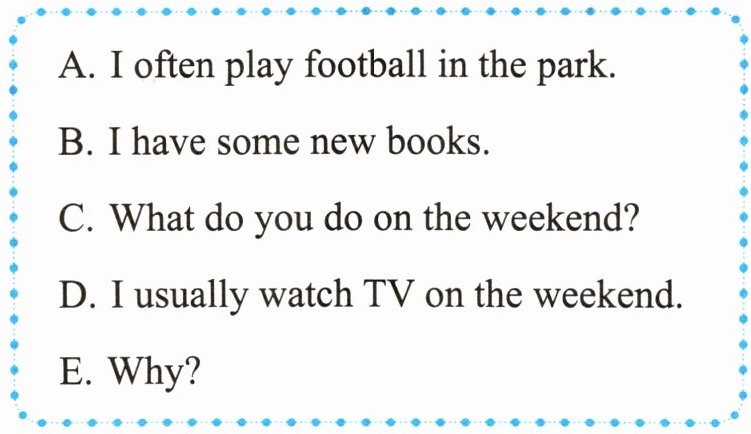
(三)小朋友们如何解决生活中的小意外呢?选择合适的句子补全对话。
Mike: Hi, Sarah!1.
Sarah: I usually go hiking with my mum on the weekend. But I can’t go this weekend.
Mike: 2.
Sarah: Because it will rain this weekend.
Mike: Really? 3. But I can’t play this weekend.
Joe: 4. But my TV doesn’t work(运行).
Chen Jie: 5. Why don’t we read books together?
Mike & Joe: Good idea!
Mike: Hi, Sarah!1.
Sarah: I usually go hiking with my mum on the weekend. But I can’t go this weekend.
Mike: 2.
Sarah: Because it will rain this weekend.
Mike: Really? 3. But I can’t play this weekend.
Joe: 4. But my TV doesn’t work(运行).
Chen Jie: 5. Why don’t we read books together?
Mike & Joe: Good idea!
答案
1. C 2. E 3. A 4. D 5. B
解析
我们可以根据对话的上下文逻辑逐一匹配选项:
1. 第一空后Sarah回答自己周末通常和妈妈去远足,说明此处是询问对方周末的活动,对应C选项“你周末做什么?”。
2. 第二空后Sarah用Because引出原因,说明此处是询问对方这周末不能去远足的原因,对应E选项“为什么?”。
3. 第三空后Mike补充说这周末没法出去玩,说明此处是介绍自己平时常做的户外活动,对应A选项“我经常在公园踢足球”。
4. 第四空后Joe说自己的电视坏了,说明此处是介绍自己周末通常的活动是看电视,对应D选项“我周末通常看电视”。
5. 第五空后陈洁提议大家一起看书,说明此处要引出和书相关的内容,对应B选项“我有一些新书”。
1. 第一空后Sarah回答自己周末通常和妈妈去远足,说明此处是询问对方周末的活动,对应C选项“你周末做什么?”。
2. 第二空后Sarah用Because引出原因,说明此处是询问对方这周末不能去远足的原因,对应E选项“为什么?”。
3. 第三空后Mike补充说这周末没法出去玩,说明此处是介绍自己平时常做的户外活动,对应A选项“我经常在公园踢足球”。
4. 第四空后Joe说自己的电视坏了,说明此处是介绍自己周末通常的活动是看电视,对应D选项“我周末通常看电视”。
5. 第五空后陈洁提议大家一起看书,说明此处要引出和书相关的内容,对应B选项“我有一些新书”。
