

 登录
知识建构
| 序号 | 语言知识 | 语言运用 |
| ---- | ---- | ---- |
| 1 | be familiar with 和 be familiar to 的意思都是“对……熟悉”,但是当表示某物为某人所熟悉时,一般用 be familiar to sb.,当表示某人对某物、某人熟悉时,一般用 be familiar with sth. / sb.。 | ①Her voice on the phone sounded
②Are you familiar
③We
| 2 | look forward to 与 expect 两者都有“期待”的意思,但是 look forward to 意为“带着愉快的心情期待着”,而 expect 指“确信某事必将发生;确信某人必会到来而等待着”,多用于好的事物,但也可以用于坏的事物。 | ①I hardly
②I am looking forward to
| 3 | try to do sth. 与 try doing sth. 的区别:
try to do sth. 是“努力做某事”,try doing sth. 是“试着做某事”。 | ①He failed in the exam, though he
②My sister likes swimming, but she can't do it. So she tries
| 4 | mustn't 表示说话人的主观意志时,意为“不准”,表示禁止、告诫。must 的否定式回答用 needn't 或 don't have to;must 的否定形式为 must not。must 也可表示对事物的推测,意为“想必,一定”,只用于肯定句中,有把握的否定判断用 can't。 | ①— Must I clean the room?
— No, you
②You
③He must be in the classroom now.(改为否定句)
He
| 5 | 表示“禁止做某事”的表达方式:“No+n.”;“You mustn't+do”;“You aren't allowed+to do.”
如:“No shouting!”意为“禁止喧哗”。
“You mustn't go up there.”意为“你不准上去”。
“You aren't allowed to touch the exhibits.”意为“不许你触摸展品”。 | In most museums, there's no
续表
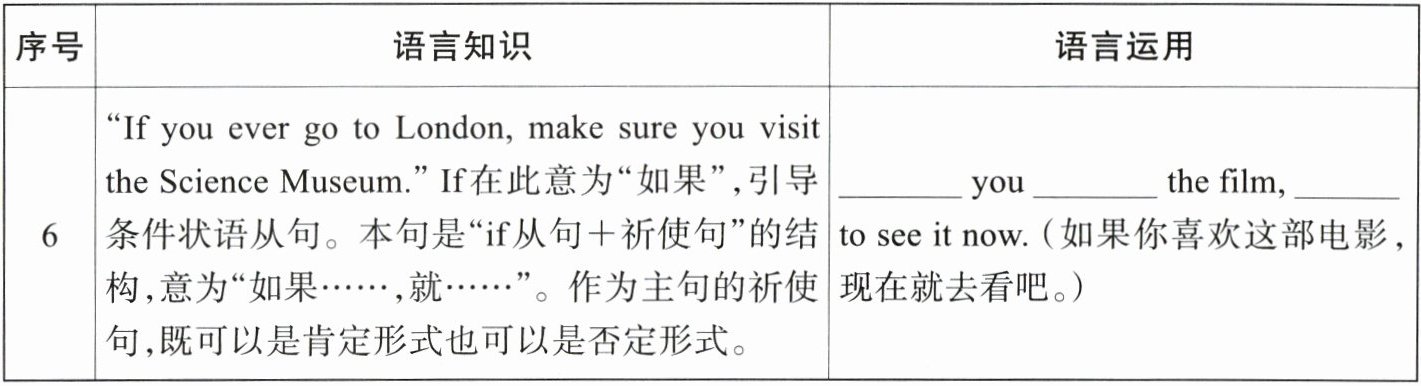
| 序号 | 语言知识 | 语言运用 |
| ---- | ---- | ---- |
| 1 | be familiar with 和 be familiar to 的意思都是“对……熟悉”,但是当表示某物为某人所熟悉时,一般用 be familiar to sb.,当表示某人对某物、某人熟悉时,一般用 be familiar with sth. / sb.。 | ①Her voice on the phone sounded
familiar
(熟悉) to me.②Are you familiar
with
these names?③We
are
very familiar with his brother. || 2 | look forward to 与 expect 两者都有“期待”的意思,但是 look forward to 意为“带着愉快的心情期待着”,而 expect 指“确信某事必将发生;确信某人必会到来而等待着”,多用于好的事物,但也可以用于坏的事物。 | ①I hardly
expected
(期待) to find you still here.②I am looking forward to
seeing
(see) him again. || 3 | try to do sth. 与 try doing sth. 的区别:
try to do sth. 是“努力做某事”,try doing sth. 是“试着做某事”。 | ①He failed in the exam, though he
tried
(努力) his best to pass it.②My sister likes swimming, but she can't do it. So she tries
swimming
(游泳) again and again. || 4 | mustn't 表示说话人的主观意志时,意为“不准”,表示禁止、告诫。must 的否定式回答用 needn't 或 don't have to;must 的否定形式为 must not。must 也可表示对事物的推测,意为“想必,一定”,只用于肯定句中,有把握的否定判断用 can't。 | ①— Must I clean the room?
— No, you
needn't / don't have to
.②You
mustn't
(禁止) play on the road.③He must be in the classroom now.(改为否定句)
He
can't
be in the classroom now. || 5 | 表示“禁止做某事”的表达方式:“No+n.”;“You mustn't+do”;“You aren't allowed+to do.”
如:“No shouting!”意为“禁止喧哗”。
“You mustn't go up there.”意为“你不准上去”。
“You aren't allowed to touch the exhibits.”意为“不许你触摸展品”。 | In most museums, there's no
shouting
(喊叫) and no running
(跑步). |续表
答案
1. familiar with are
2. expected seeing
3. tried swimming
4. needn't / don't have to mustn't can't
5. shouting, running
解析
【分析】
本题考查英语中易混短语辨析、固定搭配及情态动词的用法,需结合每个知识点的规则逐一分析:
1. 第1题考查be familiar with与be familiar to的区别:表示“某物为某人所熟悉”用“sth. be familiar to sb.”,表示“某人熟悉某物”用“sb. be familiar with sth.”;第①空“sounded(听起来)”后接形容词“熟悉的”familiar,对应“sth. be familiar to sb.”结构;第②空“你熟悉这些名字吗”对应“sb. be familiar with sth.”;第③空主语是we,对应be动词用are,构成“we be familiar with...”结构。
2. 第2题考查expect和look forward to的用法:expect是动词“期待”,后接不定式;look forward to中to是介词,后接动名词(doing形式);第①空“期待”用动词过去式expected,第②空用动名词seeing。
3. 第3题考查try to do与try doing的区别:try to do sth.是“努力做某事”,try doing sth.是“试着做某事”;第①空“努力尽最大努力”用过去式tried,第②空“试着游泳”用swimming。
4. 第4题考查情态动词must的用法:must的否定回答用needn't或don't have to;表示“禁止”用mustn't;对现在的有把握否定推测用can't。
5. 第5题考查“禁止做某事”的表达,no后接动名词表示禁止,故填动名词形式。
【解析】
1. ①“熟悉的”形容词为familiar,构成“sth. be familiar to sb.”,故填familiar;②“sb. be familiar with sth.”是固定搭配,故填with;③主语we是复数,be动词用are,故填are。
2. ①“期待”的动词是expect,结合语境用过去式expected;②look forward to中to是介词,后接动名词,故填seeing。
3. ①“努力做某事”用try to do,结合时态用过去式tried;②“试着做某事”用try doing,故填swimming。
4. ①must引导的一般疑问句否定回答为needn't或don't have to;②表示“禁止”用mustn't;③对现在的否定推测用can't。
5. no后接动名词表示禁止做某事,故填shouting、running。
【答案】
1. familiar, with, are
2. expected, seeing
3. tried, swimming
4. needn't / don't have to, mustn't, can't
5. shouting, running
【知识点】
be familiar短语用法、expect与look forward to用法、try的短语辨析、情态动词must用法
【点评】
本题围绕英语中高频易混短语及情态动词的基础用法命题,需准确区分不同短语的搭配规则,是英语学习的基础考点,注重对固定搭配和词义辨析的掌握。
【难度系数】
0.6
