

 登录
四、从方框中选择合适的句子,补全对话。(填序号)
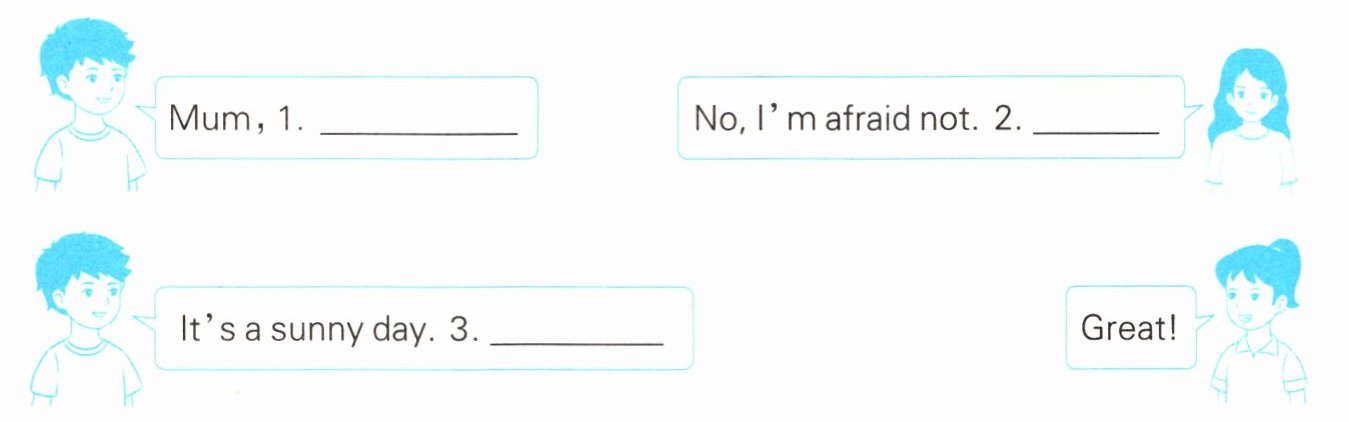
A.You should rest your eyes.
B.Let's play football in the garden, Xaomei.
C.can I play on your phone?
A.You should rest your eyes.
B.Let's play football in the garden, Xaomei.
C.can I play on your phone?
答案
1. C 2. A 3. B
解析
【分析】
这是一道补全对话题,需结合对话上下文语境选择合适句子。第1空后妈妈回答“No, I'm afraid not.”,说明此处是一般疑问句,对应选项C;第2空是妈妈拒绝后的回应,需选合理建议,对应选项A;第3空男孩提及天气晴朗,后面对方回应“Great!”,说明是提议做某事,对应选项B。
【解析】
根据对话逻辑逐一判断:1. 第1空为一般疑问句,选项C“can I play on your phone?”符合妈妈答“No”的语境,故选C;2. 妈妈拒绝男孩的请求后,应给出合理建议,选项A“You should rest your eyes.”符合语境,故选A;3. 男孩提到天气晴朗后提议活动,选项B“Let's play football in the garden, Xaomei.”符合对方答“Great!”的语境,故选B。
【答案】
1.C 2.A 3.B
【知识点】
补全对话、日常交际用语
【点评】
本题考查日常交际用语在补全对话中的运用,需结合上下文语境分析句子逻辑,是基础题型,适合基础阶段学生练习。
【难度系数】
0.3
五、日常生活中,你有哪些好习惯和坏习惯呢?请你写一写。
答案
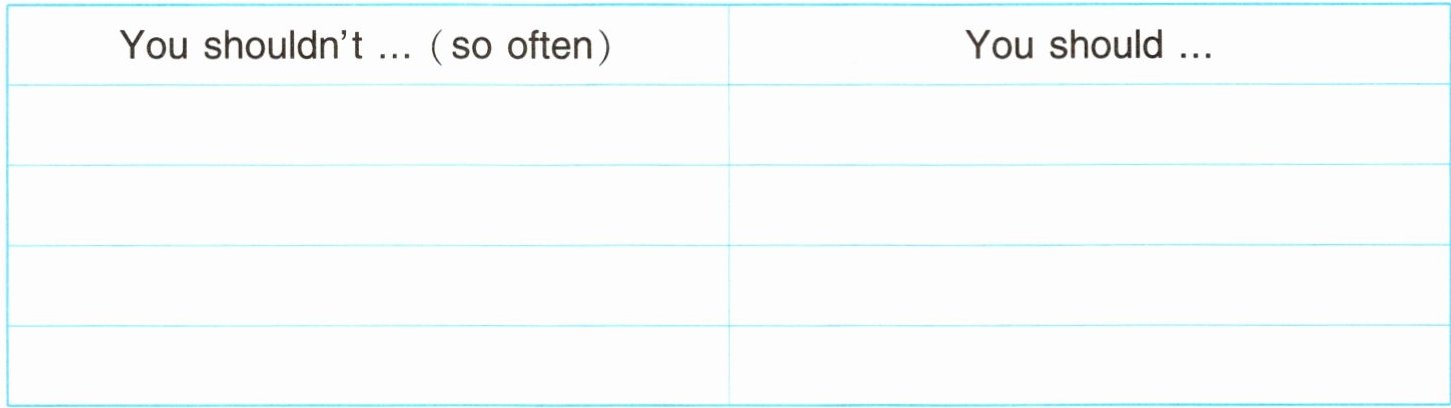
| You shouldn't ... (so often) | You should ... |
| ---- | ---- |
| You shouldn't watch TV for so long. | You should go to bed early every day. |
| You shouldn't eat junk food so often. | You should eat more vegetables and fruit. |
| You shouldn't get up late on schooldays. | You should finish your homework on time. |
| You shouldn't play mobile games so often. | You should help your parents do housework. |
解析
【分析】本题要求结合日常生活,用“You shouldn't ... (so often)”表达日常坏习惯,用“You should ...”表达日常好习惯,需选取符合生活实际的行为,确保句子语法正确,对应填入表格的左右两列。
【解析】首先明确左边列是坏习惯,使用“shouldn't + 行为”结构,可搭配“so often”体现行为频率过高的坏习惯;右边列是好习惯,使用“should + 合理日常行为”结构,选取常见的生活行为(如长时间看电视、吃垃圾食品、上学迟到等坏习惯,对应早睡、吃蔬果、按时完成作业、做家务等好习惯),整理成表格形式。
【答案】| You shouldn't ... (so often) | You should ... |
| ---- | ---- |
| You shouldn't watch TV for so long. | You should go to bed early every day. |
| You shouldn't eat junk food so often. | You should eat more vegetables and fruit. |
| You shouldn't get up late on schooldays. | You should finish your homework on time. |
| You shouldn't play mobile games so often. | You should help your parents do housework. |
【知识点】情态动词should用法、日常英语表达
【点评】本题结合日常生活场景,考察学生对情态动词should/shouldn't的运用能力,以及日常行为的英语表达,贴近生活实际,易于学生理解和作答。
【难度系数】0.3
六、说一说好习惯是如何帮助我们的。请在下面的方框中画出你心目中的好习惯,并试着用学过的英语词汇或句子描述它。
答案
示例:
1. 绘画内容:在方框中画出小朋友晚上九点按时上床睡觉,早上七点起床后做晨练的简笔画。
2. 参考英语描述:I go to bed early and get up early every day. This good habit makes me strong and healthy.
1. 绘画内容:在方框中画出小朋友晚上九点按时上床睡觉,早上七点起床后做晨练的简笔画。
2. 参考英语描述:I go to bed early and get up early every day. This good habit makes me strong and healthy.
解析
【分析】
这道题分为两步任务:一是画出自己认为的好习惯的简笔画,二是用学过的英语词汇或句子描述该好习惯。解题时,先确定一个具体的好习惯(如早睡早起),再对应画出符合该习惯的简笔画,最后用学过的简单英语句子(如一般现在时的习惯表达)完成描述,贴合题目要求即可。
【解析】
1. 绘画:选择“早睡早起”作为好习惯,画出小朋友晚上九点按时上床睡觉、早上七点起床后做晨练的简笔画;
2. 英语描述:用学过的一般现在时句子表达,如“I go to bed early and get up early every day. This good habit makes me strong and healthy.”
【答案】
示例:1. 绘画内容:在方框中画出小朋友晚上九点按时上床睡觉,早上七点起床后做晨练的简笔画。2. 参考英语描述:I go to bed early and get up early every day. This good habit makes me strong and healthy.
【知识点】
英语句子运用、好习惯的表达
【点评】
本题结合绘画与英语表达,既考查学生对良好习惯的认知,又检验学生运用所学英语知识的能力,形式灵活贴近生活,符合小学阶段的学习要求。
【难度系数】
0.6
