

 登录
登录
三、连词成句,注意首字母大写和标点。
A: John, look at my grandpa's farm.
B: 1. nice, what, farm, a (!) Are those apples?
A: Yes, I like apples. An apple a day keeps the doctor away.
B: Great! 2. that, what's, tree, the, under (?)
A: It's a cow! 3. you, like, cows, do (?)
B: Yes, I do. They are kind and cute.
A: John, look at my grandpa's farm.
B: 1. nice, what, farm, a (!) Are those apples?
A: Yes, I like apples. An apple a day keeps the doctor away.
B: Great! 2. that, what's, tree, the, under (?)
A: It's a cow! 3. you, like, cows, do (?)
B: Yes, I do. They are kind and cute.
答案
1. What a nice farm!
2. What's that under the tree?
3. Do you like cows?
2. What's that under the tree?
3. Do you like cows?
解析
这是三道英语连词成句题,结合对应句式规则,注意句首单词首字母大写、末尾标点匹配要求即可完成:
1. 第一题是what引导的感叹句,套用"What a + 形容词 + 可数名词单数!"的感叹句结构,代入给出的单词就能得到正确句子。
2. 第二题是特殊疑问句,以What's开头,后接指代事物的that,再搭配地点状语under the tree,句末用问号即可。
3. 第三题是do引导的一般疑问句,套用"助动词Do + 主语you + 动词like + 宾语cows?"的一般疑问句结构,句末用问号即可。
1. 第一题是what引导的感叹句,套用"What a + 形容词 + 可数名词单数!"的感叹句结构,代入给出的单词就能得到正确句子。
2. 第二题是特殊疑问句,以What's开头,后接指代事物的that,再搭配地点状语under the tree,句末用问号即可。
3. 第三题是do引导的一般疑问句,套用"助动词Do + 主语you + 动词like + 宾语cows?"的一般疑问句结构,句末用问号即可。
四、小小收纳师:根据图片,给丽丽提供收纳房间的建议吧!
Lily's room is nice but messy (乱的). Can you help her?
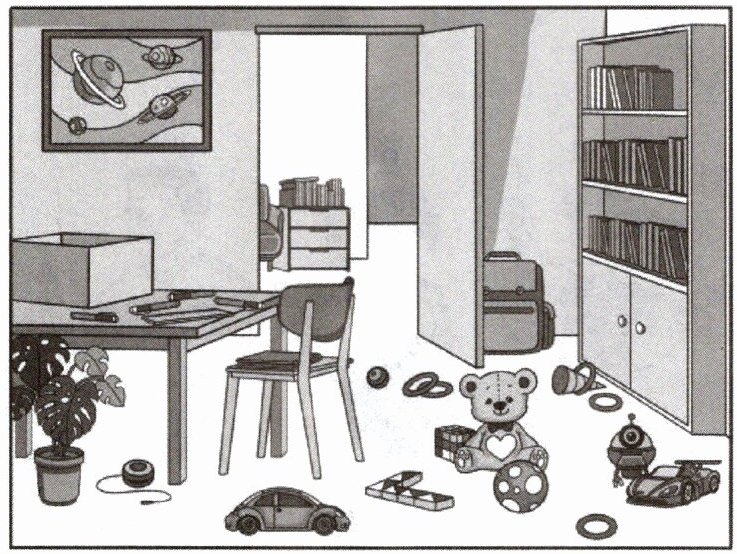
Advice (建议):
1. Your schoolbag is the door. You can your school things in it.
2. Your toys are on the . Please put them the box.
3. the floor and your desk and chair, please.
4. Please your room clean. Do your best!
Lily's room is nice but messy (乱的). Can you help her?
Advice (建议):
1. Your schoolbag is the door. You can your school things in it.
2. Your toys are on the . Please put them the box.
3. the floor and your desk and chair, please.
4. Please your room clean. Do your best!
答案
1. behind; put
2. floor; in
3. Sweep; tidy
4. keep
2. floor; in
3. Sweep; tidy
4. keep
解析
本题结合房间场景图和句意,考查三年级阶段对应的方位介词、常用动作动词的搭配,符合收纳主题的语境:
1. 第一空:观察图片可知书包在门的后方,填方位介词behind;第二空:句意为可以把学习用品放进书包里,填动词put。
2. 第三空:所有玩具都散落在地板上,填名词floor;第四空:句意为把玩具放进盒子里,填方位介词in。
3. 第五空:固定搭配sweep the floor意为扫地,祈使句首字母大写,填Sweep;第六空:句意为整理书桌和椅子,填常用动词tidy。
4. 第七空:固定搭配keep...clean意为保持……干净,填动词keep。
1. 第一空:观察图片可知书包在门的后方,填方位介词behind;第二空:句意为可以把学习用品放进书包里,填动词put。
2. 第三空:所有玩具都散落在地板上,填名词floor;第四空:句意为把玩具放进盒子里,填方位介词in。
3. 第五空:固定搭配sweep the floor意为扫地,祈使句首字母大写,填Sweep;第六空:句意为整理书桌和椅子,填常用动词tidy。
4. 第七空:固定搭配keep...clean意为保持……干净,填动词keep。
五、小小朗读者:朗读小诗,判断正(T)误(F)。
Spring (春) is green. The green grass is waving (摇晃) in the wind (风).
Summer is red. The red watermelon is juicy and yummy.
Autumn (秋) is yellow. The yellow leaves are flying in the sky.
Winter is white. The white snow is pure and nice.
()1. We can't eat watermelons in summer.
()2. We can see the snow in autumn.
()3. It's a colourful world.
Spring (春) is green. The green grass is waving (摇晃) in the wind (风).
Summer is red. The red watermelon is juicy and yummy.
Autumn (秋) is yellow. The yellow leaves are flying in the sky.
Winter is white. The white snow is pure and nice.
()1. We can't eat watermelons in summer.
()2. We can see the snow in autumn.
()3. It's a colourful world.
答案
1.F 2.F 3.T
解析
对照小诗内容逐题判断:
1. 小诗提到夏天是红色的,红色的西瓜多汁又美味,说明夏天可以吃西瓜,题目“我们夏天不能吃西瓜”和原文内容不符,判断为F。
2. 小诗提到秋天是黄色的,黄叶在空中飞舞,雪是属于冬天的事物,题目“我们在秋天能看到雪”和原文内容不符,判断为F。
3. 小诗里描写春天是绿色、夏天是红色、秋天是黄色、冬天是白色,不同季节有不同的美丽色彩,说明这是一个多姿多彩的世界,和题目描述一致,判断为T。
1. 小诗提到夏天是红色的,红色的西瓜多汁又美味,说明夏天可以吃西瓜,题目“我们夏天不能吃西瓜”和原文内容不符,判断为F。
2. 小诗提到秋天是黄色的,黄叶在空中飞舞,雪是属于冬天的事物,题目“我们在秋天能看到雪”和原文内容不符,判断为F。
3. 小诗里描写春天是绿色、夏天是红色、秋天是黄色、冬天是白色,不同季节有不同的美丽色彩,说明这是一个多姿多彩的世界,和题目描述一致,判断为T。
