

 登录
登录
二、用所给单词的适当形式填空
1. 原创As soon as the naughty boy
2. 原创The fans won't leave the ticket office until all the tickets
3. 原创
4. 2025无锡滨湖一模Make a spending plan, and your problem of wasting pocket money
5. 原创—When
—Not until last week.
6. 原创—Which picture would you like to choose as your gift for your sister?
—The one
1. 原创As soon as the naughty boy
was woken
wake up by his cousin, he started to cry loudly.2. 原创The fans won't leave the ticket office until all the tickets
are sold/have been sold
sell out. They are all looking forward to watching the performance by the superstar.3. 原创
Getting
get close to nature helps us better see the beauty around us.4. 2025无锡滨湖一模Make a spending plan, and your problem of wasting pocket money
will be dealt
deal with.5. 原创—When
were
the elderly invited
invite here to speak?—Not until last week.
6. 原创—Which picture would you like to choose as your gift for your sister?
—The one
drawn
draw by Amy.答案
二、1. was woken 2. are sold/have been sold
3. Getting 4. will be dealt
5. were; invited 6. drawn
3. Getting 4. will be dealt
5. were; invited 6. drawn
解析
【分析】
1. 第1题:先看句子时态,主句中started是一般过去式,所以as soon as引导的时间状语从句需用过去相关时态;再判断主被动关系,the naughty boy是“被叫醒”的对象,和wake是被动关系,因此要用一般过去时的被动语态,主语是单数,故用was woken。
2. 第2题:主句是一般将来时(won't leave),until引导的时间状语从句可用一般现在时表将来,也可用现在完成时强调动作完成;all the tickets是“被卖完”的对象,和sell out是被动关系,所以用被动语态,两种时态的被动形式都符合要求。
3. 第3题:句子缺少主语,动词短语作主语时要变为动名词形式,动名词短语作主语表示抽象动作,所以将get变为Getting。
4. 第4题:这是“祈使句+and+陈述句”的结构,陈述句要用一般将来时;your problem是“被解决”的对象,和deal with是被动关系,因此用一般将来时的被动语态will be dealt。
5. 第5题:答语Not until last week提示句子用一般过去时;the elderly(复数概念)是“被邀请”的对象,和invite是被动关系,一般过去时被动语态的疑问句要将be动词were提前,实义动词用过去分词invited。
6. 第6题:空缺处需作后置定语修饰the one(指代picture),picture是“被画”的对象,和draw是被动关系,用过去分词作后置定语表示被动和完成的动作,故填drawn。
【解析】
1. 第1题:
① 时态判断:主句谓语started为一般过去式,时间状语从句时态需保持一致,用过去时;
② 语态判断:主语the naughty boy是wake动作的承受者,用被动语态;
③ 结构应用:一般过去时被动语态单数形式为“was+动词过去分词”,wake的过去分词是woken,故填was woken。
2. 第2题:
① 时态规则:主句为一般将来时,until从句可用一般现在时表将来,或现在完成时强调动作完成;
② 语态判断:tickets是sell out动作的承受者,用被动语态;
③ 结构应用:一般现在时被动复数形式为are sold,现在完成时被动复数形式为have been sold,两种形式均正确。
3. 第3题:
句子成分分析:空缺处需作主语,动词作主语需转化为动名词形式,get的动名词是Getting,故填Getting。
4. 第4题:
① 句式规则:“祈使句+and+陈述句”结构中,陈述句用一般将来时;
② 语态判断:problem是deal with动作的承受者,用被动语态;
③ 结构应用:一般将来时被动语态为“will be+动词过去分词”,deal的过去分词是dealt,故填will be dealt。
5. 第5题:
① 时态判断:答语last week提示用一般过去时;
② 语态判断:the elderly是invite动作的承受者,用被动语态;
③ 句式应用:一般过去时被动语态的疑问句需将be动词were提前,invite的过去分词是invited,故填were; invited。
6. 第6题:
成分分析:空缺处作后置定语修饰the one,picture与draw是被动关系,用过去分词作定语,draw的过去分词是drawn,故填drawn。
【答案】
二、1. was woken 2. are sold/have been sold
3. Getting 4. will be dealt
5. were; invited 6. drawn
【知识点】
1. 被动语态运用
2. 非谓语动词用法
3. 时态呼应规则
【点评】
本题综合考查被动语态在不同时态、句式中的运用,以及非谓语动词作主语、定语的用法,涵盖多种时态的被动形式,需要学生准确判断主被动关系,同时掌握时态呼应和非谓语动词的基本规则,对语法综合运用能力要求较高。
【难度系数】
0.4
1. 第1题:先看句子时态,主句中started是一般过去式,所以as soon as引导的时间状语从句需用过去相关时态;再判断主被动关系,the naughty boy是“被叫醒”的对象,和wake是被动关系,因此要用一般过去时的被动语态,主语是单数,故用was woken。
2. 第2题:主句是一般将来时(won't leave),until引导的时间状语从句可用一般现在时表将来,也可用现在完成时强调动作完成;all the tickets是“被卖完”的对象,和sell out是被动关系,所以用被动语态,两种时态的被动形式都符合要求。
3. 第3题:句子缺少主语,动词短语作主语时要变为动名词形式,动名词短语作主语表示抽象动作,所以将get变为Getting。
4. 第4题:这是“祈使句+and+陈述句”的结构,陈述句要用一般将来时;your problem是“被解决”的对象,和deal with是被动关系,因此用一般将来时的被动语态will be dealt。
5. 第5题:答语Not until last week提示句子用一般过去时;the elderly(复数概念)是“被邀请”的对象,和invite是被动关系,一般过去时被动语态的疑问句要将be动词were提前,实义动词用过去分词invited。
6. 第6题:空缺处需作后置定语修饰the one(指代picture),picture是“被画”的对象,和draw是被动关系,用过去分词作后置定语表示被动和完成的动作,故填drawn。
【解析】
1. 第1题:
① 时态判断:主句谓语started为一般过去式,时间状语从句时态需保持一致,用过去时;
② 语态判断:主语the naughty boy是wake动作的承受者,用被动语态;
③ 结构应用:一般过去时被动语态单数形式为“was+动词过去分词”,wake的过去分词是woken,故填was woken。
2. 第2题:
① 时态规则:主句为一般将来时,until从句可用一般现在时表将来,或现在完成时强调动作完成;
② 语态判断:tickets是sell out动作的承受者,用被动语态;
③ 结构应用:一般现在时被动复数形式为are sold,现在完成时被动复数形式为have been sold,两种形式均正确。
3. 第3题:
句子成分分析:空缺处需作主语,动词作主语需转化为动名词形式,get的动名词是Getting,故填Getting。
4. 第4题:
① 句式规则:“祈使句+and+陈述句”结构中,陈述句用一般将来时;
② 语态判断:problem是deal with动作的承受者,用被动语态;
③ 结构应用:一般将来时被动语态为“will be+动词过去分词”,deal的过去分词是dealt,故填will be dealt。
5. 第5题:
① 时态判断:答语last week提示用一般过去时;
② 语态判断:the elderly是invite动作的承受者,用被动语态;
③ 句式应用:一般过去时被动语态的疑问句需将be动词were提前,invite的过去分词是invited,故填were; invited。
6. 第6题:
成分分析:空缺处作后置定语修饰the one,picture与draw是被动关系,用过去分词作定语,draw的过去分词是drawn,故填drawn。
【答案】
二、1. was woken 2. are sold/have been sold
3. Getting 4. will be dealt
5. were; invited 6. drawn
【知识点】
1. 被动语态运用
2. 非谓语动词用法
3. 时态呼应规则
【点评】
本题综合考查被动语态在不同时态、句式中的运用,以及非谓语动词作主语、定语的用法,涵盖多种时态的被动形式,需要学生准确判断主被动关系,同时掌握时态呼应和非谓语动词的基本规则,对语法综合运用能力要求较高。
【难度系数】
0.4
三、单项填空
1. The lights are still on in the lab. Please remember
A. turning them off B. to turn them off
C. turning off them D. to turn off them
2. I don't like this type of mobile phone. Will you show me
A. other B. others
C. the other D. another
3. Regular exercise keeps your health in good
A. shape B. order
C. condition D. situation
4. 2025镇江丹阳二模—Have you heard of the three-year Weight Management Year programme?
—Yes.
A. Take it easy.
B. My pleasure.
C. That's not the case!
D. That couldn't be better!
1. The lights are still on in the lab. Please remember
B
before leaving.A. turning them off B. to turn them off
C. turning off them D. to turn off them
2. I don't like this type of mobile phone. Will you show me
D
one, sir?A. other B. others
C. the other D. another
3. Regular exercise keeps your health in good
C
, making you stronger and ready for different challenges.A. shape B. order
C. condition D. situation
4. 2025镇江丹阳二模—Have you heard of the three-year Weight Management Year programme?
—Yes.
D
It can help everyone build a healthier future!A. Take it easy.
B. My pleasure.
C. That's not the case!
D. That couldn't be better!
答案
三、1. B 提示:remember to do sth表示"记得去做
某事";remember doing sth表示"记得做过某
事"。当动词短语由"动词+副词"构成,且宾
语为代词时,代词需置于动词和副词之间。
句意:实验室的灯还亮着。离开前请记得把
它们关掉。
2. D 提示:other其他的,形容词,后跟名词;
others其他人或物,代词;the other两者中的
另一个;another三者或三者以上中的另一个。
句意:我不喜欢这种类型的手机。先生,您能
给我看另一款吗?
3. C 提示:shape形状;order顺序;condition状
态;situation形势。句意:定期锻炼让你保持
良好的健康状态,让你更强壮,并准备好应对
不同的挑战。
4. D 提示:句意:——你听说过"体重管理年"
三年行动吗?——听说过。它再好不过了!
它能帮助每个人建设一个更健康的未来!
某事";remember doing sth表示"记得做过某
事"。当动词短语由"动词+副词"构成,且宾
语为代词时,代词需置于动词和副词之间。
句意:实验室的灯还亮着。离开前请记得把
它们关掉。
2. D 提示:other其他的,形容词,后跟名词;
others其他人或物,代词;the other两者中的
另一个;another三者或三者以上中的另一个。
句意:我不喜欢这种类型的手机。先生,您能
给我看另一款吗?
3. C 提示:shape形状;order顺序;condition状
态;situation形势。句意:定期锻炼让你保持
良好的健康状态,让你更强壮,并准备好应对
不同的挑战。
4. D 提示:句意:——你听说过"体重管理年"
三年行动吗?——听说过。它再好不过了!
它能帮助每个人建设一个更健康的未来!
解析
【分析】
1. 第1题:先区分remember的两种搭配,remember to do sth表示“记得去做未做的事”,remember doing sth表示“记得做过已完成的事”。题目中灯还亮着,说明关灯动作还没发生,因此排除含doing的A、C选项;再看“动词+副词”型短语的用法,当宾语是代词时,代词要放在动词和副词之间,turn off的宾语是them,所以应为turn them off,确定选B。
2. 第2题:明确四个选项的用法差异:other是形容词,后需接名词;others是代词,单独使用;the other特指两者中的另一个;another指三者或三者以上中的另一个。题目中想要看另一款手机,无数量限定,属于不确定数量里的另一个,故选D。
3. 第3题:结合语境判断固定搭配,in good condition是固定表达,意为“处于良好状态”,符合“保持良好健康状态”的句意;shape(形状)、order(顺序)、situation(形势)均不符合语境,因此选C。
4. 第4题:根据对话语境选交际用语,上文提到项目能帮助大家建立更健康的未来,回应需是积极认可的。Take it easy(放松点)、My pleasure(不客气)、That's not the case(并非如此)都不符合语境,只有That couldn't be better(再好不过了)符合,故选D。
【解析】
1. 第1题:remember to do sth表示“记得去做某事(动作未发生)”,remember doing sth表示“记得做过某事(动作已完成)”。由“The lights are still on”可知关灯动作尚未发生,排除A、C;“turn off”是“动词+副词”结构,宾语为代词时,代词需置于动词和副词之间,即turn them off,故选B。
2. 第2题:other作形容词,后接名词复数;others是代词,相当于“other+名词”;the other用于两者中的另一个;another用于三者或三者以上的另一个。此处指不确定数量中的另一款手机,故选D。
3. 第3题:in good condition为固定搭配,意为“处于良好状态”,契合“定期锻炼保持良好健康状态”的语境;shape、order、situation均不符合句意,故选C。
4. 第4题:A选项Take it easy意为“放松点”;B选项My pleasure意为“不客气”;C选项That's not the case意为“事实并非如此”;D选项That couldn't be better意为“再好不过了”。根据答语中对项目的认可,选D。
【答案】
1. B;2. D;3. C;4. D
【知识点】
1. 动词短语用法
2. 代词辨析
3. 交际用语
【点评】
这组单项填空聚焦英语基础核心知识点,涵盖动词搭配、代词辨析、固定短语及日常交际用语,注重结合语境理解与运用,要求学生熟练掌握相关词汇和短语的用法差异,精准判断语境来选择合适选项。
【难度系数】
0.6
1. 第1题:先区分remember的两种搭配,remember to do sth表示“记得去做未做的事”,remember doing sth表示“记得做过已完成的事”。题目中灯还亮着,说明关灯动作还没发生,因此排除含doing的A、C选项;再看“动词+副词”型短语的用法,当宾语是代词时,代词要放在动词和副词之间,turn off的宾语是them,所以应为turn them off,确定选B。
2. 第2题:明确四个选项的用法差异:other是形容词,后需接名词;others是代词,单独使用;the other特指两者中的另一个;another指三者或三者以上中的另一个。题目中想要看另一款手机,无数量限定,属于不确定数量里的另一个,故选D。
3. 第3题:结合语境判断固定搭配,in good condition是固定表达,意为“处于良好状态”,符合“保持良好健康状态”的句意;shape(形状)、order(顺序)、situation(形势)均不符合语境,因此选C。
4. 第4题:根据对话语境选交际用语,上文提到项目能帮助大家建立更健康的未来,回应需是积极认可的。Take it easy(放松点)、My pleasure(不客气)、That's not the case(并非如此)都不符合语境,只有That couldn't be better(再好不过了)符合,故选D。
【解析】
1. 第1题:remember to do sth表示“记得去做某事(动作未发生)”,remember doing sth表示“记得做过某事(动作已完成)”。由“The lights are still on”可知关灯动作尚未发生,排除A、C;“turn off”是“动词+副词”结构,宾语为代词时,代词需置于动词和副词之间,即turn them off,故选B。
2. 第2题:other作形容词,后接名词复数;others是代词,相当于“other+名词”;the other用于两者中的另一个;another用于三者或三者以上的另一个。此处指不确定数量中的另一款手机,故选D。
3. 第3题:in good condition为固定搭配,意为“处于良好状态”,契合“定期锻炼保持良好健康状态”的语境;shape、order、situation均不符合句意,故选C。
4. 第4题:A选项Take it easy意为“放松点”;B选项My pleasure意为“不客气”;C选项That's not the case意为“事实并非如此”;D选项That couldn't be better意为“再好不过了”。根据答语中对项目的认可,选D。
【答案】
1. B;2. D;3. C;4. D
【知识点】
1. 动词短语用法
2. 代词辨析
3. 交际用语
【点评】
这组单项填空聚焦英语基础核心知识点,涵盖动词搭配、代词辨析、固定短语及日常交际用语,注重结合语境理解与运用,要求学生熟练掌握相关词汇和短语的用法差异,精准判断语境来选择合适选项。
【难度系数】
0.6
四、选词填空
deal with make efforts make a big difference
hope for so that
1. Everyone in our city
2. The sick child is
3. The farming product company reduced the package size
4. Small actions like turning off lights when leaving
5. The government is making new laws
deal with make efforts make a big difference
hope for so that
1. Everyone in our city
makes efforts
to protect endangered animals before they disappear forever.2. The sick child is
hoping for
a chance to visit the zoo before the summer vacation ends.3. The farming product company reduced the package size
so that
shipping costs would be lower.4. Small actions like turning off lights when leaving
have made a big difference
to energy conservation so far.5. The government is making new laws
to deal with
air pollution caused by factories.答案
四、1. makes efforts 2. hoping for
3. so that 4. have made a big difference
5. to deal with
3. so that 4. have made a big difference
5. to deal with
解析
【分析】
1. 第一题:主语Everyone是单数第三人称,句子描述当前常态化的行为,需用一般现在时。结合“保护濒危动物”的语境,要表达“努力做某事”,因此选择短语make efforts,变形为makes efforts。
2. 第二题:句中有be动词is,结合语境“生病的孩子想要获得去动物园的机会”,需表达“希望得到”,此处用现在进行时结构,所以将hope for变为hoping for。
3. 第三题:前半句“减少包装尺寸”的目的是后半句“运费更低”,需要能引导目的状语从句的短语,so that意为“以便、为了”,符合逻辑,因此选so that。
4. 第四题:句尾的so far是现在完成时的标志词,主语Small actions是复数,结合语境“小行动对节能的作用”,make a big difference表示“产生重大影响”,所以变形为have made a big difference。
5. 第五题:制定新法律的目的是“处理工厂造成的空气污染”,deal with表示“处理、应对”,此处用不定式to deal with作目的状语,符合语境。
【解析】
1. 主语Everyone为单数第三人称,一般现在时中谓语动词用第三人称单数形式,结合语境填makes efforts。
2. 句子为现在进行时(is + 现在分词),根据语境填hoping for。
3. 此处需要引导目的状语从句的连词,so that符合逻辑,填so that。
4. so far提示用现在完成时,主语为复数,make a big difference符合语境,填have made a big difference。
5. 用不定式作目的状语,deal with符合语境,填to deal with。
【答案】
1. makes efforts
2. hoping for
3. so that
4. have made a big difference
5. to deal with
【知识点】
1. 动词短语辨析
2. 时态运用
3. 目的状语表达
【点评】
本题聚焦动词短语的辨析与灵活运用,同时结合不同时态、目的状语从句等语法点,要求学生既要掌握短语含义,又能结合语境、时态标志词和句子逻辑准确选择,对学生的语法基础和语境分析能力有一定考查。
【难度系数】
0.6
1. 第一题:主语Everyone是单数第三人称,句子描述当前常态化的行为,需用一般现在时。结合“保护濒危动物”的语境,要表达“努力做某事”,因此选择短语make efforts,变形为makes efforts。
2. 第二题:句中有be动词is,结合语境“生病的孩子想要获得去动物园的机会”,需表达“希望得到”,此处用现在进行时结构,所以将hope for变为hoping for。
3. 第三题:前半句“减少包装尺寸”的目的是后半句“运费更低”,需要能引导目的状语从句的短语,so that意为“以便、为了”,符合逻辑,因此选so that。
4. 第四题:句尾的so far是现在完成时的标志词,主语Small actions是复数,结合语境“小行动对节能的作用”,make a big difference表示“产生重大影响”,所以变形为have made a big difference。
5. 第五题:制定新法律的目的是“处理工厂造成的空气污染”,deal with表示“处理、应对”,此处用不定式to deal with作目的状语,符合语境。
【解析】
1. 主语Everyone为单数第三人称,一般现在时中谓语动词用第三人称单数形式,结合语境填makes efforts。
2. 句子为现在进行时(is + 现在分词),根据语境填hoping for。
3. 此处需要引导目的状语从句的连词,so that符合逻辑,填so that。
4. so far提示用现在完成时,主语为复数,make a big difference符合语境,填have made a big difference。
5. 用不定式作目的状语,deal with符合语境,填to deal with。
【答案】
1. makes efforts
2. hoping for
3. so that
4. have made a big difference
5. to deal with
【知识点】
1. 动词短语辨析
2. 时态运用
3. 目的状语表达
【点评】
本题聚焦动词短语的辨析与灵活运用,同时结合不同时态、目的状语从句等语法点,要求学生既要掌握短语含义,又能结合语境、时态标志词和句子逻辑准确选择,对学生的语法基础和语境分析能力有一定考查。
【难度系数】
0.6
五、根据汉语补全句子
1. 没有树木来固定土壤,我们很难成功地防治荒漠化。
Without trees to hold the soil in place,
2. 为了保护环境,垃圾在扔掉之前应该分类。
3. 购买二手物品是减少污染的好方法之一。
4. 每天节约一点水可以产生很大的影响。
5. 下周,用过的电子产品将在我们学校回收利用。
1. 没有树木来固定土壤,我们很难成功地防治荒漠化。
Without trees to hold the soil in place,
we can hardly fight desertification successfully
.2. 为了保护环境,垃圾在扔掉之前应该分类。
To protect the environment, waste should be separated before it is thrown away.
3. 购买二手物品是减少污染的好方法之一。
Buying second-hand things is one of the good ways to reduce pollution.
4. 每天节约一点水可以产生很大的影响。
Saving a little water every day can make a big difference.
5. 下周,用过的电子产品将在我们学校回收利用。
Next week, used electronic products will be recycled in our school.
答案
五、1. we can hardly fight desertification
successfully
2. To protect the environment, waste
should be separated before it is thrown
away.
3. Buying second-hand things is one of the
good ways to reduce pollution.
4. Saving a little water every day can make
a big difference.
5. Next week, used electronic products
will be recycled in our school.
successfully
2. To protect the environment, waste
should be separated before it is thrown
away.
3. Buying second-hand things is one of the
good ways to reduce pollution.
4. Saving a little water every day can make
a big difference.
5. Next week, used electronic products
will be recycled in our school.
解析
【分析】
1. 第1题:先明确句子主语为“我们”(we),“很难”用hardly表达,“防治荒漠化”是固定表达fight desertification,“成功地”是副词successfully,用来修饰动词短语fight desertification,结合英语表达习惯组织句子即可。
2. 第2题:“为了保护环境”是目的状语,用不定式To protect the environment开头;“垃圾应该被分类”需使用被动语态waste should be separated,“在扔掉之前”用before引导时间状语从句,从句中it指代waste,同样用被动语态it is thrown away,将各部分整合为符合语法的句子。
3. 第3题:“购买二手物品”在句中作主语,需转化为动名词短语Buying second-hand things;“是...的好方法之一”用one of the good ways表达,“减少污染”用不定式to reduce pollution作后置定语修饰ways,按照英语语序组合成完整句子。
4. 第4题:“每天节约一点水”作主语,用动名词短语Saving a little water every day;“产生很大影响”是固定短语make a big difference,直接按照主谓宾结构组织句子。
5. 第5题:“下周”提示句子用一般将来时,“用过的电子产品”是used electronic products,“将被回收利用”需用一般将来时的被动语态will be recycled,“在我们学校”是地点状语in our school,整合各成分形成正确句子。
【解析】
1. 根据汉语语义,确定主语we,“很难”用hardly,“防治荒漠化”为fight desertification,“成功地”successfully修饰该动词短语,因此完整句子为:we can hardly fight desertification successfully。
2. 目的状语用To protect the environment;“垃圾应该被分类”采用被动语态waste should be separated;“在扔掉之前”用before it is thrown away(it指代waste),整合后句子:To protect the environment, waste should be separated before it is thrown away.
3. 动名词短语Buying second-hand things作主语;“是减少污染的好方法之一”译为one of the good ways to reduce pollution,组合成句子:Buying second-hand things is one of the good ways to reduce pollution.
4. 动名词短语Saving a little water every day作主语;“产生很大影响”用固定短语make a big difference,句子为:Saving a little water every day can make a big difference.
5. “下周”Next week作时间状语;“用过的电子产品”used electronic products作主语;“将被回收利用”用一般将来时被动语态will be recycled;“在我们学校”in our school作地点状语,句子为:Next week, used electronic products will be recycled in our school.
【答案】
五、1. we can hardly fight desertification successfully
2. To protect the environment, waste should be separated before it is thrown away.
3. Buying second-hand things is one of the good ways to reduce pollution.
4. Saving a little water every day can make a big difference.
5. Next week, used electronic products will be recycled in our school.
【知识点】
被动语态运用、动名词作主语、固定短语搭配
【点评】
本题围绕环保主题考查英语语法与常用表达,涵盖被动语态、非谓语动词(动名词作主语)以及固定短语的使用,注重语言在实际语境中的应用,有助于提升学生用英语表达环保相关内容的能力。
【难度系数】
0.6
1. 第1题:先明确句子主语为“我们”(we),“很难”用hardly表达,“防治荒漠化”是固定表达fight desertification,“成功地”是副词successfully,用来修饰动词短语fight desertification,结合英语表达习惯组织句子即可。
2. 第2题:“为了保护环境”是目的状语,用不定式To protect the environment开头;“垃圾应该被分类”需使用被动语态waste should be separated,“在扔掉之前”用before引导时间状语从句,从句中it指代waste,同样用被动语态it is thrown away,将各部分整合为符合语法的句子。
3. 第3题:“购买二手物品”在句中作主语,需转化为动名词短语Buying second-hand things;“是...的好方法之一”用one of the good ways表达,“减少污染”用不定式to reduce pollution作后置定语修饰ways,按照英语语序组合成完整句子。
4. 第4题:“每天节约一点水”作主语,用动名词短语Saving a little water every day;“产生很大影响”是固定短语make a big difference,直接按照主谓宾结构组织句子。
5. 第5题:“下周”提示句子用一般将来时,“用过的电子产品”是used electronic products,“将被回收利用”需用一般将来时的被动语态will be recycled,“在我们学校”是地点状语in our school,整合各成分形成正确句子。
【解析】
1. 根据汉语语义,确定主语we,“很难”用hardly,“防治荒漠化”为fight desertification,“成功地”successfully修饰该动词短语,因此完整句子为:we can hardly fight desertification successfully。
2. 目的状语用To protect the environment;“垃圾应该被分类”采用被动语态waste should be separated;“在扔掉之前”用before it is thrown away(it指代waste),整合后句子:To protect the environment, waste should be separated before it is thrown away.
3. 动名词短语Buying second-hand things作主语;“是减少污染的好方法之一”译为one of the good ways to reduce pollution,组合成句子:Buying second-hand things is one of the good ways to reduce pollution.
4. 动名词短语Saving a little water every day作主语;“产生很大影响”用固定短语make a big difference,句子为:Saving a little water every day can make a big difference.
5. “下周”Next week作时间状语;“用过的电子产品”used electronic products作主语;“将被回收利用”用一般将来时被动语态will be recycled;“在我们学校”in our school作地点状语,句子为:Next week, used electronic products will be recycled in our school.
【答案】
五、1. we can hardly fight desertification successfully
2. To protect the environment, waste should be separated before it is thrown away.
3. Buying second-hand things is one of the good ways to reduce pollution.
4. Saving a little water every day can make a big difference.
5. Next week, used electronic products will be recycled in our school.
【知识点】
被动语态运用、动名词作主语、固定短语搭配
【点评】
本题围绕环保主题考查英语语法与常用表达,涵盖被动语态、非谓语动词(动名词作主语)以及固定短语的使用,注重语言在实际语境中的应用,有助于提升学生用英语表达环保相关内容的能力。
【难度系数】
0.6
六、阅读理解
2025南通海安期末Plastic waste is one of the biggest problems our planet faces. Plastic doesn't go away easily. It stays in the environment for hundreds of years, causing harm to animals, oceans, and the natural world. Every year, millions of animals suffer because of plastic. Some get sick after eating it, while others get trapped in it. And those huge "plastic islands" in the oceans just keep getting bigger.
But guess what? Scientists have found something amazing. They've found that certain plants and fungi can really "eat" plastic! In one experiment, scientists placed a plastic bottle and some fungi inside a box. After a few weeks, the fungi produced special chemicals. These chemicals slowly turned the plastic into tiny pieces. By the end of the experiment, the bottle had largely broken down, leaving behind only safe things like water and air. This shows how powerful fungi can be in fighting plastic waste.
Scientists also found other fungi and small living things in forests and mountains that can break down plastic. These little helpers live well even in bad conditions. Since there are so many of them, they're great at breaking down hard plastics.
This finding could change how we ▲ plastic. Old ways like recycling are expensive and don't always work perfectly. Using plants and fungi to get rid of plastic would cost less and be much friendlier to the environment than factories.
However, there are still problems. First, we need to grow enough of these plastic-eating fungi. And we must make sure they don't cause any new problems for nature. Also, scientists need to do more research to help these fungi work well in the real world, not just in labs.
Even with these problems, there's a lot of hope. We could create special farms in the oceans and polluted areas to grow these helpful fungi and plants. With more of them around, they can break down plastic waste faster and more effectively.
If we can make the most of these special fungi, we might finally solve the plastic pollution problem and make our earth a cleaner place. Scientists are working hard to find out the best ways to use fungi against plastic pollution in the future.
1. What did the scientists find according to their experiment in Paragraph 2?
A. Plastic pollution is quite hard to solve.
B. Fungi can really break down plastic waste.
C. People can use fungi instead of plastic.
D. Plastic will produce new chemicals.
2. Which phrase is the most suitable to be filled in " ▲ "?
A. hand out B. tidy up
C. deal with D. care about
3. According to the last paragraph, what might the writer talk about next?
A. The future use of plastic-eating fungi.
B. New ways to make our earth cleaner.
C. Other ways of solving plastic pollution.
D. Some new experiments from scientists.
4. Which of the following shows the structure of the passage?
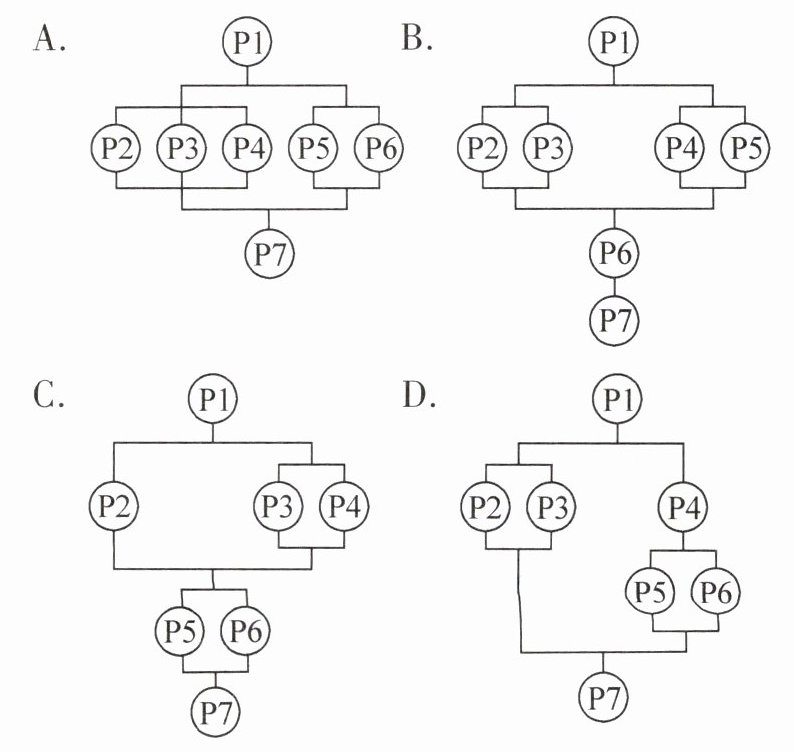
2025南通海安期末Plastic waste is one of the biggest problems our planet faces. Plastic doesn't go away easily. It stays in the environment for hundreds of years, causing harm to animals, oceans, and the natural world. Every year, millions of animals suffer because of plastic. Some get sick after eating it, while others get trapped in it. And those huge "plastic islands" in the oceans just keep getting bigger.
But guess what? Scientists have found something amazing. They've found that certain plants and fungi can really "eat" plastic! In one experiment, scientists placed a plastic bottle and some fungi inside a box. After a few weeks, the fungi produced special chemicals. These chemicals slowly turned the plastic into tiny pieces. By the end of the experiment, the bottle had largely broken down, leaving behind only safe things like water and air. This shows how powerful fungi can be in fighting plastic waste.
Scientists also found other fungi and small living things in forests and mountains that can break down plastic. These little helpers live well even in bad conditions. Since there are so many of them, they're great at breaking down hard plastics.
This finding could change how we ▲ plastic. Old ways like recycling are expensive and don't always work perfectly. Using plants and fungi to get rid of plastic would cost less and be much friendlier to the environment than factories.
However, there are still problems. First, we need to grow enough of these plastic-eating fungi. And we must make sure they don't cause any new problems for nature. Also, scientists need to do more research to help these fungi work well in the real world, not just in labs.
Even with these problems, there's a lot of hope. We could create special farms in the oceans and polluted areas to grow these helpful fungi and plants. With more of them around, they can break down plastic waste faster and more effectively.
If we can make the most of these special fungi, we might finally solve the plastic pollution problem and make our earth a cleaner place. Scientists are working hard to find out the best ways to use fungi against plastic pollution in the future.
1. What did the scientists find according to their experiment in Paragraph 2?
A. Plastic pollution is quite hard to solve.
B. Fungi can really break down plastic waste.
C. People can use fungi instead of plastic.
D. Plastic will produce new chemicals.
2. Which phrase is the most suitable to be filled in " ▲ "?
A. hand out B. tidy up
C. deal with D. care about
3. According to the last paragraph, what might the writer talk about next?
A. The future use of plastic-eating fungi.
B. New ways to make our earth cleaner.
C. Other ways of solving plastic pollution.
D. Some new experiments from scientists.
4. Which of the following shows the structure of the passage?
答案
六、【语篇导读】塑料垃圾是地球面临的重大
问题,但科学家发现某些植物和真菌能
"吃掉"塑料,这一发现可能会改变处理
塑料的方式,但目前仍存在一些问题,不
过人们对其在解决塑料污染方面抱有
希望。
1. B 提示:细节理解题。根据第二段中"In
one experiment, scientists placed a plastic bottle
and some fungi inside a box... By the end of the
experiment, the bottle had largely broken down"
可知,科学家将一个塑料瓶和真菌放入盒子
中,实验结束时,塑料瓶几乎消失了。由此可
知,科学家发现真菌能分解塑料。
2. C 提示:推理判断题。hand out分发;tidy
up整理;deal with处理;care about关心。下
文"Using plants and fungi to get rid of plastic
would cost less and be much friendlier to the
environment than factories."介绍了利用真菌
处理塑料成本更低,比工厂处理更环保。结
合选项可推断,deal with最符合语境。
3. A 提示:推理判断题。根据最后一段中
"Scientists are working hard to find out the best
ways to use fungi against plastic pollution in the
future."可知,科学家正努力研究未来利用真
菌对抗塑料污染的最佳方式。结合选项可推
断,选项A"食用塑料的真菌的未来使用"是
接下来作者可能讨论的话题。
4. A 提示:篇章结构题。通读全文可知,第一
段提出问题,说明塑料污染的严重性;第二至
四段介绍真菌能降解塑料这一科学发现;第
五、六段介绍真菌降解塑料存在的问题及解
决方法;第七段总结全文。因此,选项A的结
构图与文章相符。
问题,但科学家发现某些植物和真菌能
"吃掉"塑料,这一发现可能会改变处理
塑料的方式,但目前仍存在一些问题,不
过人们对其在解决塑料污染方面抱有
希望。
1. B 提示:细节理解题。根据第二段中"In
one experiment, scientists placed a plastic bottle
and some fungi inside a box... By the end of the
experiment, the bottle had largely broken down"
可知,科学家将一个塑料瓶和真菌放入盒子
中,实验结束时,塑料瓶几乎消失了。由此可
知,科学家发现真菌能分解塑料。
2. C 提示:推理判断题。hand out分发;tidy
up整理;deal with处理;care about关心。下
文"Using plants and fungi to get rid of plastic
would cost less and be much friendlier to the
environment than factories."介绍了利用真菌
处理塑料成本更低,比工厂处理更环保。结
合选项可推断,deal with最符合语境。
3. A 提示:推理判断题。根据最后一段中
"Scientists are working hard to find out the best
ways to use fungi against plastic pollution in the
future."可知,科学家正努力研究未来利用真
菌对抗塑料污染的最佳方式。结合选项可推
断,选项A"食用塑料的真菌的未来使用"是
接下来作者可能讨论的话题。
4. A 提示:篇章结构题。通读全文可知,第一
段提出问题,说明塑料污染的严重性;第二至
四段介绍真菌能降解塑料这一科学发现;第
五、六段介绍真菌降解塑料存在的问题及解
决方法;第七段总结全文。因此,选项A的结
构图与文章相符。
解析
【分析】
1. 第1题:属于细节理解题,解题思路为定位到第二段的实验内容,提取实验得出的核心结论,匹配对应选项即可。
2. 第2题:属于推理判断题,解题时需结合上下文语境,分析空格后介绍的“利用真菌处理塑料”相关内容,对比选项短语的词义,选出最贴合语境的表述。
3. 第3题:属于推理判断题,根据最后一段末尾的提示信息,紧扣“未来利用真菌对抗塑料污染”这一核心方向,推断作者接下来可能讨论的内容。
4. 第4题:属于篇章结构题,先梳理文章段落层次:第一段提出塑料污染的问题;第二至四段介绍真菌能降解塑料的发现;第五、六段讲该方法存在的问题及解决方向;第七段总结全文,再对应选项中的结构示意图。
【解析】
1. 第1题:细节理解题。根据第二段中"In one experiment, scientists placed a plastic bottle and some fungi inside a box... By the end of the experiment, the bottle had largely broken down"可知,科学家的实验表明真菌能够分解塑料垃圾,故选B。
2. 第2题:推理判断题。hand out意为“分发”;tidy up意为“整理”;deal with意为“处理”;care about意为“关心”。下文提到利用植物和真菌处理塑料比工厂处理成本更低、更环保,结合语境可知,此处是说这一发现可能会改变我们处理塑料的方式,deal with最符合语境,故选C。
3. 第3题:推理判断题。根据最后一段中"Scientists are working hard to find out the best ways to use fungi against plastic pollution in the future."可知,科学家正致力于研究未来利用真菌对抗塑料污染的最佳方式,由此可推断作者接下来可能会讨论食塑真菌的未来应用,故选A。
4. 第4题:篇章结构题。通读全文:第一段提出塑料污染的严峻问题;第二至四段介绍真菌可降解塑料的科学发现;第五、六段说明该方法存在的问题及相关解决思路;第七段总结全文,对未来进行展望。选项A的结构示意图与文章结构相符,故选A。
【答案】
1. B
2. C
3. A
4. A
【知识点】
细节理解题、推理判断题、篇章结构题
【点评】
本文围绕塑料污染问题展开,介绍了真菌降解塑料的新发现,题目涵盖阅读理解常见题型,既考查学生定位细节信息的能力,也考查学生推理语境、梳理篇章结构的能力,有助于提升学生的综合阅读素养。
【难度系数】
0.6
1. 第1题:属于细节理解题,解题思路为定位到第二段的实验内容,提取实验得出的核心结论,匹配对应选项即可。
2. 第2题:属于推理判断题,解题时需结合上下文语境,分析空格后介绍的“利用真菌处理塑料”相关内容,对比选项短语的词义,选出最贴合语境的表述。
3. 第3题:属于推理判断题,根据最后一段末尾的提示信息,紧扣“未来利用真菌对抗塑料污染”这一核心方向,推断作者接下来可能讨论的内容。
4. 第4题:属于篇章结构题,先梳理文章段落层次:第一段提出塑料污染的问题;第二至四段介绍真菌能降解塑料的发现;第五、六段讲该方法存在的问题及解决方向;第七段总结全文,再对应选项中的结构示意图。
【解析】
1. 第1题:细节理解题。根据第二段中"In one experiment, scientists placed a plastic bottle and some fungi inside a box... By the end of the experiment, the bottle had largely broken down"可知,科学家的实验表明真菌能够分解塑料垃圾,故选B。
2. 第2题:推理判断题。hand out意为“分发”;tidy up意为“整理”;deal with意为“处理”;care about意为“关心”。下文提到利用植物和真菌处理塑料比工厂处理成本更低、更环保,结合语境可知,此处是说这一发现可能会改变我们处理塑料的方式,deal with最符合语境,故选C。
3. 第3题:推理判断题。根据最后一段中"Scientists are working hard to find out the best ways to use fungi against plastic pollution in the future."可知,科学家正致力于研究未来利用真菌对抗塑料污染的最佳方式,由此可推断作者接下来可能会讨论食塑真菌的未来应用,故选A。
4. 第4题:篇章结构题。通读全文:第一段提出塑料污染的严峻问题;第二至四段介绍真菌可降解塑料的科学发现;第五、六段说明该方法存在的问题及相关解决思路;第七段总结全文,对未来进行展望。选项A的结构示意图与文章结构相符,故选A。
【答案】
1. B
2. C
3. A
4. A
【知识点】
细节理解题、推理判断题、篇章结构题
【点评】
本文围绕塑料污染问题展开,介绍了真菌降解塑料的新发现,题目涵盖阅读理解常见题型,既考查学生定位细节信息的能力,也考查学生推理语境、梳理篇章结构的能力,有助于提升学生的综合阅读素养。
【难度系数】
0.6
