

 登录
登录
【拓展篇】
根据短文内容,完成下列任务。
The Clever Fox and the Greedy Wolf
One day, a wolf saw a fox carrying a fish by the river. “Where did you get the fish?” asked the wolf. “I caught it in the river,” said the fox. “How?” asked the wolf. The fox smiled and said, “I put my tail into the water. The fish bit it, and I pulled it out!” The wolf ran to the river. He put his tail into the cold water and waited. He waited and waited, but no fish came. His tail was frozen in the ice! In the morning, some farmers saw him and chased(驱逐) him away. The foolish wolf learned his lesson:Don’t believe everything you hear!
任务一:根据故事内容,用“/”将文章划分成三部分。
任务二:根据故事内容,回答下列问题。
1. Who are the characters in this story?
2. Where did the story happen?
3. What was the wolf's problem?
4. How did the fox cheat the wolf?
5. What did the wolf learn?
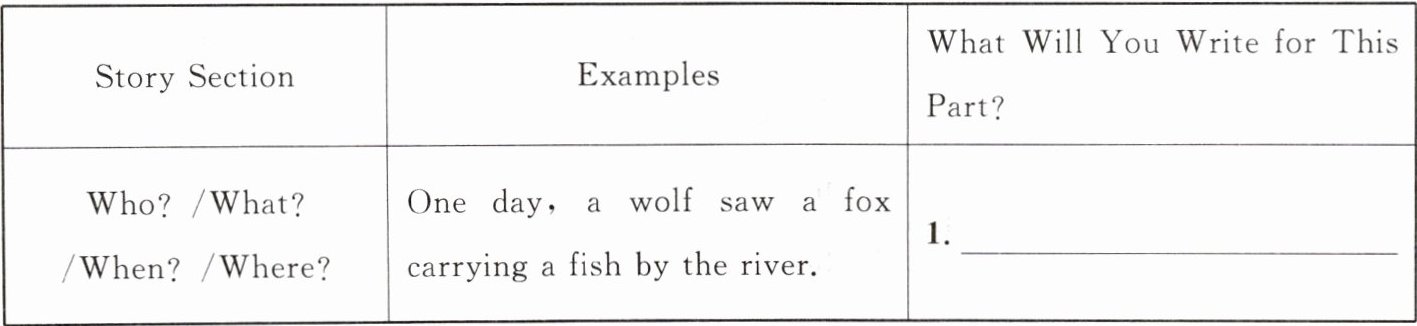
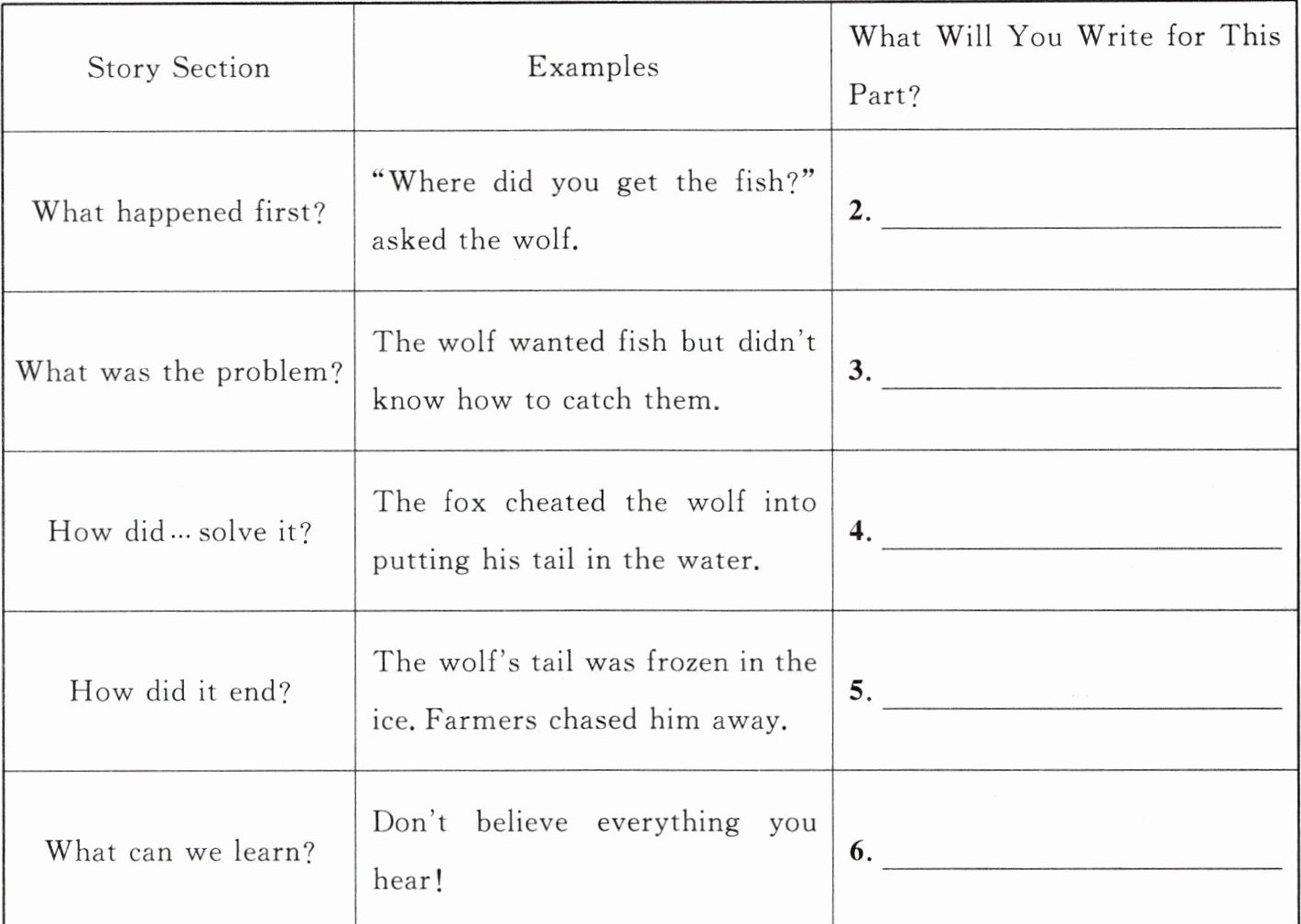
任务三:梳理结构——故事是这样“搭”起来的。
续表
任务四:学习使用“连接词”——让故事更流畅。

用合适的连接词填空。
1. , a little mouse ran over a sleeping lion.
2. The lion wanted to eat the mouse, the mouse said, “Please let me go!”
3. The lion laughed let him go.
4. Later, the lion was caught in a net. , the mouse came to help him.
5. , the lion was free. “Thank you, little friend!” he said.
任务五:开始创作——写出你的故事。
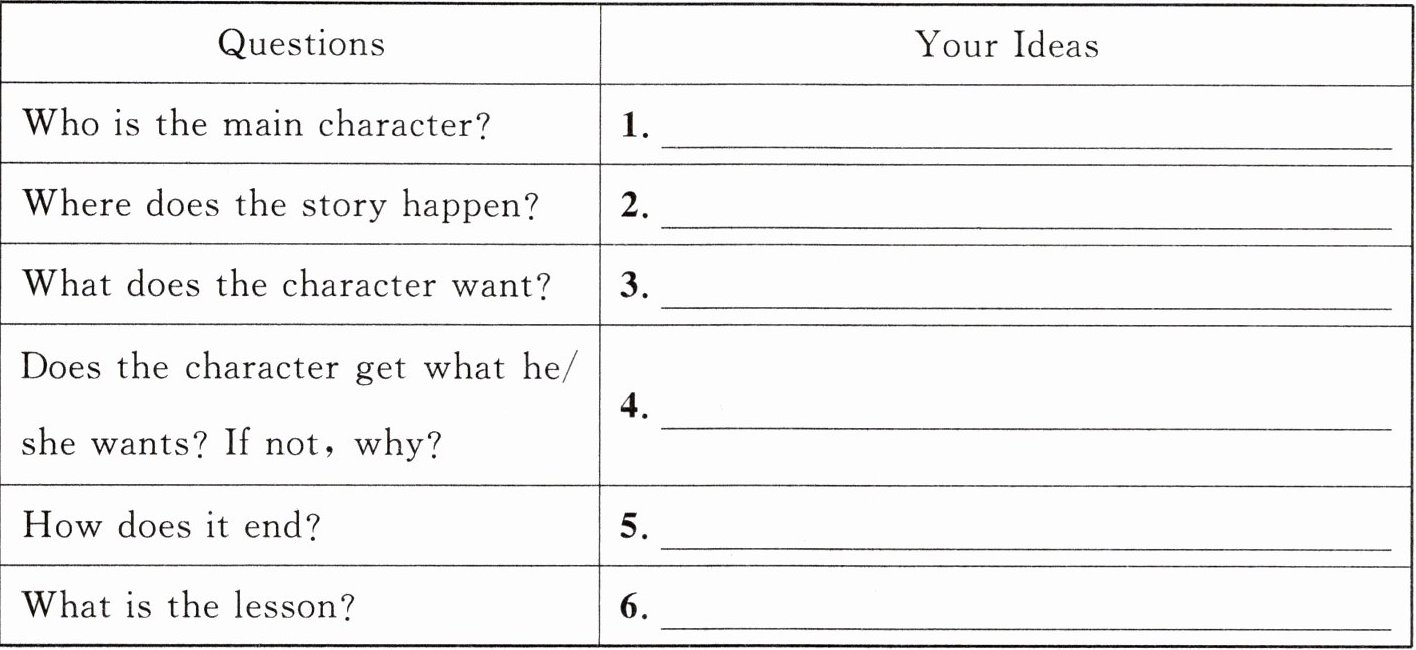
第一步:搭建框架。
第二步:打草稿。用上面学到的连接词,把你的想法写成一个小故事。
1.
2.
3.
4.
The story tells us: 5.
第三步:检查清单。写完故事后,自己检查一下。
()1.你用一般过去时了吗?(was, went, said…)
()2.你用至少2个连接词了吗?(One day, Then, But, So, In the end…)
()3.故事有开头、中间和结尾吗?
第四步:最终稿。把你的故事工整地写在下面。
根据短文内容,完成下列任务。
The Clever Fox and the Greedy Wolf
One day, a wolf saw a fox carrying a fish by the river. “Where did you get the fish?” asked the wolf. “I caught it in the river,” said the fox. “How?” asked the wolf. The fox smiled and said, “I put my tail into the water. The fish bit it, and I pulled it out!” The wolf ran to the river. He put his tail into the cold water and waited. He waited and waited, but no fish came. His tail was frozen in the ice! In the morning, some farmers saw him and chased(驱逐) him away. The foolish wolf learned his lesson:Don’t believe everything you hear!
任务一:根据故事内容,用“/”将文章划分成三部分。
任务二:根据故事内容,回答下列问题。
1. Who are the characters in this story?
2. Where did the story happen?
3. What was the wolf's problem?
4. How did the fox cheat the wolf?
5. What did the wolf learn?
任务三:梳理结构——故事是这样“搭”起来的。
续表
任务四:学习使用“连接词”——让故事更流畅。
用合适的连接词填空。
1. , a little mouse ran over a sleeping lion.
2. The lion wanted to eat the mouse, the mouse said, “Please let me go!”
3. The lion laughed let him go.
4. Later, the lion was caught in a net. , the mouse came to help him.
5. , the lion was free. “Thank you, little friend!” he said.
任务五:开始创作——写出你的故事。
第一步:搭建框架。
第二步:打草稿。用上面学到的连接词,把你的想法写成一个小故事。
1.
2.
3.
4.
The story tells us: 5.
第三步:检查清单。写完故事后,自己检查一下。
()1.你用一般过去时了吗?(was, went, said…)
()2.你用至少2个连接词了吗?(One day, Then, But, So, In the end…)
()3.故事有开头、中间和结尾吗?
第四步:最终稿。把你的故事工整地写在下面。
答案
任务一
One day, a wolf saw a fox carrying a fish by the river. / "Where did you get the fish?" asked the wolf. "I caught it in the river," said the fox. "How?" asked the wolf. The fox smiled and said, "I put my tail into the water. The fish bit it, and I pulled it out!" / The wolf ran to the river. He put his tail into the cold water and waited. He waited and waited, but no fish came. His tail was frozen in the ice! In the morning, some farmers saw him and chased him away. The foolish wolf learned his lesson: Don't believe everything you hear!
任务二
1. The characters are the clever fox and the greedy foolish wolf.
2. The story happened by the river.
3. He followed the fox's words to catch fish with his tail, but his tail was frozen in the ice and he couldn't move.
4. The fox told the wolf a lie that he could catch fish easily by putting his tail into the river and letting the fish bite it.
5. He learned that don't believe everything you hear!
任务三(示例,答案不唯一)
1. The story took place one day by the river, the main characters are a wolf and a fox.
2. The wolf asked the fox where he got the fish.
3. The wolf was greedy and wanted to get fish without any effort.
4. The fox told the wolf a wrong, fake way to catch fish.
5. The wolf's tail was frozen and he was driven away by farmers.
6. We can't believe other people's words easily without thinking carefully.
任务四
1. One day
2. But
3. Then
4. So
5. In the end / Finally
任务五(示例,符合七年级难度要求)
第一步:搭建框架
1. A little rabbit
2. In a forest
3. He wanted to pick lots of carrots from the garden in the forest.
4. No, he didn't. Because he ran too fast and fell into a small hidden hole on the way.
5. A little squirrel passed by and helped him climb out of the hole, the rabbit got home safely with only two carrots.
6. We should never be too anxious when we do things.
第二步:打草稿
1. One day, a little rabbit planned to go to the carrot garden in the forest.
2. Then he ran very fast because he wanted to pick as many carrots as he could.
3. But he didn't notice a small hole on the road and fell into it.
4. So he shouted for help, and a squirrel came to pull him out of the hole.
5. We should be careful when we are in a hurry, or we will get into unexpected trouble.
第三步:检查清单
(√)1. (√)2. (√)3.
第四步:最终稿
One day, a little rabbit planned to go to the carrot garden in the forest. He ran very fast because he wanted to pick as many carrots as he could. But he didn't notice a small hidden hole on the road and fell into it. So he shouted for help, and a squirrel who was passing by helped him climb out of the hole. In the end, the rabbit only picked two carrots and went back home happily. He learned that he should never rush when he goes out, or he will meet unexpected trouble.
One day, a wolf saw a fox carrying a fish by the river. / "Where did you get the fish?" asked the wolf. "I caught it in the river," said the fox. "How?" asked the wolf. The fox smiled and said, "I put my tail into the water. The fish bit it, and I pulled it out!" / The wolf ran to the river. He put his tail into the cold water and waited. He waited and waited, but no fish came. His tail was frozen in the ice! In the morning, some farmers saw him and chased him away. The foolish wolf learned his lesson: Don't believe everything you hear!
任务二
1. The characters are the clever fox and the greedy foolish wolf.
2. The story happened by the river.
3. He followed the fox's words to catch fish with his tail, but his tail was frozen in the ice and he couldn't move.
4. The fox told the wolf a lie that he could catch fish easily by putting his tail into the river and letting the fish bite it.
5. He learned that don't believe everything you hear!
任务三(示例,答案不唯一)
1. The story took place one day by the river, the main characters are a wolf and a fox.
2. The wolf asked the fox where he got the fish.
3. The wolf was greedy and wanted to get fish without any effort.
4. The fox told the wolf a wrong, fake way to catch fish.
5. The wolf's tail was frozen and he was driven away by farmers.
6. We can't believe other people's words easily without thinking carefully.
任务四
1. One day
2. But
3. Then
4. So
5. In the end / Finally
任务五(示例,符合七年级难度要求)
第一步:搭建框架
1. A little rabbit
2. In a forest
3. He wanted to pick lots of carrots from the garden in the forest.
4. No, he didn't. Because he ran too fast and fell into a small hidden hole on the way.
5. A little squirrel passed by and helped him climb out of the hole, the rabbit got home safely with only two carrots.
6. We should never be too anxious when we do things.
第二步:打草稿
1. One day, a little rabbit planned to go to the carrot garden in the forest.
2. Then he ran very fast because he wanted to pick as many carrots as he could.
3. But he didn't notice a small hole on the road and fell into it.
4. So he shouted for help, and a squirrel came to pull him out of the hole.
5. We should be careful when we are in a hurry, or we will get into unexpected trouble.
第三步:检查清单
(√)1. (√)2. (√)3.
第四步:最终稿
One day, a little rabbit planned to go to the carrot garden in the forest. He ran very fast because he wanted to pick as many carrots as he could. But he didn't notice a small hidden hole on the road and fell into it. So he shouted for help, and a squirrel who was passing by helped him climb out of the hole. In the end, the rabbit only picked two carrots and went back home happily. He learned that he should never rush when he goes out, or he will meet unexpected trouble.
解析
本题是结合寓言故事的综合阅读写作训练,各任务解题思路如下:
1. 任务一:按照故事的起因、发展经过、结局三个逻辑层次,将原文划分为三部分即可。
2. 任务二:所有问题都可以直接从短文原文中定位找到对应答案,注意保证回答的语法正确性。
3. 任务三:参考给出的示例句式,结合故事内容写出对应板块的同义表述即可,答案不唯一,符合故事逻辑即为正确。
4. 任务四:根据表格给出的不同连接词的使用场景,匹配句子的语境选出合适的连接词填空。
5. 任务五:属于开放性故事创作,按照要求先搭建故事框架,再用学到的连接词串联内容,使用一般过去时,保证故事有完整的开头、发展、结尾即可。
1. 任务一:按照故事的起因、发展经过、结局三个逻辑层次,将原文划分为三部分即可。
2. 任务二:所有问题都可以直接从短文原文中定位找到对应答案,注意保证回答的语法正确性。
3. 任务三:参考给出的示例句式,结合故事内容写出对应板块的同义表述即可,答案不唯一,符合故事逻辑即为正确。
4. 任务四:根据表格给出的不同连接词的使用场景,匹配句子的语境选出合适的连接词填空。
5. 任务五:属于开放性故事创作,按照要求先搭建故事框架,再用学到的连接词串联内容,使用一般过去时,保证故事有完整的开头、发展、结尾即可。
