

 登录
登录
B
For thousands of years, people have changed nature to meet their needs. But can we change nature without destroying it? The ancient Dujiangyan Irrigation* System in China is a perfect example of how we can.
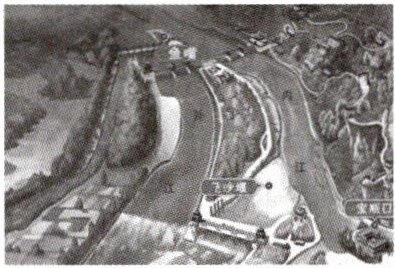
Before Dujiangyan was built, the Min River in Sichuan Province often flooded the Chengdu Plain during the rainy season. When the water left, the land became very dry. Farmers couldn't grow enough food, and people suffered from hunger.
Around 256 BC, Li Bing, a local governor*, decided to solve this problem. Instead of simply building a dam to stop the river, he had a wiser idea. He and his team created a system that would tame the river, not fight it.
The system has three main parts:
Yuzui: A man-made island that divides the river into two channels* — the Inner River for irrigation and the Outer River for flood control.
Feishayan: A channel that helps to wash away extra silt* and water from the Inner to the Outer River.
Baopingkou: The final gate that brings clear water into the irrigation network for the farms.
This smart design uses the river's own power and flow. It takes away the danger of floods and uses the water to make the dry land fertile*. Thanks to Dujiangyan, the Chengdu Plain became one of the most productive farming areas in China.
Even today, over 2,000 years later, Dujiangyan still works perfectly. It doesn't just control water but also helps people and nature live in harmony. It shows the world that by understanding the laws of nature, we can change it in a smart and respectful way.
(
A. There were no rivers for water.
B. People didn't know how to build a dam.
C. The land was not good for farming at all.
D. The river often flooded and then became dry.
(
A. Be afraid of something.
B. Make something disappear.
C. Make something under control.
D. Fight against something strongly.
(
A. Yuzui. B. Feishayan.
C. Baopingkou. D. The irrigation network.
(
A. To introduce the scenery of the Chengdu Plain.
B. To describe how Dujiangyan solved water problems.
C. To explain each part of Li Bing's engineering design.
D. To show Dujiangyan's smart and respectful use of nature.
For thousands of years, people have changed nature to meet their needs. But can we change nature without destroying it? The ancient Dujiangyan Irrigation* System in China is a perfect example of how we can.
Before Dujiangyan was built, the Min River in Sichuan Province often flooded the Chengdu Plain during the rainy season. When the water left, the land became very dry. Farmers couldn't grow enough food, and people suffered from hunger.
Around 256 BC, Li Bing, a local governor*, decided to solve this problem. Instead of simply building a dam to stop the river, he had a wiser idea. He and his team created a system that would tame the river, not fight it.
The system has three main parts:
Yuzui: A man-made island that divides the river into two channels* — the Inner River for irrigation and the Outer River for flood control.
Feishayan: A channel that helps to wash away extra silt* and water from the Inner to the Outer River.
Baopingkou: The final gate that brings clear water into the irrigation network for the farms.
This smart design uses the river's own power and flow. It takes away the danger of floods and uses the water to make the dry land fertile*. Thanks to Dujiangyan, the Chengdu Plain became one of the most productive farming areas in China.
Even today, over 2,000 years later, Dujiangyan still works perfectly. It doesn't just control water but also helps people and nature live in harmony. It shows the world that by understanding the laws of nature, we can change it in a smart and respectful way.
(
D
)6. What was the main problem of the Chengdu Plain before Dujiangyan was built?A. There were no rivers for water.
B. People didn't know how to build a dam.
C. The land was not good for farming at all.
D. The river often flooded and then became dry.
(
C
)7. What does the underline word "tame" in Paragraph 3 probably mean?A. Be afraid of something.
B. Make something disappear.
C. Make something under control.
D. Fight against something strongly.
(
B
)8. Which part of the system is used for washing away extra silt and water?A. Yuzui. B. Feishayan.
C. Baopingkou. D. The irrigation network.
(
D
)9. What is the main purpose of the passage?A. To introduce the scenery of the Chengdu Plain.
B. To describe how Dujiangyan solved water problems.
C. To explain each part of Li Bing's engineering design.
D. To show Dujiangyan's smart and respectful use of nature.
答案
6. D 7. C 8. B 9. D
