

 登录
登录
任务二:提升题 请结合前三次单元项目分析的情况,为Andy制作一份新的时间安排表。
| Time | Activity |
| ---- | ---- |
| |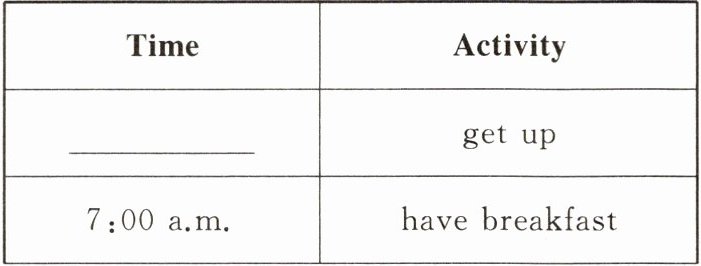 get up |
| 7:00 a.m. | have breakfast |
续表
| Time | Activity |
| ---- | ---- |
| | pack the schoolbag |
| | go to school |
| 8:00 a.m. | start school |
| 4:30 p.m. | |
| 4:50 p.m. | |
| 5:20 p.m. — 6:00 p.m. | |
| 6:00 p.m. — 7:00 p.m. | have dinner |
| 7:20 p.m. | finish housework |
| | |
| | go to bed |
| Time | Activity |
| ---- | ---- |
| |
get up || 7:00 a.m. | have breakfast |
续表
| Time | Activity |
| ---- | ---- |
| | pack the schoolbag |
| | go to school |
| 8:00 a.m. | start school |
| 4:30 p.m. | |
| 4:50 p.m. | |
| 5:20 p.m. — 6:00 p.m. | |
| 6:00 p.m. — 7:00 p.m. | have dinner |
| 7:20 p.m. | finish housework |
| | |
| | go to bed |
答案
| Time | Activity |
| ---- | ---- |
| 6:40 a.m. | get up |
| 7:00 a.m. | have breakfast |
| 7:20 a.m. | pack the schoolbag |
| 7:30 a.m. | go to school |
| 8:00 a.m. | start school |
| 4:30 p.m. | go back home |
| 4:50 p.m. | walk the dog |
| 5:20 p.m. — 6:00 p.m. | read |
| 6:00 p.m. — 7:00 p.m. | have dinner |
| 7:20 p.m. | finish housework |
| 7:30 p.m. — 9:00 p.m. | do homework |
| 9:20 p.m. | go to bed |
| ---- | ---- |
| 6:40 a.m. | get up |
| 7:00 a.m. | have breakfast |
| 7:20 a.m. | pack the schoolbag |
| 7:30 a.m. | go to school |
| 8:00 a.m. | start school |
| 4:30 p.m. | go back home |
| 4:50 p.m. | walk the dog |
| 5:20 p.m. — 6:00 p.m. | read |
| 6:00 p.m. — 7:00 p.m. | have dinner |
| 7:20 p.m. | finish housework |
| 7:30 p.m. — 9:00 p.m. | do homework |
| 9:20 p.m. | go to bed |
解析
【分析】
要制作合理的时间安排表,需结合日常作息的时间逻辑,按照时间先后顺序,参考已给出的时间节点(如7:00 a.m.吃早饭、8:00 a.m.开始上学等),补充符合生活实际的活动与对应时间。先确定起床时间在吃早饭之前,收拾书包、上学时间在开始上学之前;下午放学、课后活动、家务后作业及睡觉时间也需符合常规作息节奏。
【解析】
根据日常作息的时间顺序和已给出的时间节点,依次补充各空:
1. 起床时间在7:00 a.m.吃早饭之前,填6:40 a.m.;
2. 收拾书包在上学前,填7:20 a.m.;
3. 上学时间在8:00 a.m.前,填7:30 a.m.;
4. 4:30 p.m.对应放学回家,填go back home;
5. 4:50 p.m.填日常课后活动walk the dog;
6. 5:20 p.m.—6:00 p.m.填课后阅读read;
7. 7:20 p.m.完成家务后,7:30 p.m.—9:00 p.m.填do homework;
8. 睡觉时间在9:00后,填9:20 p.m.。
【答案】
| Time | Activity |
| ---- | ---- |
| 6:40 a.m. | get up |
| 7:00 a.m. | have breakfast |
| 7:20 a.m. | pack the schoolbag |
| 7:30 a.m. | go to school |
| 8:00 a.m. | start school |
| 4:30 p.m. | go back home |
| 4:50 p.m. | walk the dog |
| 5:20 p.m. — 6:00 p.m. | read |
| 6:00 p.m. — 7:00 p.m. | have dinner |
| 7:20 p.m. | finish housework |
| 7:30 p.m. — 9:00 p.m. | do homework |
| 9:20 p.m. | go to bed |
【知识点】
时间表达、日常作息安排
【点评】
本题结合生活实际考查时间规划,需学生结合日常作息逻辑补充内容,贴近生活,难度适中。
【难度系数】
0.3
要制作合理的时间安排表,需结合日常作息的时间逻辑,按照时间先后顺序,参考已给出的时间节点(如7:00 a.m.吃早饭、8:00 a.m.开始上学等),补充符合生活实际的活动与对应时间。先确定起床时间在吃早饭之前,收拾书包、上学时间在开始上学之前;下午放学、课后活动、家务后作业及睡觉时间也需符合常规作息节奏。
【解析】
根据日常作息的时间顺序和已给出的时间节点,依次补充各空:
1. 起床时间在7:00 a.m.吃早饭之前,填6:40 a.m.;
2. 收拾书包在上学前,填7:20 a.m.;
3. 上学时间在8:00 a.m.前,填7:30 a.m.;
4. 4:30 p.m.对应放学回家,填go back home;
5. 4:50 p.m.填日常课后活动walk the dog;
6. 5:20 p.m.—6:00 p.m.填课后阅读read;
7. 7:20 p.m.完成家务后,7:30 p.m.—9:00 p.m.填do homework;
8. 睡觉时间在9:00后,填9:20 p.m.。
【答案】
| Time | Activity |
| ---- | ---- |
| 6:40 a.m. | get up |
| 7:00 a.m. | have breakfast |
| 7:20 a.m. | pack the schoolbag |
| 7:30 a.m. | go to school |
| 8:00 a.m. | start school |
| 4:30 p.m. | go back home |
| 4:50 p.m. | walk the dog |
| 5:20 p.m. — 6:00 p.m. | read |
| 6:00 p.m. — 7:00 p.m. | have dinner |
| 7:20 p.m. | finish housework |
| 7:30 p.m. — 9:00 p.m. | do homework |
| 9:20 p.m. | go to bed |
【知识点】
时间表达、日常作息安排
【点评】
本题结合生活实际考查时间规划,需学生结合日常作息逻辑补充内容,贴近生活,难度适中。
【难度系数】
0.3
一、有一种“神器”能帮助同学们尽快适应初中生活,你想知道是什么吗?请阅读下面短文,根据短文内容回答以下问题。
Do you have more subjects to learn but less(少) time to sleep these days?
Some students can adapt(适应) to the new school life quickly.
Li Wei is a good example. He's a seventh-grade student. He has a timetable for this term. It helps him make good use of his school days. Let's look at his daily routine on school days.
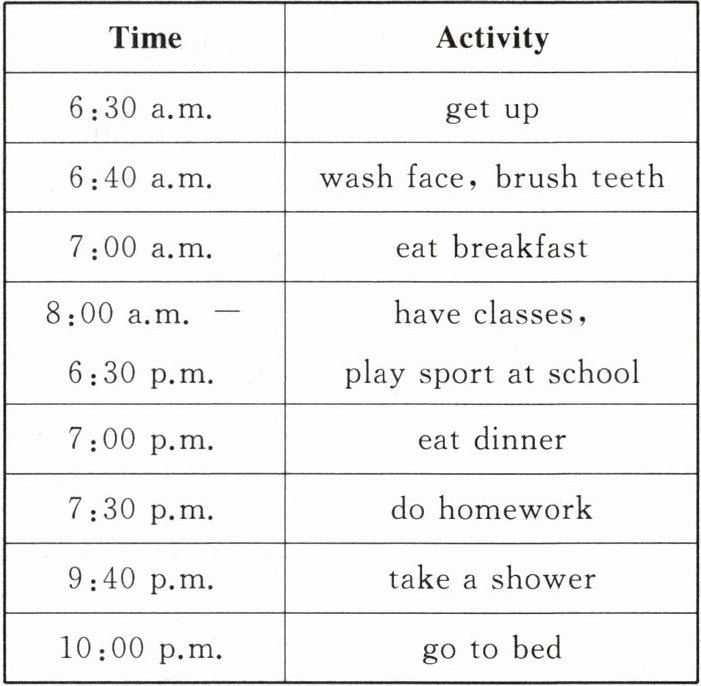
A good timetable is important for students. First, it improves(改善) their health. Some students don't have time for a good breakfast or exercise, and they go to bed late and get up early. But with a good timetable, they can do these things well even when they are busy with schoolwork. Second, a good timetable can help them do more things in one day. It sets(设置) time for different things, so students know what to do and when to do it. Then they can finish more things. When you do the same things every day, they will become your habits(习惯).
1. What helps Li Wei adapt to his new school life?
2. When does Li Wei get up and go to bed?
3. How can a good timetable help students? Underline the sentences in the passage.
4. 提升题 Do you want to try making a timetable? Why or why not?
Do you have more subjects to learn but less(少) time to sleep these days?
Some students can adapt(适应) to the new school life quickly.
Li Wei is a good example. He's a seventh-grade student. He has a timetable for this term. It helps him make good use of his school days. Let's look at his daily routine on school days.
A good timetable is important for students. First, it improves(改善) their health. Some students don't have time for a good breakfast or exercise, and they go to bed late and get up early. But with a good timetable, they can do these things well even when they are busy with schoolwork. Second, a good timetable can help them do more things in one day. It sets(设置) time for different things, so students know what to do and when to do it. Then they can finish more things. When you do the same things every day, they will become your habits(习惯).
1. What helps Li Wei adapt to his new school life?
A timetable. / He has a timetable.
2. When does Li Wei get up and go to bed?
He gets up at 6:30 a.m. and goes to bed at 10:00 p.m.
3. How can a good timetable help students? Underline the sentences in the passage.
4. 提升题 Do you want to try making a timetable? Why or why not?
Yes, because I want to study well and
play well.
答案
1. A timetable. / He has a timetable.
2. He gets up at 6:30 a.m. and goes to bed at 10:00 p.m.
3. 需在文中划出的对应句子:First, it improves(改善) their health. Second, a good timetable can help them do more things in one day.
4. Yes, because I want to study well and play well.
2. He gets up at 6:30 a.m. and goes to bed at 10:00 p.m.
3. 需在文中划出的对应句子:First, it improves(改善) their health. Second, a good timetable can help them do more things in one day.
4. Yes, because I want to study well and play well.
解析
【分析】
本题为英语阅读理解题,需结合短文内容和表格信息提取关键信息作答。第1题定位李伟适应新生活的帮助物;第2题从表格找起床、睡觉时间;第3题定位好时间表的作用句;第4题开放表达,结合自身说明是否做时间表及原因。
【解析】
1. 短文提到“He has a timetable for this term. It helps him make good use of his school days.”,可知帮助李伟适应新生活的是时间表,故答案为A timetable. / He has a timetable.
2. 表格中6:30 a.m.对应get up,10:00 p.m.对应go to bed,因此答案为He gets up at 6:30 a.m. and goes to bed at 10:00 p.m.
3. 文中明确好时间表的作用句为:First, it improves their health. Second, a good timetable can help them do more things in one day.
4. 开放题,结合自身情况,答案为Yes, because I want to study well and play well.
【答案】
1. A timetable. / He has a timetable.
2. He gets up at 6:30 a.m. and goes to bed at 10:00 p.m.
3. 划线句子:First, it improves their health. Second, a good timetable can help them do more things in one day.
4. Yes, because I want to study well and play well.
【知识点】
英语阅读理解、信息提取、开放表达
【点评】
本题考查学生的信息定位与提取能力,第3题需精准识别原文关键句,第4题开放题考查语言组织能力,整体贴合初中英语学习要求。
【难度系数】
0.6
本题为英语阅读理解题,需结合短文内容和表格信息提取关键信息作答。第1题定位李伟适应新生活的帮助物;第2题从表格找起床、睡觉时间;第3题定位好时间表的作用句;第4题开放表达,结合自身说明是否做时间表及原因。
【解析】
1. 短文提到“He has a timetable for this term. It helps him make good use of his school days.”,可知帮助李伟适应新生活的是时间表,故答案为A timetable. / He has a timetable.
2. 表格中6:30 a.m.对应get up,10:00 p.m.对应go to bed,因此答案为He gets up at 6:30 a.m. and goes to bed at 10:00 p.m.
3. 文中明确好时间表的作用句为:First, it improves their health. Second, a good timetable can help them do more things in one day.
4. 开放题,结合自身情况,答案为Yes, because I want to study well and play well.
【答案】
1. A timetable. / He has a timetable.
2. He gets up at 6:30 a.m. and goes to bed at 10:00 p.m.
3. 划线句子:First, it improves their health. Second, a good timetable can help them do more things in one day.
4. Yes, because I want to study well and play well.
【知识点】
英语阅读理解、信息提取、开放表达
【点评】
本题考查学生的信息定位与提取能力,第3题需精准识别原文关键句,第4题开放题考查语言组织能力,整体贴合初中英语学习要求。
【难度系数】
0.6
