

 登录
二、补全对话。
根据下面的对话情景,在每个空白处填上一个适当的句子,使对话的意思连贯、完整。
A: Tom, you look so excited. 1.
B: I watched a show just now.
A: 2.
B: It's about science and technology. And I saw a very lovely robot there.
A: 3.
B: It's used for cooking. And it can make over 1,000 dishes.
A: 4.
B: Yes. I also saw a robot that can help with housework. I even want to watch the show again!
A: I also want to watch it. 5.
B: Sure. I think you'll like it.
根据下面的对话情景,在每个空白处填上一个适当的句子,使对话的意思连贯、完整。
A: Tom, you look so excited. 1.
What happened
?B: I watched a show just now.
A: 2.
What is the show about
?B: It's about science and technology. And I saw a very lovely robot there.
A: 3.
What's the robot used for
?B: It's used for cooking. And it can make over 1,000 dishes.
A: 4.
Sounds amazing/great
! Are there any other robots?B: Yes. I also saw a robot that can help with housework. I even want to watch the show again!
A: I also want to watch it. 5.
Can I go with you next time
?B: Sure. I think you'll like it.
答案
二、1. What happened
2. What is the show about
3. What's the robot used for
4. Sounds amazing/great
5. Can I go with you next time
解析
【分析】首先通读对话,明确对话围绕Tom观看科技类节目展开,每个空白处需结合答语信息,填写符合日常交际逻辑、语义连贯的英语句子,保证语法正确、符合语境。
【解析】1. 根据答语“I watched a show just now.”可知,A询问Tom发生了什么事,填What happened;2. 根据答语“It's about science and technology.”可知,A询问节目主题,填What is the show about;3. 根据答语“It's used for cooking.”可知,A询问机器人的用途,填What's the robot used for;4. 结合前文提到机器人能做1000多道菜,A发出感叹,填Sounds amazing/great;5. 根据答语“Sure. I think you'll like it.”可知,A询问能否下次一起去,填Can I go with you next time。
【答案】1. What happened 2. What is the show about 3. What's the robot used for 4. Sounds amazing/great 5. Can I go with you next time
【知识点】日常交际用语、补全对话
【点评】本题考查日常交际用语在补全对话中的运用,需结合上下文语境填写符合逻辑的句子,侧重基础交际能力的考查,难度适中。
【难度系数】0.7
三、阅读理解。
With the growing concern about climate change and the need to reduce greenhouse gas emissions(排放), more and more countries are focusing on developing new energy. These days, terms like clean energy, green energy and renewable energy are becoming increasingly familiar to people around the world.
Different from traditional fossil fuels(化石燃料)such as oil, natural gas and coal, new energy covers a wide range of energy sources. Besides renewable ones like solar power, water energy, wind energy and biomass energy(生物质能), it also includes nuclear energy. Although nuclear energy is not renewable, it hardly causes any pollution. However, it needs uranium(铀)as fuel, which will produce nuclear waste. What’s more, developing nuclear energy requires a large amount of money. Even so, it is still a good choice instead of fossil fuels when the world is trying to cut down carbon dioxide emissions.
Clean energy, also called green energy, means energy sources that do not cause pollution. Since nuclear energy produces almost no pollution, some experts regard it as a type of clean energy. Another related concept is renewable energy, which comes from natural resources that can be refilled naturally, such as water, sunlight, and wind.
Because renewable energy can be naturally renewed, many countries put it in a high position in their development plans. Yet this kind of energy has its own disadvantages. It depends heavily on natural conditions, and both its primary investment and daily maintenance(维护)costs are high. In addition, its energy efficiency(效率)is not as high as expected.
Nowadays, as the shortage of natural resources becomes a serious problem, many scientists are working hard to find ways to improve the efficiency of renewable energy.
根据材料内容选择最佳选项。
(
A. To save money on energy production.
B. To deal with climate change and reduce greenhouse gas emissions.
C. To replace all traditional fossil fuels.
D. To produce more nuclear waste.
(
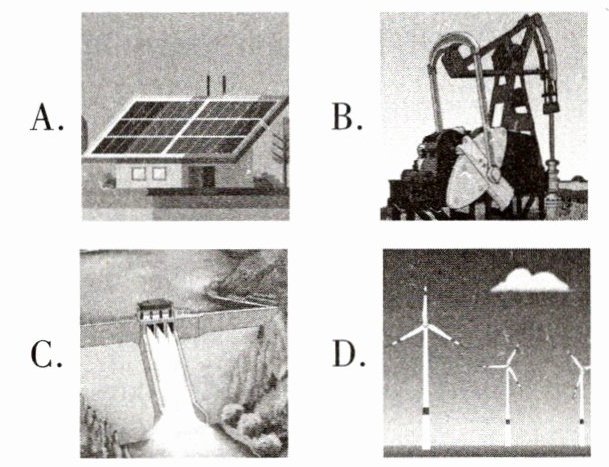
(
A. It is a kind of renewable energy that produces no pollution.
B. It is cheap to develop but difficult to maintain.
C. It is a good way to reduce carbon dioxide emissions.
D. It will soon replace all other energy sources.
(
A. Giving up developing renewable energy.
B. Stopping the use of all fossil fuels.
C. Trying to improve renewable energy’s efficiency.
D. Only developing nuclear energy around the world.
(
A. How to use traditional fossil fuels in a better way.
B. The differences between different new energy types.
C. Why nuclear energy is the best kind of new energy.
D. The reasons why people stop using natural resources.
With the growing concern about climate change and the need to reduce greenhouse gas emissions(排放), more and more countries are focusing on developing new energy. These days, terms like clean energy, green energy and renewable energy are becoming increasingly familiar to people around the world.
Different from traditional fossil fuels(化石燃料)such as oil, natural gas and coal, new energy covers a wide range of energy sources. Besides renewable ones like solar power, water energy, wind energy and biomass energy(生物质能), it also includes nuclear energy. Although nuclear energy is not renewable, it hardly causes any pollution. However, it needs uranium(铀)as fuel, which will produce nuclear waste. What’s more, developing nuclear energy requires a large amount of money. Even so, it is still a good choice instead of fossil fuels when the world is trying to cut down carbon dioxide emissions.
Clean energy, also called green energy, means energy sources that do not cause pollution. Since nuclear energy produces almost no pollution, some experts regard it as a type of clean energy. Another related concept is renewable energy, which comes from natural resources that can be refilled naturally, such as water, sunlight, and wind.
Because renewable energy can be naturally renewed, many countries put it in a high position in their development plans. Yet this kind of energy has its own disadvantages. It depends heavily on natural conditions, and both its primary investment and daily maintenance(维护)costs are high. In addition, its energy efficiency(效率)is not as high as expected.
Nowadays, as the shortage of natural resources becomes a serious problem, many scientists are working hard to find ways to improve the efficiency of renewable energy.
根据材料内容选择最佳选项。
(
B
)1. Why are many countries developing new energy according to the text?A. To save money on energy production.
B. To deal with climate change and reduce greenhouse gas emissions.
C. To replace all traditional fossil fuels.
D. To produce more nuclear waste.
(
B
)2. Which of the following is NOT included in new energy?(
C
)3. What can we learn about nuclear energy from the text?A. It is a kind of renewable energy that produces no pollution.
B. It is cheap to develop but difficult to maintain.
C. It is a good way to reduce carbon dioxide emissions.
D. It will soon replace all other energy sources.
(
C
)4. What are many scientists doing to solve the energy problem?A. Giving up developing renewable energy.
B. Stopping the use of all fossil fuels.
C. Trying to improve renewable energy’s efficiency.
D. Only developing nuclear energy around the world.
(
B
)5. What’s the main idea of the text?A. How to use traditional fossil fuels in a better way.
B. The differences between different new energy types.
C. Why nuclear energy is the best kind of new energy.
D. The reasons why people stop using natural resources.
答案
三、1. B 由第一段第一句可知,各国发展新能源是为了应对气候变化、减少温室气体排放。
2. B 由第二段第一句可知,石油属于传统化石燃料,不属于新能源。
3. C 由第二段最后一句可知,利用核能仍然是减少二氧化碳排放的好方式。
4. C 由最后一段可知,科学家正致力于提高可再生能源的利用效率。
5. B 全文围绕新能源展开,介绍了新能源的范畴、清洁能源与可再生能源的定义、各类新能源的优缺点,核心是介绍不同新能源类型的差异。
解析
【分析】
做此类英语阅读理解题,需先通读原文把握核心内容,再针对每个题目,根据题干关键词定位原文对应段落,对比选项与原文信息,排除错误选项得出答案。例如第1题通过关键词“developing new energy”定位第一段找原因;第2题通过“NOT included in new energy”定位新能源与传统化石燃料的区分;第3题通过“nuclear energy”定位核能相关内容;第4题通过“scientists”定位科学家的行动;第5题主旨题需梳理全文结构确定核心。
【解析】
1. 题干问各国发展新能源的原因,定位原文第一段第一句“With the growing concern about climate change and the need to reduce greenhouse gas emissions...”,可知目的是应对气候变化、减少温室气体排放,对应选项B;A(省钱)、C(替代所有化石燃料)、D(产生更多核废料)均与原文不符,故选B。
2. 题干问不属于新能源的选项,定位原文第二段“Different from traditional fossil fuels such as oil, natural gas and coal, new energy covers...”,选项B的图是石油开采(石油属于传统化石燃料),不属于新能源,A(太阳能)、C(水能)、D(风能)均属于新能源,故选B。
3. 题干问核能的相关信息,定位原文第二段最后一句“it is still a good choice instead of fossil fuels when the world is trying to cut down carbon dioxide emissions”,可知核能是减少二氧化碳排放的好方式,对应选项C;A(核能是可再生能源)错误,原文说核能不可再生;B(开发核能便宜)错误,原文说需大量资金;D(很快取代所有能源)未提及,故选C。
4. 题干问科学家的行动,定位原文最后一段“many scientists are working hard to find ways to improve the efficiency of renewable energy”,对应选项C;A(放弃可再生能源)、B(停止使用所有化石燃料)、D(只发展核能)均与原文不符,故选C。
5. 题干问文章主旨,全文围绕新能源展开,介绍了新能源的范畴、清洁能源与可再生能源的定义、各类新能源的优缺点,核心是不同新能源类型的差异,对应选项B;A(如何更好使用传统化石燃料)、C(核能是最好的新能源)、D(停止使用自然资源的原因)均不符合主旨,故选B。
【答案】
1.B 2.B 3.C 4.C 5.B
【知识点】
英语阅读理解,细节理解,主旨大意
【点评】
本文是一篇关于新能源的英语阅读理解,题型包含细节理解和主旨大意,要求学生能快速定位原文信息,准确理解不同能源类型的概念和特点,整体难度适中,适合初中或高中学生练习。
【难度系数】
0.6
