

 登录
登录
Where does our food come from?
答案
Our food mostly comes from farms. We get vegetables and fruits from the plants grown on the farm, and we get meat, eggs and milk from farm animals.
解析
本题是where引导的特殊疑问句,用于询问食物的来源,结合五年级已学的词汇和生活常识,用简单易懂的表达说明食物的常见来源即可,不需要使用超纲的复杂句式。
2. Read and match
—What's your favourite food?
—Beef. It's delicious.
—I like it too.
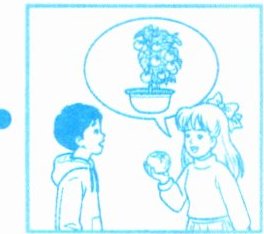
—Wow, a purple tomato! Where does it come from?
—It comes from my small garden.
—Wow! I really want to go and see!
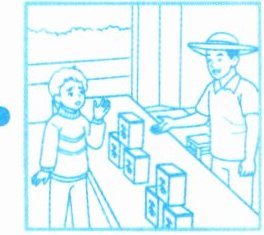
—How much is the tea?
—It's 99 yuan a can. It comes from Fujian.
—Oh, but it's a little expensive.
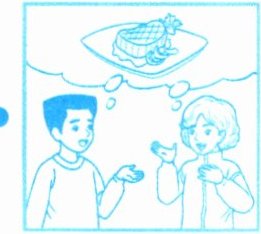
—What's your favourite food?
—Beef. It's delicious.
—I like it too.
—Wow, a purple tomato! Where does it come from?
—It comes from my small garden.
—Wow! I really want to go and see!
—How much is the tea?
—It's 99 yuan a can. It comes from Fujian.
—Oh, but it's a little expensive.
答案
谈论最爱的食物是牛肉的第一组对话,连接最下方浮现牛肉图案的图;谈论紫色番茄来源的第二组对话,连接中间手持番茄、浮现盆栽番茄的图;谈论茶叶价格的第三组对话,连接最上方茶叶店交流场景的图。
解析
我们逐段理解对话内容,匹配对应场景的图片:
1. 第一组对话围绕“最喜欢的食物是美味的牛肉”展开,对应两人脑海中浮现牛肉图案的第三幅图。
2. 第二组对话围绕“紫色番茄来自自家小花园”展开,对应女生手持番茄、脑海里浮现盆栽番茄的第二幅图。
3. 第三组对话围绕“询问产自福建的茶叶的价格”展开,对应摆放着茶叶罐的店铺交流场景的第一幅图。
1. 第一组对话围绕“最喜欢的食物是美味的牛肉”展开,对应两人脑海中浮现牛肉图案的第三幅图。
2. 第二组对话围绕“紫色番茄来自自家小花园”展开,对应女生手持番茄、脑海里浮现盆栽番茄的第二幅图。
3. 第三组对话围绕“询问产自福建的茶叶的价格”展开,对应摆放着茶叶罐的店铺交流场景的第一幅图。
3. Read and number
() It comes from Jiaxing.
() What's this? It smells so good.
() 8 yuan each, 15 yuan for two.
( 3 ) Yum! Where does it come from?
() It's zongzi. It has sticky rice(糯米) and meat. Try some!
() How much is it?
() OK. I'll take two for my family.
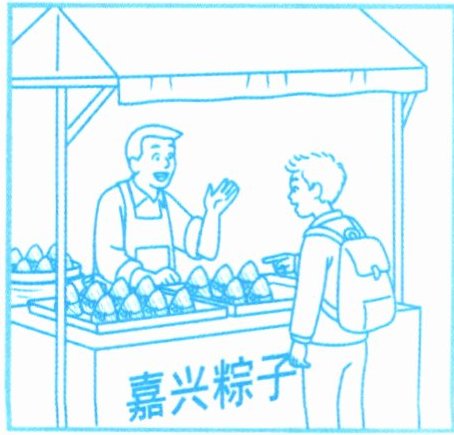
() It comes from Jiaxing.
() What's this? It smells so good.
() 8 yuan each, 15 yuan for two.
( 3 ) Yum! Where does it come from?
() It's zongzi. It has sticky rice(糯米) and meat. Try some!
() How much is it?
() OK. I'll take two for my family.
答案
按题目中空缺括号从上到下的顺序,答案依次为:4、1、6、2、5、7
解析
这是情景对话排序题,我们按照购物时的日常对话逻辑梳理顺序:1. 首先小朋友闻到食物的香味,询问对方这是什么;2. 摊主介绍这是肉粽子,邀请小朋友品尝;3. 题目已给出第3句:小朋友品尝后觉得美味,询问粽子来自哪里;4. 回答粽子产自嘉兴;5. 接下来小朋友询问粽子的价格;6. 摊主告知单价和优惠价;7. 最后小朋友决定买两个带回家给家人。按照这个逻辑给句子标序号即可。
