

 登录
Ⅰ. Read the Simple Present Tense in the appendix of the textbook and write some sentences after the model. 读课本附录关于一般现在时的语法,然后仿写句子。
A) Model: A: Whose erhu is this? B: It's my aunt's erhu.
A: Does she play the erhu really well? B: Yes, she does.
1. A:
A:
B) Model: A: Whose fishing rods are these? B: They're my father's fishing rods.
A: Does he spend a lot of time fishing? B: Yes, he does.
2. A:
A:
C) Model: My parents have a piano. They don't have a violin.
3.
Now change the above sentences into general questions and then answer. 将以上句子变为一般疑问句并回答。
Model: A: Do your parents have a piano? B: Yes, they do.
A: Do your parents have a violin? B: No, they don't.
4. A:
A:
D) Model: My sister has a pink hat. She doesn't have a pink cap.
5.
Now change the above sentences into general questions and then answer. 将以上句子变为一般疑问句并回答。
Model: A: Does your sister have a pink hat? B: Yes, she does.
A: Does your sister have a pink cap? B: No, she doesn't.
6. A:
A:
A) Model: A: Whose erhu is this? B: It's my aunt's erhu.
A: Does she play the erhu really well? B: Yes, she does.
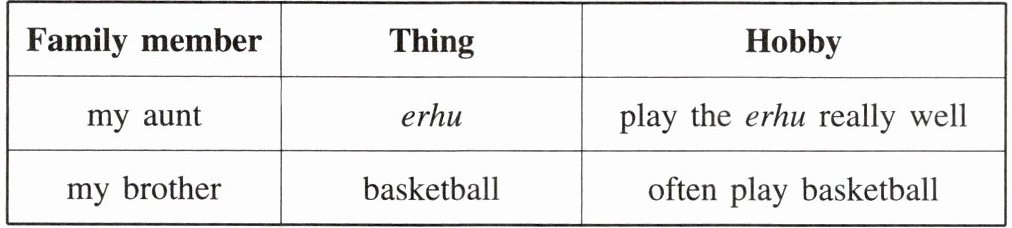
1. A:
Whose basketball is this?
B: It’s my brother’s basketball.
A:
Does he often play basketball?
B: Yes, he does.
B) Model: A: Whose fishing rods are these? B: They're my father's fishing rods.
A: Does he spend a lot of time fishing? B: Yes, he does.
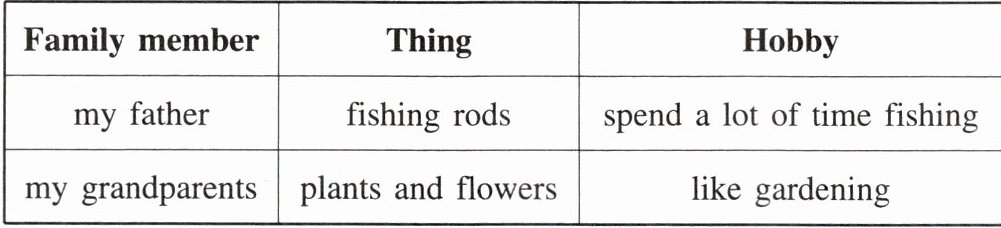
2. A:
Whose plants and flowers are these?
B: They’re my grandparents’ plants and flowers.
A:
Do they like gardening?
B: Yes, they do.
C) Model: My parents have a piano. They don't have a violin.
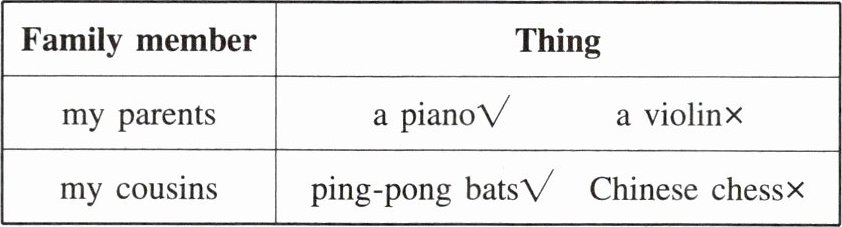
3.
My cousins have ping-pong bats. They don’t have Chinese chess.
Now change the above sentences into general questions and then answer. 将以上句子变为一般疑问句并回答。
Model: A: Do your parents have a piano? B: Yes, they do.
A: Do your parents have a violin? B: No, they don't.
4. A:
Do your cousins have ping-pong bats?
B: Yes, they do.
A:
Do your cousins have Chinese chess?
B: No, they don’t.
D) Model: My sister has a pink hat. She doesn't have a pink cap.
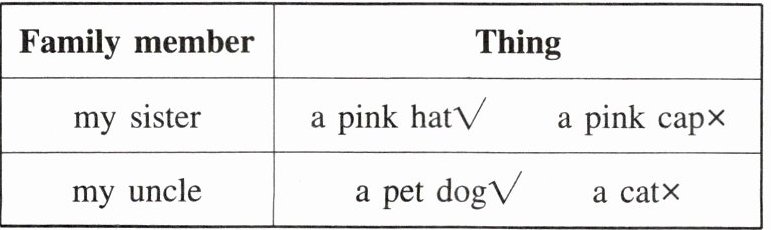
5.
My uncle has a pet dog. He doesn’t have a cat.
Now change the above sentences into general questions and then answer. 将以上句子变为一般疑问句并回答。
Model: A: Does your sister have a pink hat? B: Yes, she does.
A: Does your sister have a pink cap? B: No, she doesn't.
6. A:
Does your uncle have a pet dog?
B: Yes, he does.
A:
Does your uncle have a cat?
B: No, he doesn’t.
答案
Ⅰ .1. A:Whose basketball is this? B:It’s my brother’s basketball. A:Does he often play basketball? B: Yes, he does. 2. A:Whose plants and flowers are these? B:They’re my grandparents’ plants and flowers. A:Do they like gardening? B: Yes, they do. 3. My cousins have ping-pong bats. They don’t have Chinese chess. 4. A:Do your cousins have ping-pong bats? B:Yes, they do. A:Do your cousins have Chinese chess? B:No, they don’t. 5. My uncle has a pet dog. He doesn’t have a cat. 6. A:Does your uncle have a pet dog? B:Yes, he does. A:Does your uncle have a cat? B:No, he doesn’t.
解析
翻译:
Ⅰ. 阅读课本附录中关于一般现在时的内容,然后仿照示例写一些句子。
A)示例:A:这是谁的二胡?B:这是我姑姑的二胡。
A:她二胡拉得真的很好吗?B:是的,她拉得很好。
1. A:这是谁的篮球?B:这是我哥哥的篮球。
A:他经常打篮球吗?B:是的,他经常打。
B)示例:A:这些是谁的鱼竿?B:它们是我爸爸的鱼竿。
A:他花很多时间钓鱼吗?B:是的,他花很多时间钓鱼。
2. A:这些是谁的植物和花?B:它们是我祖父母的植物和花。
A:他们喜欢园艺吗?B:是的,他们喜欢。
C)示例:我的父母有一架钢琴。他们没有小提琴。
3. 我的堂兄弟们有乒乓球拍。他们没有中国象棋。
现在把上面的句子变成一般疑问句然后回答。
示例:A:你的父母有一架钢琴吗?B:是的,他们有。
A:你的父母有小提琴吗?B:不,他们没有。
4. A:你的堂兄弟们有乒乓球拍吗?B:是的,他们有。
A:你的堂兄弟们有中国象棋吗?B:不,他们没有。
D)示例:我的妹妹有一顶粉色的帽子。她没有粉色的便帽。
5. 我的叔叔有一只宠物狗。他没有猫。
现在把上面的句子变成一般疑问句然后回答。
示例:A:你的妹妹有一顶粉色的帽子吗?B:是的,她有。
A:你的妹妹有粉色的便帽吗?B:不,她没有。
6. A:你的叔叔有一只宠物狗吗?B:是的,他有。
A:你的叔叔有猫吗?B:不,他没有。
