

 登录
C(2025·杭州阶段)
Where does the wind come from? What makes the wind move all the time?
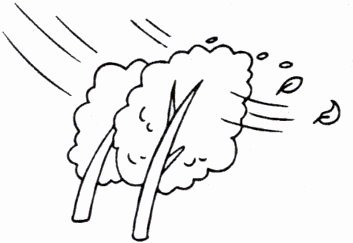
Scientists tell us that the sun makes it move and blow. When the sun shines, it makes the land and the water hot. Then the land and water make the air hot. The warm air is light, so it goes up. The cool air moves in to take the place of(取代) the warm air. Warm and cool air move from place to place and that makes winds.
When the wind changes speed, it often brings a change in the weather. When the air moves slowly, it makes light winds. But when the air moves very fast, it makes big winds. It can also tell us a lot about what the weather will be like. Air over the land is dry and that over the water is wet. Winds from the land or the water bring different kinds of weather. Some winds bring sunny or dry weather and other bring rainy or wet weather.
(
A. By listing numbers.
B. By telling a story.
C. By giving examples.
D. By asking questions.
(

(
A. Cool air makes big winds.
B. The wind can change the weather.
C. The wind only blows on rainy days.
D. The warm air is usually heavy.
(
A. Weather report.
B. School life.
C. History.
D. Science.
Where does the wind come from? What makes the wind move all the time?
Scientists tell us that the sun makes it move and blow. When the sun shines, it makes the land and the water hot. Then the land and water make the air hot. The warm air is light, so it goes up. The cool air moves in to take the place of(取代) the warm air. Warm and cool air move from place to place and that makes winds.
When the wind changes speed, it often brings a change in the weather. When the air moves slowly, it makes light winds. But when the air moves very fast, it makes big winds. It can also tell us a lot about what the weather will be like. Air over the land is dry and that over the water is wet. Winds from the land or the water bring different kinds of weather. Some winds bring sunny or dry weather and other bring rainy or wet weather.
(
D
)33. How does the writer start the passage?A. By listing numbers.
B. By telling a story.
C. By giving examples.
D. By asking questions.
(
C
)34. According to Paragraph 2, which picture best tells the movements of warm air and cool air?(
B
)35. Which of the following statements is TRUE?A. Cool air makes big winds.
B. The wind can change the weather.
C. The wind only blows on rainy days.
D. The warm air is usually heavy.
(
D
)36. In which part of a newspaper can we read the passage?A. Weather report.
B. School life.
C. History.
D. Science.
答案
33.D 34.C 35.B 36.D
解析
翻译:
(2025·杭州阶段)
风从哪里来?是什么让风一直移动?
科学家告诉我们,是太阳使它(空气)移动并形成风。当太阳照耀时,它使陆地和水变热。然后陆地和水使空气变热。暖空气很轻,所以它会上升。冷空气移动过来取代暖空气的位置。暖空气和冷空气从一个地方移动到另一个地方,这就形成了风。
当风的速度改变时,它通常会带来天气的变化。当空气缓慢移动时,就会形成微风。但当空气快速移动时,就会形成大风。它还能告诉我们很多关于天气将会如何的信息。陆地上的空气是干燥的,而水面上的空气是潮湿的。来自陆地或水面的风会带来不同类型的天气。一些风带来晴朗或干燥的天气,另一些风带来多雨或潮湿的天气。
33. 作者是如何开始这篇文章的?
A. 通过列举数字。
B. 通过讲故事。
C. 通过举例子。
D. 通过提问。
34. 根据第二段,哪幅图最能说明暖空气和冷空气的运动?
35. 以下哪项陈述是正确的?
A. 冷空气形成大风。
B. 风可以改变天气。
C. 风只在雨天刮。
D. 暖空气通常很重。
36. 我们可以在报纸的哪个部分读到这篇文章?
A. 天气预报。
B. 学校生活。
C. 历史。
D. 科学。
