

 登录
■ A. Listen and choose. 听录音,选择正确的答语。
(
a. Helps others.
b. Saves most of it.
c. Buys storybooks.
(
a. Sad.
b. Happy.
c. Worried.
(
a. By doing chores.
b. By making toys.
c. By getting lucky money.
(
b
) 1. What does Tom do with his pocket money?a. Helps others.
b. Saves most of it.
c. Buys storybooks.
(
b
) 2. How does Lily feel after buying a pencil for Lucy?a. Sad.
b. Happy.
c. Worried.
(
a
) 3. How does Tom earn pocket money?a. By doing chores.
b. By making toys.
c. By getting lucky money.
答案
1. b 2. b 3. a
■ B. Read and match. 读一读,将单词或词组和对应的释义连线。
1 pocket money
a a plan to save money
2 a savings plan
b money a child gets regularly ( 定期地 )
3 chores
c in a sensible ( 明智的 ) way
4 wisely
d jobs like cleaning, washing at home
1 pocket money
a a plan to save money
2 a savings plan
b money a child gets regularly ( 定期地 )
3 chores
c in a sensible ( 明智的 ) way
4 wisely
d jobs like cleaning, washing at home
答案
1-b 2-a 3-d 4-c
解析
我们可以逐个匹配词义和对应的释义:
1. pocket money的含义是零花钱,指孩子定期可以获得的钱款,对应释义b;
2. a savings plan的含义是储蓄计划,也就是用来存钱的方案,对应释义a;
3. chores的含义是家务杂活,指家里打扫、清洗这类的家务工作,对应释义d;
4. wisely是副词,含义是明智地,指以明智的方式,对应释义c。
1. pocket money的含义是零花钱,指孩子定期可以获得的钱款,对应释义b;
2. a savings plan的含义是储蓄计划,也就是用来存钱的方案,对应释义a;
3. chores的含义是家务杂活,指家里打扫、清洗这类的家务工作,对应释义d;
4. wisely是副词,含义是明智地,指以明智的方式,对应释义c。
C. Read, choose and write. 读一读,选择合适的内容完成句子并回答问题。
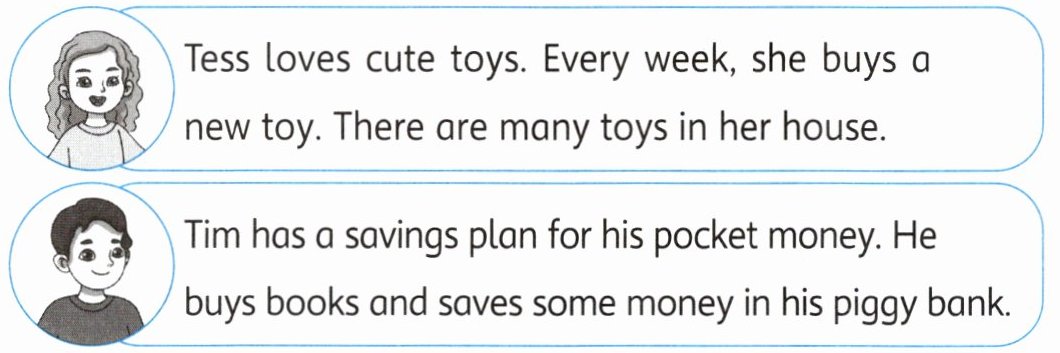
Tess .
Tim .
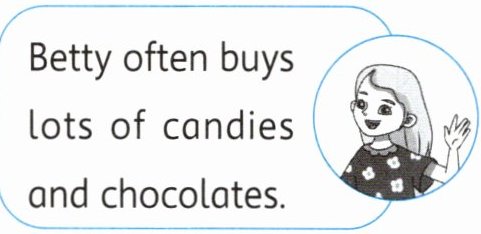
Betty .
• wastes pocket money
• spends pocket money wisely
Who is the money-wise kid?
Tess .
Tim .
Betty .
• wastes pocket money
• spends pocket money wisely
Who is the money-wise kid?
答案
Tess wastes pocket money.
Tim spends pocket money wisely.
Betty wastes pocket money.
Who is the money-wise kid? Tim.
Tim spends pocket money wisely.
Betty wastes pocket money.
Who is the money-wise kid? Tim.
解析
我们根据三个人的消费行为匹配对应的描述:1. Tess每周都购买新玩具,家中已经有大量玩具,属于浪费零花钱;2. Tim有明确的零花钱储蓄计划,购买书籍同时还会把部分钱存进存钱罐,属于明智地支配零花钱;3. Betty经常购买大量糖果和巧克力,属于浪费零花钱。最后符合“明智理财的孩子”描述的是Tim。
