

 登录
一、一材多设问 阅读理解。
The Beauty of Chinese Music
——素材源自教材P90 Reading Plus
①Last night, one of my Chinese friends took me to a traditional Chinese music concert. I have always wanted to see traditional Chinese music performed live. The most common Chinese instruments that I recognized were the erhu, pipa, guzheng, and dizi. The concert was a superb performance by Chinese artists, attended by both the elderly and the young. As a foreign audience member, I felt the legacy and continuation of traditional Chinese music in China, and I deeply felt the charm of traditional Chinese music.
②The first song that was performed was a familiar tune, Molihua (Jasmine Flower). It was one of the first Chinese folk songs to become popular outside of China. The romantic song, played in a simple five-note scale that is characteristic of Chinese music, expressed the love for natural beauty. It was adapted into the Italian opera Turandot by Puccini. It was also played during the 2008 Beijing Olympic Games, the opening ceremony of the 2010 Shanghai Expo, and the opening ceremony of the Youth Olympics in Nanjing in 2014. No wonder it sounded so familiar!
③My favourite performance was the erhu solo of Erquan Yingyue. The piece has a poetic name, which means Moon Reflected on Second Spring. The gifted performer was so expressive that I almost cried along with it as I listened. The piece is considered one of the masterpieces of
Chinese string music and the most famous piece by Chinese musician Abing. Its sad beauty reminded me of the hardships in Abing's life, but under the sadness, I sensed the musician's optimism and deep love for life.
④The concert ended with Chunjie Xuqu (the Spring Festival Overture), the first movement of the Spring Festival Suite by Li Huanzhi. Composed in the 1950s, the piece was based on the folk music of northern Shaanxi. It depicts the Spring Festival celebrated in northern Shaanxi Province in China during the Chinese People's War of Resistance Against Japanese Aggression. The piece had a lively beginning, and then slowed down to a soothing tune. As the melody played, I felt as though I was among the crowd celebrating the Spring Festival in Shaanxi back then, sharing the people's uplifting spirit and their hopes for a bright future.
(
A. Six. B. Five.
C. Four. D. Three.
(
A. Molihua.
B. Erquan Yingyue.
C. Chunjie Xuqu.
D. Liuyang River.
(
A. Happy and humorous.
B. Loud and exciting.
C. Touching but too long.
D. Sad but positive.
(
A. In the 1950s. B. In 2008.
C. In the 1990s. D. In 2014.
(
【拓展设问】根据短文内容,判断正误(正确“T”,错误“F”)。
(
(
(
(
(
The Beauty of Chinese Music
——素材源自教材P90 Reading Plus
①Last night, one of my Chinese friends took me to a traditional Chinese music concert. I have always wanted to see traditional Chinese music performed live. The most common Chinese instruments that I recognized were the erhu, pipa, guzheng, and dizi. The concert was a superb performance by Chinese artists, attended by both the elderly and the young. As a foreign audience member, I felt the legacy and continuation of traditional Chinese music in China, and I deeply felt the charm of traditional Chinese music.
②The first song that was performed was a familiar tune, Molihua (Jasmine Flower). It was one of the first Chinese folk songs to become popular outside of China. The romantic song, played in a simple five-note scale that is characteristic of Chinese music, expressed the love for natural beauty. It was adapted into the Italian opera Turandot by Puccini. It was also played during the 2008 Beijing Olympic Games, the opening ceremony of the 2010 Shanghai Expo, and the opening ceremony of the Youth Olympics in Nanjing in 2014. No wonder it sounded so familiar!
③My favourite performance was the erhu solo of Erquan Yingyue. The piece has a poetic name, which means Moon Reflected on Second Spring. The gifted performer was so expressive that I almost cried along with it as I listened. The piece is considered one of the masterpieces of
Chinese string music and the most famous piece by Chinese musician Abing. Its sad beauty reminded me of the hardships in Abing's life, but under the sadness, I sensed the musician's optimism and deep love for life.
④The concert ended with Chunjie Xuqu (the Spring Festival Overture), the first movement of the Spring Festival Suite by Li Huanzhi. Composed in the 1950s, the piece was based on the folk music of northern Shaanxi. It depicts the Spring Festival celebrated in northern Shaanxi Province in China during the Chinese People's War of Resistance Against Japanese Aggression. The piece had a lively beginning, and then slowed down to a soothing tune. As the melody played, I felt as though I was among the crowd celebrating the Spring Festival in Shaanxi back then, sharing the people's uplifting spirit and their hopes for a bright future.
(
C
)1. How many Chinese instruments did the writer recognize at the concert?A. Six. B. Five.
C. Four. D. Three.
(
A
)2. Which of the following songs is about natural beauty?A. Molihua.
B. Erquan Yingyue.
C. Chunjie Xuqu.
D. Liuyang River.
(
D
)3. What did the writer think of Erquan Yingyue?A. Happy and humorous.
B. Loud and exciting.
C. Touching but too long.
D. Sad but positive.
(
A
)4. When was Chunjie Xuqu created?A. In the 1950s. B. In 2008.
C. In the 1990s. D. In 2014.
(
B
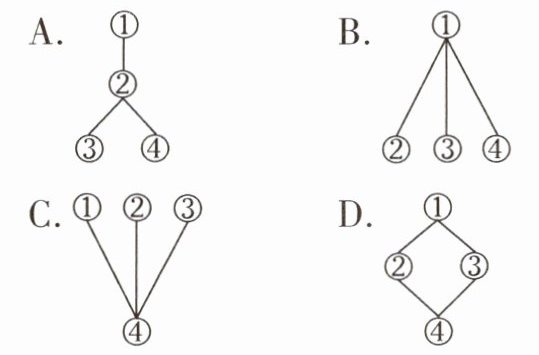
)5. 新考法 段落划分 What is the structure of the text?【拓展设问】根据短文内容,判断正误(正确“T”,错误“F”)。
(
F
)6. The writer of the text comes from China.(
F
)7. Molihua was adapted from an Italian opera.(
T
)8. Erquan Yingyue was played on the erhu at the concert.(
F
)9. Chunjie Xuqu is about the Spring Festival celebrations in South China.(
T
)10. The last song of the concert was Chunjie Xuqu.答案
1. C
2. A
3. D
4. A
5. B
6. F
7. F
8. T
9. F
10. T
