

 登录
Ⅲ. 阅读理解。
It's not easy to get used to another country's customs, but before you visit a country, you'd better learn how to behave properly at table.
| In China, it's rude to use your chopsticks to hit an empty bowl. And you are not supposed to point at anyone with your chopsticks. When you finish eating, place them on top of the bowl. And you should never stick (插) your chopsticks into the food. |
| When in India, do as the Indians do. In India, you are expected to eat with your right hand. That's because Indians think the left hand is “dirty” (when you shake hands with an Indian, you should also use your right hand). |
| In France, you are not supposed to put your bread on your plate. Instead, you should put it on the table. And when you eat fruit, you should cut it up and eat it with a fork. In France, don't eat anything with your hands except bread. |
(
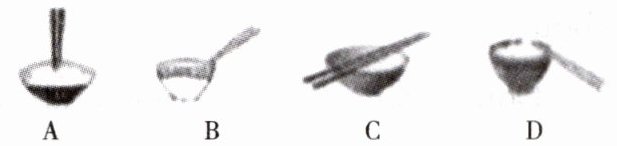
(
A. important
B. impolite
C. necessary
D. wise
(
A. On the table.
B. On a plate.
C. In a bowl.
D. In a cup.
(
A. Chopsticks.
B. A knife.
C. A spoon.
D. A fork.
(
A. How to serve at table.
B. How to use forks and chopsticks.
C. Some fantastic countries to visit.
D. Eating customs in some countries.
It's not easy to get used to another country's customs, but before you visit a country, you'd better learn how to behave properly at table.
| In China, it's rude to use your chopsticks to hit an empty bowl. And you are not supposed to point at anyone with your chopsticks. When you finish eating, place them on top of the bowl. And you should never stick (插) your chopsticks into the food. |
| When in India, do as the Indians do. In India, you are expected to eat with your right hand. That's because Indians think the left hand is “dirty” (when you shake hands with an Indian, you should also use your right hand). |
| In France, you are not supposed to put your bread on your plate. Instead, you should put it on the table. And when you eat fruit, you should cut it up and eat it with a fork. In France, don't eat anything with your hands except bread. |
(
C
)1. In China, when you are full, what should you do?(
B
)2. Indians probably think it's ____ to eat with the left hand.A. important
B. impolite
C. necessary
D. wise
(
A
)3. Where do French people put their bread?A. On the table.
B. On a plate.
C. In a bowl.
D. In a cup.
(
D
)4. What do French people use to eat fruit?A. Chopsticks.
B. A knife.
C. A spoon.
D. A fork.
(
D
)5. What's the reading mainly about?A. How to serve at table.
B. How to use forks and chopsticks.
C. Some fantastic countries to visit.
D. Eating customs in some countries.
答案
1. C 2. B 3. A 4. D 5. D
解析
翻译:
Ⅲ. 阅读理解。
习惯另一个国家的习俗并不容易,但在你访问一个国家之前,你最好学会在餐桌上举止得体。
| 在中国,用筷子敲空碗是不礼貌的。而且你不应该用筷子指着任何人。当你吃完后,把它们放在碗上。并且你绝不应该把筷子插进食物里。 |
| 在印度时,要入乡随俗。在印度,人们期望你用右手吃饭。那是因为印度人认为左手是“脏的”(当你和一个印度人握手时,你也应该用右手)。 |
| 在法国,你不应该把面包放在盘子里。相反,你应该把它放在桌子上。而且当你吃水果时,你应该把它切碎然后用叉子吃。在法国,除了面包,不要用手吃任何东西。 |
( )1. 在中国,当你吃饱了,你应该做什么?
( )2. 印度人可能认为用左手吃饭是____的。
A. 重要的
B. 不礼貌的
C. 必要的
D. 明智的
( )3. 法国人把他们的面包放在哪里?
A. 在桌子上。
B. 在盘子里。
C. 在碗里。
D. 在杯子里。
( )4. 法国人用什么吃水果?
A. 筷子。
B. 一把刀。
C. 一个勺子。
D. 一把叉子。
( )5. 这篇阅读主要讲的是什么?
A. 如何在餐桌上服务。
B. 如何使用叉子和筷子。
C. 一些值得游览的很棒的国家。
D. 一些国家的饮食习俗。
Ⅳ. 任务型阅读。
Table manners in America
Don't circle your plate with your arms. If you do so, you will become the focus (焦点) of the table. Everyone would wonder, “Is there anything wrong with the food?”. This may give a wrong message that you don't like the food or something like that.
Don't push the plate back when finished. Leave it where it was. Do you want to let the hostess (女主人) ① ____ (know) that you have just done some labours?
Don't lean (倚靠) back and say “I'm through” or “I'm full”. Just put the fork and knife across the plate. That's all.
② Don't cut up everything before you start to eat. Cut only one or two bites (块) at the time. Never take a huge mouthful of anything. Do you want to show how hungry you are? Don't do that. It's not so good.
It's never good to reach across the table for anything. If the thing you want is not at hand, simply ask the nearest person for help, like “③ Mrs Smith, could you pass me the dish, please?”
1. 判断正 (T) 误 (F)。
When we have dinner in an American family, we can circle our plate with our arms. (
2. 用①处所给词的适当形式填空。
3. 将句②改成被动语态。
Everything
4. 将句③改为其同义句。
Mrs Smith, could you
5. How many manners are there in the passage?
Table manners in America
Don't circle your plate with your arms. If you do so, you will become the focus (焦点) of the table. Everyone would wonder, “Is there anything wrong with the food?”. This may give a wrong message that you don't like the food or something like that.
Don't push the plate back when finished. Leave it where it was. Do you want to let the hostess (女主人) ① ____ (know) that you have just done some labours?
Don't lean (倚靠) back and say “I'm through” or “I'm full”. Just put the fork and knife across the plate. That's all.
② Don't cut up everything before you start to eat. Cut only one or two bites (块) at the time. Never take a huge mouthful of anything. Do you want to show how hungry you are? Don't do that. It's not so good.
It's never good to reach across the table for anything. If the thing you want is not at hand, simply ask the nearest person for help, like “③ Mrs Smith, could you pass me the dish, please?”
1. 判断正 (T) 误 (F)。
When we have dinner in an American family, we can circle our plate with our arms. (
F
)2. 用①处所给词的适当形式填空。
know
3. 将句②改成被动语态。
Everything
isn't cut
up before you start to eat.4. 将句③改为其同义句。
Mrs Smith, could you
pass
the dish to
me, please?5. How many manners are there in the passage?
There are five manners in the passage.
答案
1. F 2. know 3. isn't cut 4. pass to 5. There are five manners in the passage.
解析
翻译:
### Ⅳ. 任务型阅读。
#### 美国的餐桌礼仪
不要用胳膊圈着盘子。如果你这样做,你会成为餐桌的焦点。每个人都会疑惑:“食物有什么问题吗?”这可能会传递出错误的信息,比如你不喜欢这食物之类的。
吃完后不要把盘子推回去。把它留在原来的地方。你想让女主人知道你刚刚做了一些“劳动”吗?
不要向后仰着说“我吃完了”或者“我饱了”。只要把叉子和刀交叉放在盘子上就可以了。就这么简单。
在开始吃之前不要把所有东西都切好。一次只切一两口的量。永远不要大口吃任何东西。你想表现出你有多饿吗?别那样做。那样不太好。
越过餐桌去够任何东西从来都不是好事。如果你想要的东西不在手边,只需向离你最近的人求助,比如“史密斯夫人,请你把那个盘子递给我好吗?”
1. 判断正(T)误(F)。
当我们在美国人家中吃晚餐时,我们可以用胳膊圈着盘子。( )
2. 用①处所给词的适当形式填空。
3. 将句②改成被动语态。
在你开始吃之前,所有东西都____被切好。
4. 将句③改为其同义句。
史密斯夫人,请你把盘子____我好吗?
5. 文章中有多少条礼仪?____
