

 登录
登录
Ⅰ. 根据句意、图片提示和汉语提示填写单词。
(1)Don't ______ (呼喊). The ______ is sleeping.
(2)Don't walk on the ______ .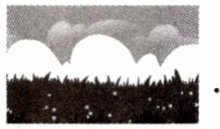
(3)Don't ______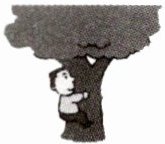 the tree. It's ______ (危险的).
(1)Don't ______ (呼喊). The ______
is sleeping.(2)Don't walk on the ______ .
(3)Don't ______
the tree. It's ______ (危险的).答案
(1)shout; baby (2)grass (3)climb; dangerous
解析
(1)第一空“呼喊”对应单词shout,Don't后接动词原形;第二空图片为婴儿,对应单词baby。(2)图片为草地,“草地”对应单词grass。(3)第一空图片为爬树,“爬”对应单词climb,Don't后接动词原形;第二空“危险的”对应单词dangerous。
Ⅱ. 选择合适的介词补全对话及句子。
in with off
(1)I fell ______ the bed.
(2)—Is Tom talking ______ you?
—Yes, he is. We are happy.
(3)I found Lingling ______ the bedroom.
in with off
(1)I fell ______ the bed.
(2)—Is Tom talking ______ you?
—Yes, he is. We are happy.
(3)I found Lingling ______ the bedroom.
答案
(1)off
(2)with
(3)in
(2)with
(3)in
解析
(1) “fall off”是固定短语,表示“从……跌落”,这里说“I fell off the bed.”即“我从床上跌落下来”,所以此空填off。
(2) “talk with sb.”是固定搭配,意为“和某人交谈”,此句问“—Is Tom talking with you?”即“汤姆正在和你交谈吗?”,所以填with。
(3) “in the bedroom”表示“在卧室里”,“I found Lingling in the bedroom.”意思是“我发现玲玲在卧室里”,故填in。
(2) “talk with sb.”是固定搭配,意为“和某人交谈”,此句问“—Is Tom talking with you?”即“汤姆正在和你交谈吗?”,所以填with。
(3) “in the bedroom”表示“在卧室里”,“I found Lingling in the bedroom.”意思是“我发现玲玲在卧室里”,故填in。
( )(1)—______
—I found him in the kitchen.
A.Where did you find your mum?
B.Who find your sister?
C.Where did you find Tom?
—I found him in the kitchen.
A.Where did you find your mum?
B.Who find your sister?
C.Where did you find Tom?
答案
C
解析
根据答句“I found him in the kitchen.”可知,问句应询问“在哪里找到某人”,用Where引导,且时态为一般过去时,助动词用did。A选项中“mum”是女性,答句用“him”,性别不符;B选项疑问词错误且“find”未用过去式;C选项“Where did you find Tom?”符合,Tom是男性,用“him”指代。
( )(2)—Don't shout in the class.
—______
A.Sorry, Mr Wu.
B.OK. Let's go.
C.Of course.
—______
A.Sorry, Mr Wu.
B.OK. Let's go.
C.Of course.
答案
A
解析
题目中"Don't shout in the class."是祈使句,表示禁止在课堂上大喊。对于这样的提醒,合适的回应应是道歉。选项A"Sorry, Mr Wu."符合语境;B"OK. Let's go."意为“好的,我们走”,与语境无关;C"Of course."意为“当然”,也不符合回应禁止行为的场景。
( )(3)You can ______ in the playground.
A.ran
B.running
C.run
A.ran
B.running
C.run
答案
C
解析
题干为“You can ______ in the playground.”,其中“can”为情态动词,后接动词原形。
选项A“ran”为过去式,选项B“running”为现在分词,选项C“run”为动词原形。
因此,选择动词原形“run”填入空格。
选项A“ran”为过去式,选项B“running”为现在分词,选项C“run”为动词原形。
因此,选择动词原形“run”填入空格。
