

 登录
登录
探究点1 compare 的用法
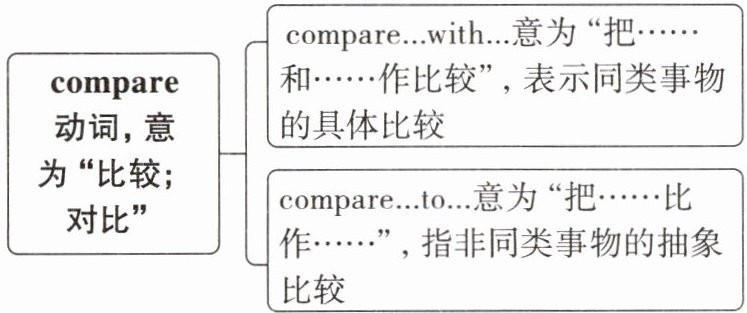
Let’s compare this book with that one.
让我们把这本书和那本书比较一下。
Writers often compare life to a journey.
作家们经常把生活比作一场旅行。
情境应用
1. People often a mother’s love sunshine.(把……比作……)
2. this picture that one, and you will see the differences.(把
……和……比较)
Let’s compare this book with that one.
让我们把这本书和那本书比较一下。
Writers often compare life to a journey.
作家们经常把生活比作一场旅行。
情境应用
1. People often a mother’s love sunshine.(把……比作……)
2. this picture that one, and you will see the differences.(把
……和……比较)
答案
1. compare; to
2. Compare; with
2. Compare; with
解析
本题考查动词compare的固定搭配用法:1. compare...to...意为“把……比作……”,用于不同类事物间的抽象比喻;2. compare...with...意为“把……和……作比较”,用于同类事物间的具体对比。第1题语境是将母爱比作阳光,属于不同类事物的抽象比喻,主语People为复数,句子是一般现在时,谓语用动词原形;第2题是祈使句结构,句首用动词原形,语境是对比两幅图片的差异,属于同类事物的具体比较。
探究点2 loud 的用法
情境应用
1. The rain made on the window.(很大的噪音)
2. Please speak . I can’t hear you.(大声地)
情境应用
1. The rain made on the window.(很大的噪音)
2. Please speak . I can’t hear you.(大声地)
答案
1. a loud noise 2. loud
解析
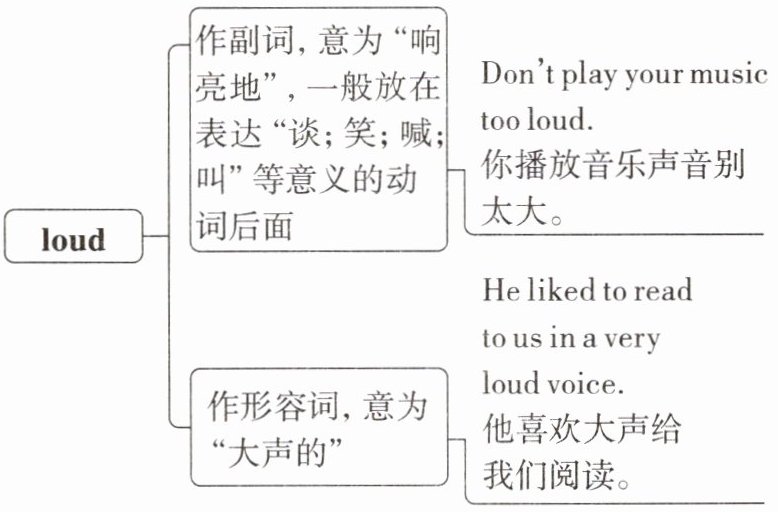
1. 此处要表达“很大的噪音”,“噪音”是名词noise,需要用形容词loud修饰,构成固定搭配make a loud noise,符合雨打窗户发出很大声响的语境。
2. 空格前的speak是表示“说话”的动词,根据loud的用法,作副词意为“大声地”,可以直接放在这类表示说、笑、喊含义的动词之后,符合此处“请大声说,我听不见”的要求。
2. 空格前的speak是表示“说话”的动词,根据loud的用法,作副词意为“大声地”,可以直接放在这类表示说、笑、喊含义的动词之后,符合此处“请大声说,我听不见”的要求。
Ⅰ.找出画线部分与其他单词发音不同的选项
() 1. A. away B. about
C. agree D. lazy
() 2. A. hers B. term
C. person D. number
() 3. A. together B. compare
C. solve D. tomorrow
() 4. A. moment B. flute
C. quiet D. open
() 5. A. hard-working
B. perform
C. forty
D. horse
() 1. A. away B. about
C. agree D. lazy
() 2. A. hers B. term
C. person D. number
() 3. A. together B. compare
C. solve D. tomorrow
() 4. A. moment B. flute
C. quiet D. open
() 5. A. hard-working
B. perform
C. forty
D. horse
答案
1.D 2.D 3.C 4.B 5.A
解析
我们逐个辨析每个单词画线部分的发音:
1. 选项A.away /əˈweɪ/、B.about /əˈbaʊt/、C.agree /əˈɡriː/ 中画线字母a的发音均为/ə/,D.lazy /ˈleɪzi/ 中画线字母a的发音为/eɪ/,发音不同的是D。
2. 选项A.hers /hɜːz/、B.term /tɜːm/、C.person /ˈpɜːsn/ 中画线部分的发音均为/ɜː/,D.number /ˈnʌmbə(r)/ 中画线部分er的发音为/ə/,发音不同的是D。
3. 选项A.together /təˈɡeðə(r)/、B.compare /kəmˈpeə(r)/、D.tomorrow /təˈmɒrəʊ/ 中画线字母o的发音均为/ə/,C.solve /sɒlv/ 中画线字母o的发音为/ɒ/,发音不同的是C。
4. 选项A.moment /ˈməʊmənt/、C.quiet /ˈkwaɪət/、D.open /ˈəʊpən/ 中画线字母e的发音均为/ə/,B.flute /fluːt/ 中末尾画线字母e不发音,发音不同的是B。
5. 选项B.perform /pəˈfɔːm/、C.forty /ˈfɔːti/、D.horse /hɔːs/ 中画线部分or的发音均为/ɔː/,A.hard-working /ˌhɑːd ˈwɜːkɪŋ/ 中画线部分or的发音为/ɜː/,发音不同的是A。
1. 选项A.away /əˈweɪ/、B.about /əˈbaʊt/、C.agree /əˈɡriː/ 中画线字母a的发音均为/ə/,D.lazy /ˈleɪzi/ 中画线字母a的发音为/eɪ/,发音不同的是D。
2. 选项A.hers /hɜːz/、B.term /tɜːm/、C.person /ˈpɜːsn/ 中画线部分的发音均为/ɜː/,D.number /ˈnʌmbə(r)/ 中画线部分er的发音为/ə/,发音不同的是D。
3. 选项A.together /təˈɡeðə(r)/、B.compare /kəmˈpeə(r)/、D.tomorrow /təˈmɒrəʊ/ 中画线字母o的发音均为/ə/,C.solve /sɒlv/ 中画线字母o的发音为/ɒ/,发音不同的是C。
4. 选项A.moment /ˈməʊmənt/、C.quiet /ˈkwaɪət/、D.open /ˈəʊpən/ 中画线字母e的发音均为/ə/,B.flute /fluːt/ 中末尾画线字母e不发音,发音不同的是B。
5. 选项B.perform /pəˈfɔːm/、C.forty /ˈfɔːti/、D.horse /hɔːs/ 中画线部分or的发音均为/ɔː/,A.hard-working /ˌhɑːd ˈwɜːkɪŋ/ 中画线部分or的发音为/ɜː/,发音不同的是A。
Ⅱ.用斜线(/)标注出适当的停顿
1. I get up at six o'clock every morning.
2. They are going to the park to fly a kite.
3. My sister likes dancing and singing very much.
4. The teacher is telling us an interesting story.
5. We need to buy some food for the picnic.
1. I get up at six o'clock every morning.
2. They are going to the park to fly a kite.
3. My sister likes dancing and singing very much.
4. The teacher is telling us an interesting story.
5. We need to buy some food for the picnic.
答案
1. I get up / at six o'clock / every morning.
2. They are going to the park / to fly a kite.
3. My sister / likes dancing and singing / very much.
4. The teacher / is telling us / an interesting story.
5. We need to buy some food / for the picnic.
2. They are going to the park / to fly a kite.
3. My sister / likes dancing and singing / very much.
4. The teacher / is telling us / an interesting story.
5. We need to buy some food / for the picnic.
解析
英语朗读停顿需要按照表意相对独立的意群来划分,在不同的意群之间用斜线断开,既符合日常口语朗读的习惯,也能清晰体现句子的逻辑语义。
