

 登录
■ A. Listen and tick. 听录音,勾出合适的内容完成短文。
Li Ming and Jenny are talking about their pocket money. Jenny bought 1. ( a bike / a book) with her pocket money. She 2. ( does chores / does her homework) every week to earn money. But Li Ming gets 3. ( gifts / lucky money) during the Spring Festival as pocket money. He saves some and keeps some to spend. Then he can use the money to 4. ( buy things / play computer games) he wants or gifts for others.
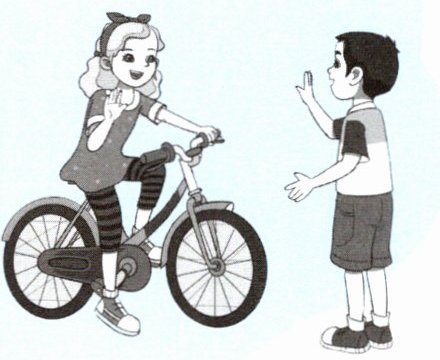
Li Ming and Jenny are talking about their pocket money. Jenny bought 1. ( a bike / a book) with her pocket money. She 2. ( does chores / does her homework) every week to earn money. But Li Ming gets 3. ( gifts / lucky money) during the Spring Festival as pocket money. He saves some and keeps some to spend. Then he can use the money to 4. ( buy things / play computer games) he wants or gifts for others.
答案
1. a bike 2. does chores 3. lucky money 4. buy things
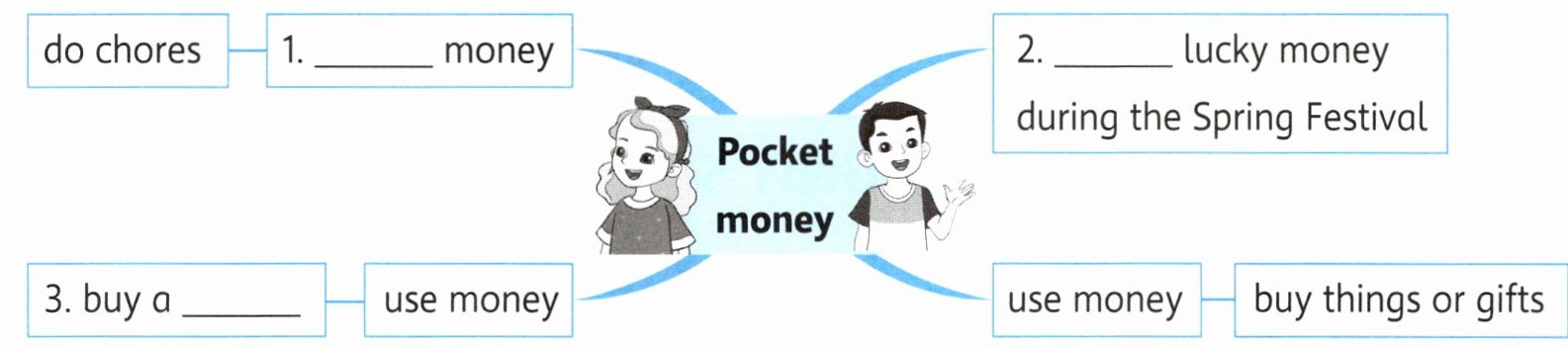
■ B. Read and write. 读一读,根据课文完成思维导图。
答案
1. earn/make 2. get 3. book(答案不唯一,toy、dictionary等合理名词也可)
解析
本题结合冀教版六年级上册《Pocket money》课文内容,梳理零花钱的获取途径与使用场景:1. 做家务对应的行为是赚取零花钱,填入符合该年级所学的对应动词即可;2. 春节期间对应的行为是获得压岁钱,填入对应动词;3. 填写零花钱的常见合理消费物品,符合单元所学词汇即可。
■ C. Read and check. 读一读,判断哪些是好的(√)行为,哪些不是(×)。
1. Danny goes to the library to borrow some books.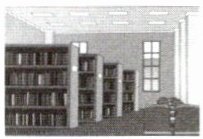 ()
2. Danny uses both sides(双面)of the paper. ()
3. Danny often buys new toys.
There are too many toys in his bedroom.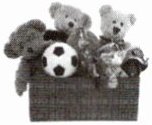 ()
4. Danny finds some coins(硬币)in the house and saves up.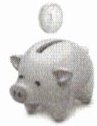 ()
1. Danny goes to the library to borrow some books.
()2. Danny uses both sides(双面)of the paper.
()3. Danny often buys new toys.
There are too many toys in his bedroom.
()4. Danny finds some coins(硬币)in the house and saves up.
()答案
1. √ 2. √ 3. × 4. √
解析
1. 去图书馆借阅书籍是热爱阅读、合理利用公共资源的良好行为,属于好行为。
2. 纸张双面使用是节约资源、践行环保的良好行为,属于好行为。
3. 频繁购买新玩具,卧室里玩具数量过多属于不必要的过度消费,是不好的行为。
4. 将找到的硬币储存起来是勤俭节约、合理储蓄的良好行为,属于好行为。
2. 纸张双面使用是节约资源、践行环保的良好行为,属于好行为。
3. 频繁购买新玩具,卧室里玩具数量过多属于不必要的过度消费,是不好的行为。
4. 将找到的硬币储存起来是勤俭节约、合理储蓄的良好行为,属于好行为。
