

 登录
Ⅳ.完形填空。
[新课标 历史文化] Do you like eating dumplings? Dumplings, also known as jiaozi, have a long history and have become an important 1 of many people's lives.
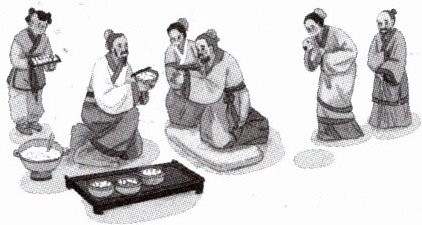
According to the story, during the Eastern Han Dynasty, there lived a(n) 2 doctor of traditional Chinese medicine named Zhang Zhongjing.
He 3 dumplings. About 1, 800 years ago, Zhang Zhongjing 4 to his village after being absent(缺席的) for a long period. That was a really 5 winter. Lots of poor villagers didn't have enough clothes or food and they had frostbite(冻疮), mainly around their 6. After seeing their 7, Zhang decided to do something to help them.
He 8 meat, black pepper and some Chinese medicine, and then put them in the dumpling wrappers(饺子皮). He shaped the dumplings like ears and 9 them. Every sick person was given two "ears" along with a bowl of warm soup. After a few days, the frostbite was gone. Because of their 10, the dumplings were called "jiao'er", which meant "tender(娇嫩的) ears". From Winter Solstice to New Year's Eve, Zhang kept 11 the dumplings among all the villagers who were in need. Since then, most people began to 12 Zhang and make dumplings.
13 time went by, the shape of dumplings has also changed. Some dumplings look like gold and silver ingots(银锭) that were used as 14 in ancient China. So people believe eating them can bring wealth(财富). Families love to eat them at the Spring Festival. Some of them 15 hide a clean coin inside a dumpling. It's said that the person that finds it will have good luck in the new year.
(
(
(
(
(
(
(
(
(
(
(
(
(
(
(
[新课标 历史文化] Do you like eating dumplings? Dumplings, also known as jiaozi, have a long history and have become an important 1 of many people's lives.
According to the story, during the Eastern Han Dynasty, there lived a(n) 2 doctor of traditional Chinese medicine named Zhang Zhongjing.
He 3 dumplings. About 1, 800 years ago, Zhang Zhongjing 4 to his village after being absent(缺席的) for a long period. That was a really 5 winter. Lots of poor villagers didn't have enough clothes or food and they had frostbite(冻疮), mainly around their 6. After seeing their 7, Zhang decided to do something to help them.
He 8 meat, black pepper and some Chinese medicine, and then put them in the dumpling wrappers(饺子皮). He shaped the dumplings like ears and 9 them. Every sick person was given two "ears" along with a bowl of warm soup. After a few days, the frostbite was gone. Because of their 10, the dumplings were called "jiao'er", which meant "tender(娇嫩的) ears". From Winter Solstice to New Year's Eve, Zhang kept 11 the dumplings among all the villagers who were in need. Since then, most people began to 12 Zhang and make dumplings.
13 time went by, the shape of dumplings has also changed. Some dumplings look like gold and silver ingots(银锭) that were used as 14 in ancient China. So people believe eating them can bring wealth(财富). Families love to eat them at the Spring Festival. Some of them 15 hide a clean coin inside a dumpling. It's said that the person that finds it will have good luck in the new year.
(
B
)1. A. symbol B. part C. mark D. treat(
A
)2. A. famous B. strange C. active D. patient(
A
)3. A. introduced B. discovered C. ordered D. passed(
D
)4. A. led B. spread C. dreamed D. returned(
C
)5. A. dry B. clear C. cold D. short(
C
)6. A. legs B. faces C. ears D. hands(
A
)7. A. condition B. progress C. work D. research(
D
)8. A. made up B. put up C. took up D. cut up(
B
)9. A. showed B. cooked C. painted D. sold(
B
)10. A. color B. shape C. taste D. smell(
C
)11. A. laying out B. finding out C. giving out D. watching out(
B
)12. A. change B. follow C. forget D. guess(
A
)13. A. As B. Since C. While D. If(
D
)14. A. food B. peace C. culture D. money(
D
)15. A. ever B. still C. again D. even答案
1-5 B A A D C 6-10 C A D B B
11-15 C B A D D
解析
【分析】
做完形填空需遵循“先通读把握主旨,再逐空结合语境分析”的思路:首先通读全文,明确文章围绕饺子的起源与文化意义展开;然后结合上下文逻辑、词汇辨析、固定搭配及中国历史文化背景,逐一排除不符合语境的选项,选出最恰当的答案。
【解析】
1. 第1空:考查词汇辨析。此处指饺子成为人们生活的重要部分,A.symbol(象征)、C.mark(标记)、D.treat(款待)均不符合语境,B.part(部分)正确。
2. 第2空:考查形容词辨析。张仲景是著名的中医,A.famous(著名的)符合;B.strange(奇怪的)、C.active(活跃的)、D.patient(耐心的)不符合。
3. 第3空:考查动词辨析。此处指张仲景介绍了饺子,A.introduced(介绍)正确;B.discovered(发现)、C.ordered(命令)、D.passed(传递)不符合。
4. 第4空:考查动词辨析。此处指他回到村庄,D.returned(返回)正确;A.led(带领)、B.spread(传播)、C.dreamed(梦想)不符合。
5. 第5空:考查形容词辨析。后文提到村民长冻疮,说明冬天寒冷,C.cold(寒冷的)正确;A.dry(干燥的)、B.clear(晴朗的)、D.short(短的)不符合。
6. 第6空:考查名词辨析。后文提到饺子形状像耳朵,可知冻疮在耳朵,C.ears(耳朵)正确;A.legs(腿)、B.faces(脸)、D.hands(手)不符合。
7. 第7空:考查名词辨析。此处指看到村民的状况,A.condition(状况)正确;B.progress(进步)、C.work(工作)、D.research(研究)不符合。
8. 第8空:考查短语辨析。做饺子馅需要切碎食材,D.cut up(切碎)正确;A.made up(编造)、B.put up(搭建)、C.took up(开始从事)不符合。
9. 第9空:考查动词辨析。饺子做好后需烹饪,B.cooked(煮)正确;A.showed(展示)、C.painted(绘画)、D.sold(售卖)不符合。
10. 第10空:考查名词辨析。饺子形状像耳朵,因此得名“jiao'er”,B.shape(形状)正确;A.color(颜色)、C.taste(味道)、D.smell(气味)不符合。
11. 第11空:考查短语辨析。此处指给有需要的村民分发饺子,C.giving out(分发)正确;A.laying out(布置)、B.finding out(查明)、D.watching out(小心)不符合。
12. 第12空:考查动词辨析。此处指人们效仿张仲景做饺子,B.follow(跟随、效仿)正确;A.change(改变)、C.forget(忘记)、D.guess(猜测)不符合。
13. 第13空:考查连词辨析。固定搭配“as time went by”(随着时间流逝),A.As正确;B.Since(自从)、C.While(当…时)、D.If(如果)不符合。
14. 第14空:考查名词辨析。银锭是古代的货币,D.money(钱)正确;A.food(食物)、B.peace(和平)、C.culture(文化)不符合。
15. 第15空:考查副词辨析。此处指人们甚至会在饺子里包硬币,D.even(甚至)正确;A.ever(曾经)、B.still(仍然)、C.again(再次)不符合。
【答案】
1-5 B A A D C 6-10 C A D B B 11-15 C B A D D
【知识点】
完形填空解题技巧,词汇辨析,语境理解
【点评】
本题以中国传统美食饺子的起源故事为载体,既考查学生的英语词汇运用、上下文逻辑分析能力,又渗透了中国传统文化知识,是一道兼具语言考查与文化传播意义的完形填空题。
【难度系数】
0.6
