

 登录
登录
Ⅳ.补全对话(本题共6小题,每小题2分,满分12分)
从下面方框中选择合适的句子,填到横线上,使对话意思完整。
A:Hi,Lisa. Did you have a hard time getting to work today?
B:Yeah,I even left home half an hour earlier than usual.
A:Me too! How heavy was the rain in your city?
B:
A:That sounds scary.
B:It's not just today's problem! Last month,my neighbourhood even got flooded for two days.
A:
B:Yes. Thankfully.
A:What were your family doing at that time?
B:
A:The weather report said this year's rainy season will be longer than usual.
B:

59.
从下面方框中选择合适的句子,填到横线上,使对话意思完整。
A:Hi,Lisa. Did you have a hard time getting to work today?
B:Yeah,I even left home half an hour earlier than usual.
B
59A:Me too! How heavy was the rain in your city?
B:
C
60 And the bus had to go super slowly,and the water washed away many cars.A:That sounds scary.
D
61B:It's not just today's problem! Last month,my neighbourhood even got flooded for two days.
A:
A
62B:Yes. Thankfully.
A:What were your family doing at that time?
B:
F
63A:The weather report said this year's rainy season will be longer than usual.
B:
E
6459.
B
60. C
61. D
62. A
63. F
64. E
答案
59.B 60.C 61.D 62.A 63.F 64.E
解析
【分析】
补全对话需结合上下文语境,分析句子间的逻辑关系:59题前B提到提前出门,后A回应“Me too”,说明B虽提前但仍迟到,需选对应迟到的句子;60题A询问雨的大小,需选描述雨势大的句子;61题A承接雨大的话题,结合B提到“不只是今天的问题”,需选询问雨是否越来越严重的句子;62题B答“Yes”,需选一般疑问句,结合语境问邻居情况;63题A问当时家人在做什么,需选过去进行时的回答;64题A说雨季更长,需选应对建议的句子。
【解析】
59. 前文B说提前出门,后文A说“Me too”,说明B还是迟到了,选B;
60. A问雨多大,C选项描述水几乎到车轮,体现雨大,选C;
61. A承接雨大的话题,B提到“不只是今天的问题”,D选项询问是否雨越来越严重,衔接自然,选D;
62. B答“Yes”,需一般疑问句,A选项是一般疑问句,问邻居是否安好,选A;
63. A问过去某时刻家人在做什么,F选项是过去进行时的回答,选F;
64. A说雨季更长,E选项给出应对建议,符合语境,选E。
【答案】
59.B 60.C 61.D 62.A 63.F 64.E
【知识点】
补全对话、情景交际
【点评】
本题考查日常情景对话的补全,需结合上下文逻辑选择合适句子,难度适中,学生需掌握日常话题的表达逻辑。
【难度系数】
0.3
补全对话需结合上下文语境,分析句子间的逻辑关系:59题前B提到提前出门,后A回应“Me too”,说明B虽提前但仍迟到,需选对应迟到的句子;60题A询问雨的大小,需选描述雨势大的句子;61题A承接雨大的话题,结合B提到“不只是今天的问题”,需选询问雨是否越来越严重的句子;62题B答“Yes”,需选一般疑问句,结合语境问邻居情况;63题A问当时家人在做什么,需选过去进行时的回答;64题A说雨季更长,需选应对建议的句子。
【解析】
59. 前文B说提前出门,后文A说“Me too”,说明B还是迟到了,选B;
60. A问雨多大,C选项描述水几乎到车轮,体现雨大,选C;
61. A承接雨大的话题,B提到“不只是今天的问题”,D选项询问是否雨越来越严重,衔接自然,选D;
62. B答“Yes”,需一般疑问句,A选项是一般疑问句,问邻居是否安好,选A;
63. A问过去某时刻家人在做什么,F选项是过去进行时的回答,选F;
64. A说雨季更长,E选项给出应对建议,符合语境,选E。
【答案】
59.B 60.C 61.D 62.A 63.F 64.E
【知识点】
补全对话、情景交际
【点评】
本题考查日常情景对话的补全,需结合上下文逻辑选择合适句子,难度适中,学生需掌握日常话题的表达逻辑。
【难度系数】
0.3
Ⅴ.读写题(本题共分两节,满分15分)
第一节 阅读短文,根据语篇内容,在方框内的缩写文章中,填入与短文意思最符合的单词,每空一词。(共6小题,每小题1分,满分6分)
Sometimes the earth, which looks gentle, will feel unhappy like us. Natural disasters are not always separate events. They often have a close relationship, which we can explain with geography knowledge we learn in class. For instance, we know the earth's outer layer is made of tectonic plates, and their movements shape our planet.
For example, when tectonic plates under the earth's surface move suddenly—sometimes sliding past each other or crashing together—they can cause earthquakes. These earthquakes may then trigger(触发) tsunamis. Tsunamis are huge ocean waves that destroy coastal areas. They can wash away houses, carry cars into the sea, and even ruin schools near the shore. This is because the movement of plates pushes a lot of seawater quickly, making the waves rush towards land with great force.
Besides, heavy rain may cause other disasters. When it rains heavily for days without stopping, it can lead to floods. The water fills streets, enters homes, and makes it hard for people to go out. And floods might make hillsides(山坡)unstable, causing landslides. Landslides can block roads so cars can't pass, and damage houses by covering them with dirt and rocks.
We should learn about these connections to make better preparations and keep ourselves safe.
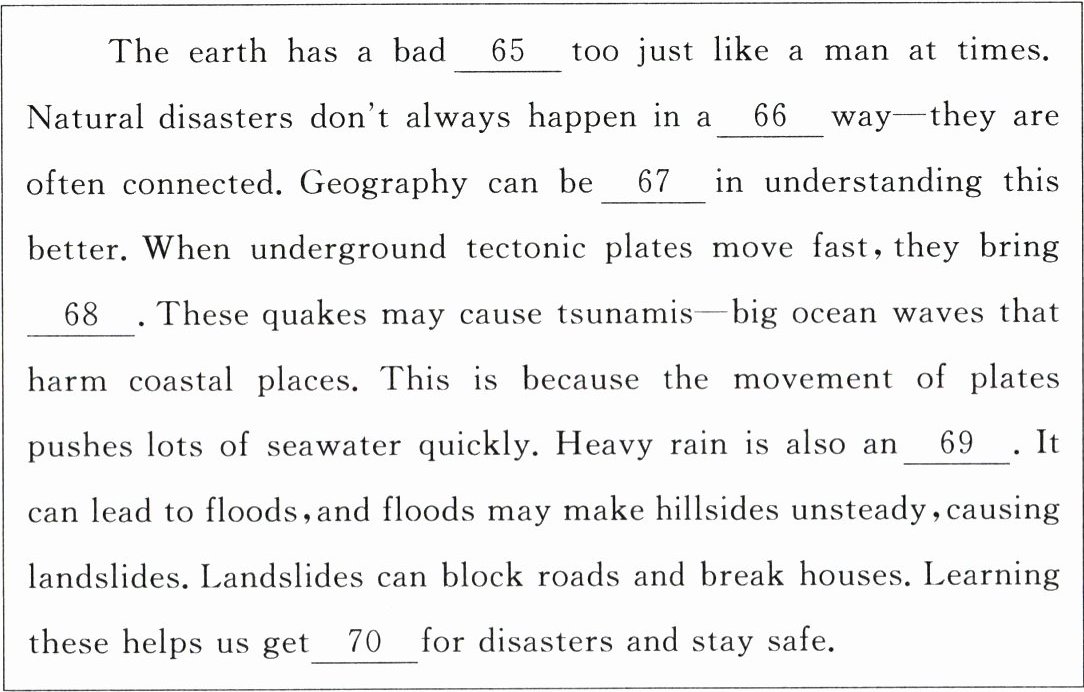
65.
69.
第二节 阅读短文,根据语篇内容,回答3个问题。(共3小题,每小题3分,满分9分)
71. Do floods possibly cause landslides?
72. What kind of areas do tsunamis mainly destroy?
73. What one thing do you think families should keep at home to deal with earthquakes or floods? Why?
第一节 阅读短文,根据语篇内容,在方框内的缩写文章中,填入与短文意思最符合的单词,每空一词。(共6小题,每小题1分,满分6分)
Sometimes the earth, which looks gentle, will feel unhappy like us. Natural disasters are not always separate events. They often have a close relationship, which we can explain with geography knowledge we learn in class. For instance, we know the earth's outer layer is made of tectonic plates, and their movements shape our planet.
For example, when tectonic plates under the earth's surface move suddenly—sometimes sliding past each other or crashing together—they can cause earthquakes. These earthquakes may then trigger(触发) tsunamis. Tsunamis are huge ocean waves that destroy coastal areas. They can wash away houses, carry cars into the sea, and even ruin schools near the shore. This is because the movement of plates pushes a lot of seawater quickly, making the waves rush towards land with great force.
Besides, heavy rain may cause other disasters. When it rains heavily for days without stopping, it can lead to floods. The water fills streets, enters homes, and makes it hard for people to go out. And floods might make hillsides(山坡)unstable, causing landslides. Landslides can block roads so cars can't pass, and damage houses by covering them with dirt and rocks.
We should learn about these connections to make better preparations and keep ourselves safe.
65.
temper
66. single
67. helpful
68. earthquakes
69.
example
70. ready
第二节 阅读短文,根据语篇内容,回答3个问题。(共3小题,每小题3分,满分9分)
71. Do floods possibly cause landslides?
Yes,they do.
72. What kind of areas do tsunamis mainly destroy?
Coastal areas.
73. What one thing do you think families should keep at home to deal with earthquakes or floods? Why?
Families should keep a first aid kit at home. Because the first aid kit can help treat injuries quickly before getting more help.(开放性设题,答案合理即可)
答案
65.temper
66.single
67.helpful
68.earthquakes
69.example
70.ready
71.Yes,they do.
72.Coastal areas.
73.Families should keep a first aid kit at home. Because the first aid kit can help treat injuries quickly before getting more help.
(开放性设题,答案合理即可)
66.single
67.helpful
68.earthquakes
69.example
70.ready
71.Yes,they do.
72.Coastal areas.
73.Families should keep a first aid kit at home. Because the first aid kit can help treat injuries quickly before getting more help.
(开放性设题,答案合理即可)
解析
【分析】
1. 65题:将地球拟人化,结合前文“like a man”和“bad”,需填表示“脾气”的名词;
2. 66题:后文提到自然灾害常相互关联,说明并非“单一”发生,需填形容词;
3. 67题:考查固定搭配“be helpful in doing sth”,结合句意“地理有助于理解灾害关联”,需填形容词;
4. 68题:后文出现“quakes”,说明板块快速移动引发地震,需填名词;
5. 69题:前文举了板块移动引发海啸的例子,此处表示大雨也是一个“例子”,需填名词;
6. 70题:考查固定短语“get ready for”,意为“为……做准备”,需填形容词;
7. 71题:根据原文“floods may make hillsides unsteady, causing landslides”,判断洪水是否引发滑坡;
8. 72题:根据原文“Tsunamis are huge ocean waves that destroy coastal areas”,提取海啸破坏的区域;
9. 73题:开放性问题,结合应对地震、洪水的常识作答,答案合理即可。
【解析】
65. 固定搭配“bad temper”表示“坏脾气”,结合拟人化语境,填temper;
66. 由后文“often connected”可知,自然灾害并非单独发生,single(单一的)符合语境;
67. “be helpful in doing sth”是固定结构,意为“有助于做某事”,此处指地理有助于理解灾害关联,填helpful;
68. 后文“These quakes”提示板块快速移动引发地震,填earthquakes;
69. 前文举例说明灾害关联性,此处表示大雨也是一个例子,填example;
70. “get ready for”是固定短语,意为“为……做准备”,符合句意;
71. 原文明确提到洪水可能引发滑坡,作肯定回答:Yes,they do.;
72. 原文指出海啸破坏沿海地区,答案为Coastal areas.;
73. 开放性试题,结合应对灾害的常识,示例答案为Families should keep a first aid kit at home. Because the first aid kit can help treat injuries quickly before getting more help.(答案合理即可)
【答案】
65.temper;66.single;67.helpful;68.earthquakes;69.example;70.ready;71.Yes,they do.;72.Coastal areas.;73.Families should keep a first aid kit at home. Because the first aid kit can help treat injuries quickly before getting more help.(开放性答案合理即可)
【知识点】
英语词汇运用、固定搭配、阅读理解、开放性问答
【点评】
本题分为语篇词汇填空和信息提取、开放性问答两部分,考查学生对上下文语境、固定搭配的掌握,以及阅读理解和语言表达能力,整体难度适中,需结合语篇内容和常识作答。
【难度系数】
0.5
1. 65题:将地球拟人化,结合前文“like a man”和“bad”,需填表示“脾气”的名词;
2. 66题:后文提到自然灾害常相互关联,说明并非“单一”发生,需填形容词;
3. 67题:考查固定搭配“be helpful in doing sth”,结合句意“地理有助于理解灾害关联”,需填形容词;
4. 68题:后文出现“quakes”,说明板块快速移动引发地震,需填名词;
5. 69题:前文举了板块移动引发海啸的例子,此处表示大雨也是一个“例子”,需填名词;
6. 70题:考查固定短语“get ready for”,意为“为……做准备”,需填形容词;
7. 71题:根据原文“floods may make hillsides unsteady, causing landslides”,判断洪水是否引发滑坡;
8. 72题:根据原文“Tsunamis are huge ocean waves that destroy coastal areas”,提取海啸破坏的区域;
9. 73题:开放性问题,结合应对地震、洪水的常识作答,答案合理即可。
【解析】
65. 固定搭配“bad temper”表示“坏脾气”,结合拟人化语境,填temper;
66. 由后文“often connected”可知,自然灾害并非单独发生,single(单一的)符合语境;
67. “be helpful in doing sth”是固定结构,意为“有助于做某事”,此处指地理有助于理解灾害关联,填helpful;
68. 后文“These quakes”提示板块快速移动引发地震,填earthquakes;
69. 前文举例说明灾害关联性,此处表示大雨也是一个例子,填example;
70. “get ready for”是固定短语,意为“为……做准备”,符合句意;
71. 原文明确提到洪水可能引发滑坡,作肯定回答:Yes,they do.;
72. 原文指出海啸破坏沿海地区,答案为Coastal areas.;
73. 开放性试题,结合应对灾害的常识,示例答案为Families should keep a first aid kit at home. Because the first aid kit can help treat injuries quickly before getting more help.(答案合理即可)
【答案】
65.temper;66.single;67.helpful;68.earthquakes;69.example;70.ready;71.Yes,they do.;72.Coastal areas.;73.Families should keep a first aid kit at home. Because the first aid kit can help treat injuries quickly before getting more help.(开放性答案合理即可)
【知识点】
英语词汇运用、固定搭配、阅读理解、开放性问答
【点评】
本题分为语篇词汇填空和信息提取、开放性问答两部分,考查学生对上下文语境、固定搭配的掌握,以及阅读理解和语言表达能力,整体难度适中,需结合语篇内容和常识作答。
【难度系数】
0.5
