

 登录
登录
五、阅读理解。
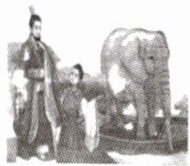
It's 201 A. D. There are no elephants in China, but the king gets an elephant as a present. People are very happy to see this big animal. Everyone carefully watches it and has a question: How heavy is it? But they don't know how to weigh(称重)it. No scales in China are big enough to weigh such a big animal.
The king has a six-year-old son called Cao Chong. He says, “Father, I know the way to weigh it.” No one believes the boy. But after he tells people his idea, they all think it is a good one.
“Here's what you do,” says the boy. “Let the elephant stand in a big boat on the water. Draw a line on the side of the boat at the water level(水位). Then bring it to the bank(河岸)and let the elephant off. Bring a lot of big stones, put the stones on the boat until the boat goes down to the same water level. Then take the stones out of the boat and weigh all the stones. Now you know how much the elephant weighs.”
“Wonderful! Wonderful!” shout the people. Soon everyone in the country knows that the king has a clever son.
(

(
A. How to weigh the elephant.
B. When to put the stones on boat.
C. Where to find lots of stones.
D. What to do to help the elephant.
(
A. It's difficult to go boating.
B. One must work hard for his dream.
C. Children can do great things.
D. Never use an elephant for easy things.
It's 201 A. D. There are no elephants in China, but the king gets an elephant as a present. People are very happy to see this big animal. Everyone carefully watches it and has a question: How heavy is it? But they don't know how to weigh(称重)it. No scales in China are big enough to weigh such a big animal.
The king has a six-year-old son called Cao Chong. He says, “Father, I know the way to weigh it.” No one believes the boy. But after he tells people his idea, they all think it is a good one.
“Here's what you do,” says the boy. “Let the elephant stand in a big boat on the water. Draw a line on the side of the boat at the water level(水位). Then bring it to the bank(河岸)and let the elephant off. Bring a lot of big stones, put the stones on the boat until the boat goes down to the same water level. Then take the stones out of the boat and weigh all the stones. Now you know how much the elephant weighs.”
“Wonderful! Wonderful!” shout the people. Soon everyone in the country knows that the king has a clever son.
(
B
)1. Which of the following pictures can be a “scale”?(
A
)2. What is Paragraph 3 about?A. How to weigh the elephant.
B. When to put the stones on boat.
C. Where to find lots of stones.
D. What to do to help the elephant.
(
C
)3. What does the story want to tell us?A. It's difficult to go boating.
B. One must work hard for his dream.
C. Children can do great things.
D. Never use an elephant for easy things.
答案
1. B 2. A 3. C
解析
【分析】
本题为英语阅读理解题,围绕曹冲称象的经典故事设置题目,需先通读全文把握故事内容,再针对各题的考查方向(细节理解、段落大意、主旨大意)逐一分析:第1题需结合曹冲称象的原理判断对应“秤”的选项;第2题需明确第三段的核心内容;第3题需提炼故事传达的道理。
【解析】
1. 结合曹冲称象利用水位等量替换的原理,对应选项B;
2. 第三段详细介绍了称大象的具体步骤,核心是如何称重,故选A;
3. 故事通过六岁曹冲想出称象的巧妙办法,说明孩子也能做成了不起的事,对应选项C。
【答案】
1.B 2.A 3.C
【知识点】
英语阅读理解、细节理解、主旨大意
【点评】
本题以经典故事为载体,考查学生对文章的理解能力,题型基础,贴近学生认知,有助于提升阅读技巧。
【难度系数】
0.5
本题为英语阅读理解题,围绕曹冲称象的经典故事设置题目,需先通读全文把握故事内容,再针对各题的考查方向(细节理解、段落大意、主旨大意)逐一分析:第1题需结合曹冲称象的原理判断对应“秤”的选项;第2题需明确第三段的核心内容;第3题需提炼故事传达的道理。
【解析】
1. 结合曹冲称象利用水位等量替换的原理,对应选项B;
2. 第三段详细介绍了称大象的具体步骤,核心是如何称重,故选A;
3. 故事通过六岁曹冲想出称象的巧妙办法,说明孩子也能做成了不起的事,对应选项C。
【答案】
1.B 2.A 3.C
【知识点】
英语阅读理解、细节理解、主旨大意
【点评】
本题以经典故事为载体,考查学生对文章的理解能力,题型基础,贴近学生认知,有助于提升阅读技巧。
【难度系数】
0.5
