

 登录
五、看图并根据上下文提示完成下列对话,每空填一词。
1. A: I'm thirsty, Mum. Can I have some juice?
B: OK. Oh, there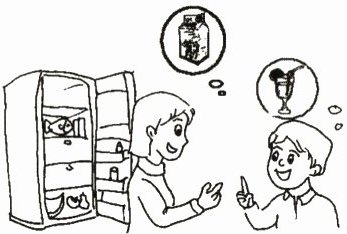
A:
B:
A: Good! I like going to the supermarket.
B: Let's make a shopping list(购物单) now. Can you help me?
A:
B: Look,
A: OK, Mum. Let's start.
2. A: What's the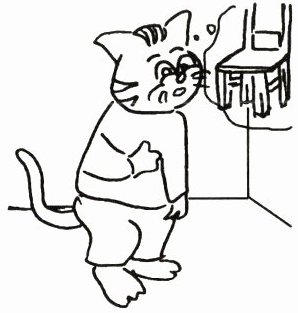
B: I'm very
A: Don't worry. I can get one for you.
B: Thanks.
1. A: I'm thirsty, Mum. Can I have some juice?
B: OK. Oh, there
isn't
any juice in the fridge. A:
Is
there any milk
in the fridge?B:
No
, there isn't. We should go to the super-market(超市) this evening.A: Good! I like going to the supermarket.
B: Let's make a shopping list(购物单) now. Can you help me?
A:
Yes/Sure
. But there's no pen. I can't
write.B: Look,
there
is a pencil on the table.A: OK, Mum. Let's start.
2. A: What's the
matter
, Sam? B: I'm very
tired
. But there aren't any chairs
.A: Don't worry. I can get one for you.
B: Thanks.
答案
1. isn't; Is; milk; No; Yes/Sure; can't; there
2. matter; tired; chairs
解析
【分析】首先梳理对话的上下文逻辑:第一部分是孩子口渴要果汁,妈妈告知冰箱里没有了,孩子询问是否还有其他饮品,妈妈说没有需要去超市,孩子想帮忙但没有笔,妈妈指出桌上有铅笔;第二部分是询问Sam的状况,Sam说自己累且没有椅子,朋友表示帮忙。每空需结合语法规则(there be句型、一般疑问句、否定句)和日常交际用语的固定搭配来填空。
【解析】1. 第一空:any用于否定句,juice是不可数名词,there be句型的否定形式为isn't;第二空:答句是there isn't,对应的一般疑问句需将be动词Is提前;第三空:结合语境,询问除果汁外的饮品,填milk;第四空:答句是否定,填No;第五空:表示愿意帮忙,填Yes/Sure;第六空:没有笔所以不能写字,填can't;第七空:there be句型表示某地有某物,填there。2. 第八空:固定搭配What's the matter(怎么了);第九空:结合Sam的状态描述,填tired;第十空:结合答句“拿一个”,填chairs。
【答案】1. isn't; Is; milk; No; Yes/Sure; can't; there 2. matter; tired; chairs
【知识点】there be句型;固定搭配;日常交际用语
【点评】本题为补全对话题型,考查学生对日常交际用语、基础语法的掌握,需结合上下文语境推理填空,难度适中。
【难度系数】0.6
六、阅读下列短文,判断所给句子与对话内容是否相符,相符的写“T”,不符的写“F”。
There's a folder(夹子)in the room. On the folder, there's a fish.
A mouse comes out. He sees the fish on it. He wants
to eat the fish.
A cat is hungry. He comes to the room. He sees the mouse and runs to him. “Don’t eat me,” says the mouse to the cat. “I know you like fish very much. I have a nice fish for you. Look, there it is.”
The cat is very happy to see the fish on the folder. He lets the mouse go and comes to the fish. Oh, the folder catches(捉)his paws(爪子). He can’t move. Then the mouse goes to eat the fish happily.
(
(
(
(
(
There's a folder(夹子)in the room. On the folder, there's a fish.
A mouse comes out. He sees the fish on it. He wants
to eat the fish.
A cat is hungry. He comes to the room. He sees the mouse and runs to him. “Don’t eat me,” says the mouse to the cat. “I know you like fish very much. I have a nice fish for you. Look, there it is.”
The cat is very happy to see the fish on the folder. He lets the mouse go and comes to the fish. Oh, the folder catches(捉)his paws(爪子). He can’t move. Then the mouse goes to eat the fish happily.
(
T
)1. There is a fish on the folder in the room.(
F
)2. At first, the cat wants to eat the fish, so he runs to it.(
T
)3. The folder catches the cat's paws.(
F
)4. At last(最后), the cat eats the fish.(
T
)5. The mouse is clever(聪明的).答案
1. T 2. F 3. T 4. F 5. T
解析
【分析】做这类判断正误题的核心方法是“定位原文,对比验证”:先通读短文理解大意,再逐题分析题目句子,回到短文中找到对应内容,对比两者是否一致,不能主观臆断,必须依据原文细节判断。
【解析】1. 定位原文:“There's a folder(夹子)in the room. On the folder, there's a fish.”,题目句子与原文一致,故判断为T;2. 定位原文:“A cat is hungry. He comes to the room. He sees the mouse and runs to him.”,猫跑向的是老鼠而非鱼,题目句子与原文不符,故判断为F;3. 定位原文:“Oh, the folder catches(捉)his paws(爪子).”,题目句子与原文一致,故判断为T;4. 定位原文:“Then the mouse goes to eat the fish happily.”,最后吃鱼的是老鼠,不是猫,题目句子与原文不符,故判断为F;5. 老鼠用“有鱼给猫”的说法骗了猫,成功自救,体现了聪明,题目句子与原文一致,故判断为T。
【答案】1.T 2.F 3.T 4.F 5.T
【知识点】短文阅读理解,细节信息判断,信息定位
【点评】本题为阅读理解判断正误题,考查学生对短文细节信息的提取与理解能力,解题关键是紧扣原文内容,避免主观猜测,整体难度适中,认真阅读短文即可正确作答。
【难度系数】0.7
