

 登录
C Read and circle(读一读,圈出正确的单词或词组)
1 Li Sha is going to have / having a busy day.
2 Mum and I usually go jogging tomorrow / at the weekend.
3 Peter is going to make / is making a robot tomorrow.
4 I visit my grandparents every Saturday / this weekend.
5 Dad is going to do / does some gardening next weekend.
1 Li Sha is going to have / having a busy day.
2 Mum and I usually go jogging tomorrow / at the weekend.
3 Peter is going to make / is making a robot tomorrow.
4 I visit my grandparents every Saturday / this weekend.
5 Dad is going to do / does some gardening next weekend.
答案
1. have 2. at the weekend 3. is going to make 4. every Saturday 5. is going to do
解析
【分析】这道题考查英语时态(一般现在时、一般将来时)的用法,解题思路是:先识别每个句子的时间状语,再根据时间状语匹配对应的动词形式——一般将来时用“be going to + 动词原形”结构,一般现在时用动词原形/第三人称单数形式,从而选出正确的单词或词组。
【解析】1. 句子为一般将来时(be going to结构),其后需接动词原形,故选have;2. usually是一般现在时的标志词,表经常性动作,at the weekend是常规活动的时间,tomorrow表将来不符合,故选at the weekend;3. 时间状语tomorrow表将来,需用一般将来时结构,故选is going to make;4. every Saturday是一般现在时的标志词,表经常性动作,this weekend表将来不符合,故选every Saturday;5. 时间状语next weekend表将来,需用一般将来时结构,故选is going to do。
【答案】1. have 2. at the weekend 3. is going to make 4. every Saturday 5. is going to do
【知识点】一般将来时、一般现在时、时态与时间状语搭配
【点评】本题聚焦基础时态的结构与时间状语的匹配,是小学英语常考基础题,难度适中,主要考查学生对时态规则的掌握。
【难度系数】0.6
D Look and say(看图,说一说Jack周末的计划)
My weekend plan
Saturday Sunday
Morning
Afternoon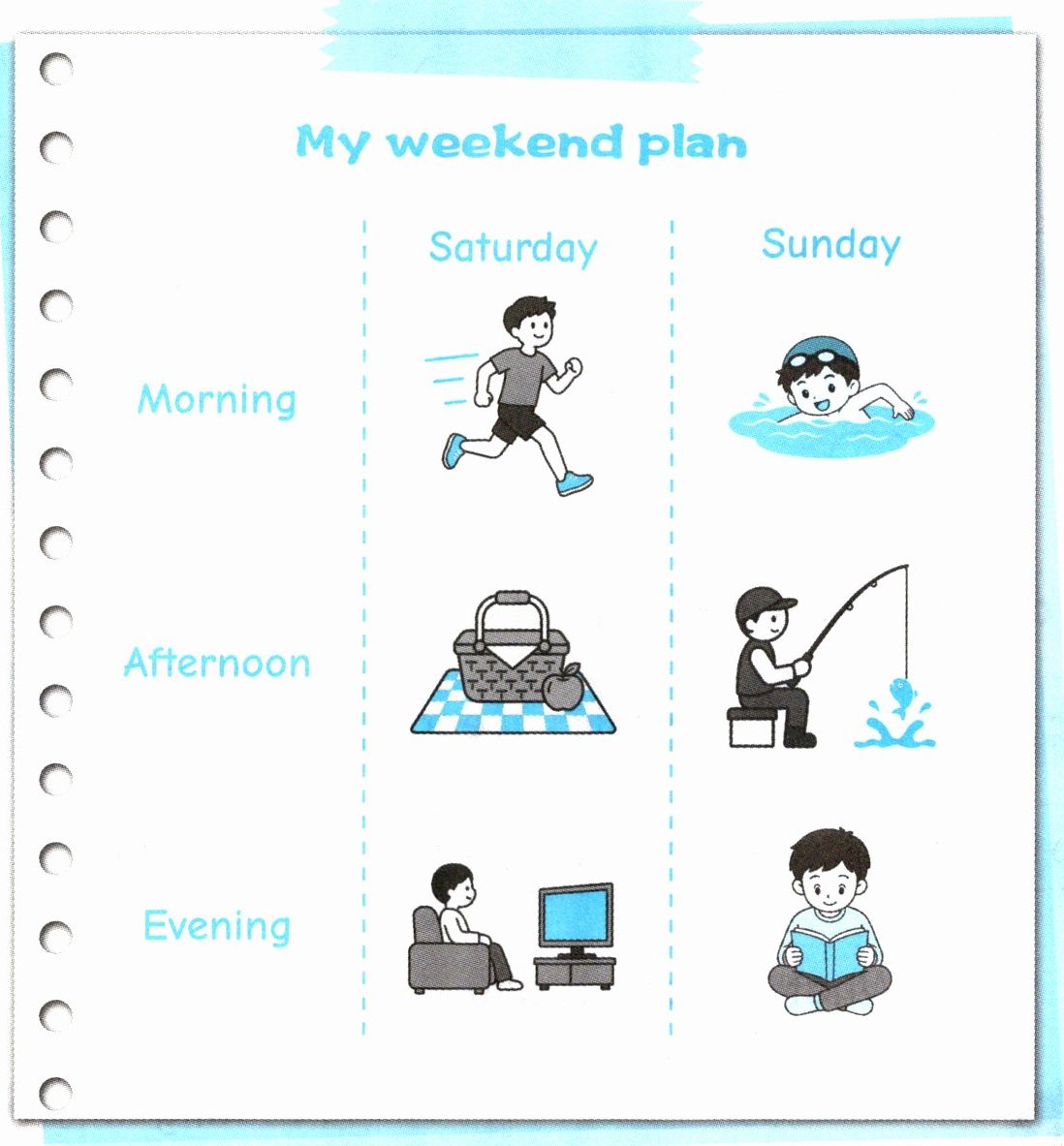
Evening
My weekend plan
Saturday Sunday
Morning
Afternoon
Evening
答案
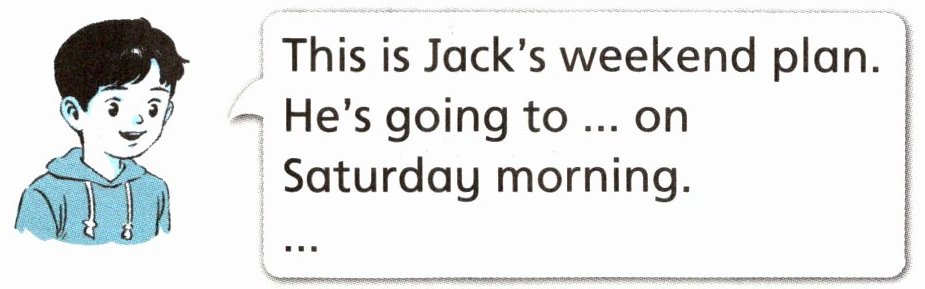
This is Jack's weekend plan.
He's going to run on Saturday morning.
He's going to have a picnic on Saturday afternoon.
He's going to watch TV on Saturday evening.
He's going to swim on Sunday morning.
He's going to go fishing on Sunday afternoon.
He's going to read books on Sunday evening.
He's going to run on Saturday morning.
He's going to have a picnic on Saturday afternoon.
He's going to watch TV on Saturday evening.
He's going to swim on Sunday morning.
He's going to go fishing on Sunday afternoon.
He's going to read books on Sunday evening.
解析
【分析】本题要求根据Jack周末计划的时间(周六、周日的早、中、晚)及对应活动,用一般将来时的“be going to”结构描述其周末安排。解题思路为:先梳理各时段对应的活动,再用正确的一般将来时句型组织语言,确保内容与给定活动匹配,准确表述每个时间点的计划。
【解析】需使用一般将来时的“be going to”结构,依次对应各时段活动组织句子:周六上午跑步,周六下午野餐,周六晚上看电视;周日上午游泳,周日下午钓鱼,周日晚上读书,形成完整的描述。
【答案】This is Jack's weekend plan.
He's going to run on Saturday morning.
He's going to have a picnic on Saturday afternoon.
He's going to watch TV on Saturday evening.
He's going to swim on Sunday morning.
He's going to go fishing on Sunday afternoon.
He's going to read books on Sunday evening.
【知识点】一般将来时、日常活动表达、看图写话
【点评】本题为英语基础表达题,考查学生对一般将来时结构的运用及日常活动词汇的掌握,结合时间节点准确对应活动即可完成,难度较低。
【难度系数】0.8
