

 登录
4. —If you stand a bit
—I see. I'll walk nearer and enjoy its beautiful colours.
A.up close; close to
B.close to; up close
C.close; closely
D.closely; close
C
the new painting, you can see it C
.—I see. I'll walk nearer and enjoy its beautiful colours.
A.up close; close to
B.close to; up close
C.close; closely
D.closely; close
答案
4. C
解析
【分析】首先明确句子语境:对话围绕“站的位置和看画的状态”展开,第一空修饰动词stand,需表达“靠近”的含义;第二空修饰动词see,需表达“仔细地”的含义。需区分close和closely的用法:close可作副词,意为“靠近地”;closely是副词,意为“仔细地、密切地”。再结合选项逐一排查,排除不符合语境和用法的选项即可得出答案。
【解析】1. 分析第一空:修饰动词stand,需用副词表“靠近”,close作副词符合要求;2. 分析第二空:修饰动词see,需用副词表“仔细地”,closely作副词符合要求;3. 排除其他选项:A项up close为副词短语,close to后需接宾语,第一空后有the new painting,用法不符;B项第二空up close语义不符;D项第一空closely语义不通,第二空close不符合修饰see的语境。因此选C。
【答案】C
【知识点】副词的用法;近义词辨析
【点评】本题考查英语中副词的词义辨析及在语境中的运用,需掌握close与closely的不同含义,属于基础词汇题,难度适中。
【难度系数】0.5
5. Is this book
A.that
B.which
C.the one
D.what
C
you bought in the bookshop yesterday?A.that
B.which
C.the one
D.what
答案
5. C
解析
【分析】
首先将题干的一般疑问句还原为陈述句:This book is ____ you bought in the bookshop yesterday. 观察句子结构,主句缺少表语,需补充一个可作定语从句先行词的名词性成分;若直接选关系代词that/which,主句无先行词会导致结构不完整,需先确定先行词,再结合定语从句规则判断选项。
【解析】
原句还原为陈述句后,主句结构为“主语(This book)+ 系动词(is)+ 缺失的表语”,需补充表语同时作定语从句的先行词:A.that、B.which是关系代词,必须依附先行词存在,此处无先行词,排除;D.what不能引导定语从句,排除;C.the one可作先行词,指代the book,其后定语从句you bought省略了作宾语的关系代词that/which,句子结构完整,语法正确。
【答案】
C
【知识点】
定语从句;代词用法
【点评】
本题考查定语从句中先行词的补充,需先还原句子分析成分,避免误选关系代词,是基础语法中易混淆的考点。
【难度系数】
0.5
6. The first thing
A.which
B.that
C.why
D.who
B
my brother is going to do this afternoon is to write a letter.A.which
B.that
C.why
D.who
答案
6. B
解析
【分析】本题考查定语从句中关系代词的选择,解题思路如下:①先确定句子类型:空格后是修饰先行词的从句,属于定语从句;②找到先行词:空格前的the first thing,指物;③分析先行词的修饰特征:被序数词first修饰;④回忆关系代词用法:当先行词被序数词修饰时,关系代词只能用that,不能用which;why指代原因、who指代人,均不符合语境,据此选出答案。
【解析】本句为定语从句,先行词是the first thing,指物且被序数词first修饰。根据定语从句的关系代词使用规则,当先行词被序数词、形容词最高级等修饰时,关系代词只能用that,不能用which;why用于指代原因,who用于指代人,均与先行词及语境不符,因此选B。
【答案】B
【知识点】定语从句 关系代词用法
【点评】本题聚焦定语从句中关系代词的特殊用法,是初中英语的基础考点,需准确掌握先行词被序数词修饰时关系代词的选择规则。
【难度系数】0.6
7. A pair of shoes that was covered with blood
A.finds
B.found
C.was found
D.were found
C
in a rubbish bin.A.finds
B.found
C.was found
D.were found
答案
7. C
解析
【分析】
本题考查主谓一致和被动语态的用法。首先确定主语的单复数:“a pair of + 复数名词”作主语时,谓语动词的单复数由中心词“pair”决定,此处“pair”是单数,可先排除复数形式的选项;再判断语态:鞋子是“被发现”,需用被动语态,结合选项分析即可得出答案。
【解析】
1. 主谓一致判断:“A pair of shoes”中,中心词为“pair”(单数),因此谓语动词需用单数形式,排除复数形式的D选项(were found)。
2. 语态判断:鞋子与动词“find”之间是被动关系(鞋子被发现),需使用被动语态“be + 过去分词”结构。A选项(finds)是主动语态一般现在时,B选项(found)是主动语态一般过去时,均不符合;C选项(was found)是被动语态一般过去时,符合要求。
【答案】
C
【知识点】
主谓一致;被动语态
【点评】
本题结合主谓一致和被动语态两个基础考点,需掌握“a pair of + 复数名词”作主语时谓语的单复数规则,以及被动语态的基本结构,属于常规基础题。
【难度系数】
0.5
8. —Have you found the details of Yuan Longping
—He is so famous that I've easily got plenty on the internet.
A.where
B.which
C.what
D.who
B
you can use for your report?—He is so famous that I've easily got plenty on the internet.
A.where
B.which
C.what
D.who
答案
8. B
解析
【分析】本题考查定语从句关系词的用法,解题思路如下:首先确定先行词,再分析定语从句中缺少的成分,最后结合选项判断合适的关系词。先行词是the details(指物),定语从句中use后缺少宾语,需选指代物且作宾语的关系词,据此排除不符合的选项。
【解析】第一步,确定先行词:空格处修饰的先行词是the details,指物。第二步,分析定语从句成分:从句“you can use for your report”中,及物动词use缺少宾语,需用关系代词作宾语。第三步,辨析选项:A.where是关系副词,在从句中作地点状语,不符合;B.which是关系代词,指代物,可在从句中作宾语,符合要求;C.what不能引导定语从句,直接排除;D.who指代人,先行词是物,排除。因此选B。
【答案】B
【知识点】定语从句关系词
【点评】本题为定语从句关系词的基础考查题,需掌握不同关系词的用法差异,难度不大,适合中等及以上学生作答。
【难度系数】0.7
9. —How do you like the book Little Women?
—Wonderful. I think it is the best one
A./
B.what
C.which
D.that
—Wonderful. I think it is the best one
D
tells us the importance of family.A./
B.what
C.which
D.that
答案
9. D
解析
【分析】本题考查定语从句中关系代词的选择。首先明确句子结构:先行词是the best one(指代前文的book),定语从句部分缺少主语。需回忆定语从句的规则:当先行词被形容词最高级修饰时,关系代词只能用that,不能用which;同时,关系代词在从句中作主语时不能省略,且what不能引导定语从句,据此分析选项。
【解析】先行词the best one被形容词最高级the best修饰,根据定语从句的用法,此时关系代词只能用that,不能用which;关系代词在从句中作主语,不能省略,故排除A(省略关系代词且不符合规则)、B(what不能引导定语从句)、C(which不符合先行词被最高级修饰时的关系代词选择规则),因此选D。
【答案】D
【知识点】定语从句关系代词;形容词最高级
【点评】本题聚焦定语从句中关系代词的特殊用法,是初中英语的基础语法考点,需牢记先行词被最高级修饰时关系代词的选择规则,属于易掌握的题目。
【难度系数】0.6
Ⅲ. 翻译句子
1. 书法是一种被国内外许多人喜欢的艺术形式吗?
2. 我不熟悉那个画画很好的学生。
3. 借助现代技术,我们可以近距离地欣赏中国书法之美。
4. 书法是一种可以追溯到3,000多年前的书写形式。
5. 很多人不熟悉现代艺术技巧。
1. 书法是一种被国内外许多人喜欢的艺术形式吗?
Is calligraphy an art form loved by many people at home and abroad?
2. 我不熟悉那个画画很好的学生。
I am unfamiliar with the student who draws well.
3. 借助现代技术,我们可以近距离地欣赏中国书法之美。
With the help of modern technology, we can enjoy the beauty of Chinese calligraphy up close.
4. 书法是一种可以追溯到3,000多年前的书写形式。
Calligraphy is a form of writing that dates back over 3,000 years.
5. 很多人不熟悉现代艺术技巧。
Many people are unfamiliar with modern artistic techniques.
答案
1. Is calligraphy an art form loved by many people at home and abroad?
2. I am unfamiliar with the student who draws well.
3. With the help of modern technology, we can enjoy the beauty of Chinese calligraphy up close.
4. Calligraphy is a form of writing that dates back over 3,000 years.
5. Many people are unfamiliar with modern artistic techniques.
解析
【分析】本题为汉译英题型,需先明确每个中文句子的句式(疑问句/陈述句),再处理定语、固定短语等核心内容:1. 是一般疑问句,需将be动词提前,“被国内外许多人喜欢的”作后置定语用过去分词短语表达;2. “画画很好的学生”需用定语从句修饰先行词;3. “借助”“近距离地”等是固定短语,需准确对应;4. “追溯到”是固定短语,需用定语从句修饰“书写形式”;5. 直接对应常用短语“不熟悉”“现代艺术技巧”即可。
【解析】1. 一般疑问句,将be动词Is提前,“书法”译为calligraphy,“一种艺术形式”译为an art form,“被国内外许多人喜欢的”译为loved by many people at home and abroad,组合得Is calligraphy an art form loved by many people at home and abroad?
2. 主语为I,“不熟悉”译为am unfamiliar with,“那个学生”译为the student,“画画很好的”用定语从句who draws well修饰,组合得I am unfamiliar with the student who draws well.
3. “借助现代技术”译为With the help of modern technology,主语we,“可以欣赏”译为can enjoy,“中国书法之美”译为the beauty of Chinese calligraphy,“近距离地”译为up close,组合得With the help of modern technology, we can enjoy the beauty of Chinese calligraphy up close.
4. 主语Calligraphy,“是一种书写形式”译为is a form of writing,“可以追溯到3000多年前”用定语从句that dates back over 3,000 years修饰,组合得Calligraphy is a form of writing that dates back over 3,000 years.
5. “很多人”译为Many people,“不熟悉”译为are unfamiliar with,“现代艺术技巧”译为modern artistic techniques,组合得Many people are unfamiliar with modern artistic techniques.
【答案】1. Is calligraphy an art form loved by many people at home and abroad?
2. I am unfamiliar with the student who draws well.
3. With the help of modern technology, we can enjoy the beauty of Chinese calligraphy up close.
4. Calligraphy is a form of writing that dates back over 3,000 years.
5. Many people are unfamiliar with modern artistic techniques.
【知识点】汉译英、定语表达、固定短语搭配
【点评】本题考查基础汉译英能力,涉及常用词汇、定语处理及固定短语运用,是英语学习中常见的基础题型,注重核心词汇和句式的掌握。
【难度系数】0.6
Ⅳ. 阅读理解
Among all the pen productions, the writing brush(maobi) is a kind of special writing tool mainly made in China.
Archaeologists(考古学家)said that writing brushes first appeared about 5,000 years ago. Hengshui, Xuancheng and Huzhou were three centres for making writing brushes in Chinese history. Many people still celebrate the invention of the brush every year.
▲ Materials for the head part include rabbit hair, horse hair and so on. Some Chinese people like to make the writing brush with babies' lanugos(胎毛). People believe that a writing brush made of the hair of newborn babies will bring good luck while taking exams. As for stalks(笔杆), normal materials are usually wood, but we can also see some special ones made of ivory, gold and some other expensive materials.
It's considered that the writing brush is the most important one among the four treasures of Chinese study. In Chinese calligraphy and Chinese painting, the writing brush is widely used. In ancient China, children had to learn calligraphy and try to write a good hand. Even the emperors were good at calligraphy. Nowadays, some Chinese people still practise calligraphy with a writing brush from a very young age. Calligraphy is beneficial to people in some ways. When writing, people will forget all worries and even themselves, turning all thoughts into the beauty of art. People think it helps improve a person's temper.
Writing or painting with writing brushes is not only a way of communication, but also a way of expressing a person's inner world.
1. The following cities were the centres for making writing brushes EXCEPT
A. Hengshui
B. Xuancheng
C. Huzhou
D. Lanzhou
2. Which of the following sentences can be put into the " ▲ " in Paragraph 3?
A. The lanugos of newborn babies can bring good luck.
B. The materials needed to make writing brushes are expensive.
C. The head of writing brushes can be made of different materials.
D. A writing brush can be divided into two parts: the head and the stalk.
3. What does the underlined word "beneficial" in Paragraph 4 mean?
A. Special.
B. Difficult.
C. Helpful.
D. Interesting.
4. What can we know from the passage?
A. People started to use the writing brush 4,000 years ago.
B. Chinese people now still use writing brushes in many fields.
C. Writing brushes made from the human hair will help you get good grades.
D. The writing brush is the most important invention in modern China.
5. What is the structure of the passage? (①=Paragraph 1...)
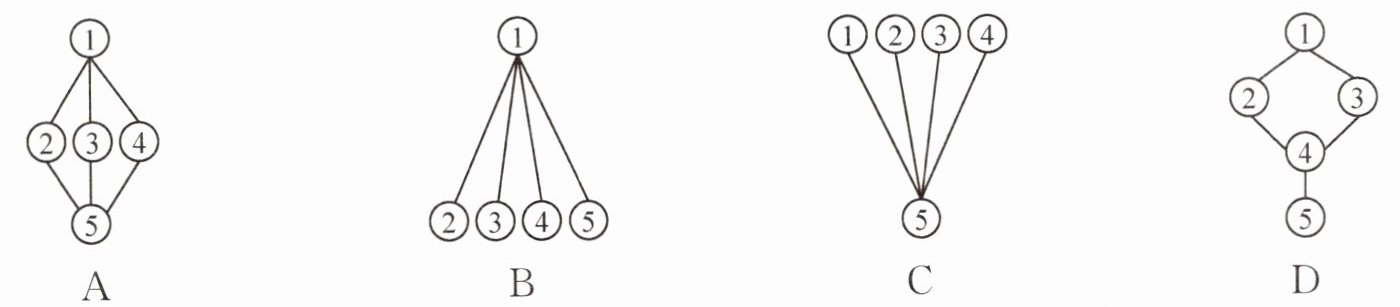
Among all the pen productions, the writing brush(maobi) is a kind of special writing tool mainly made in China.
Archaeologists(考古学家)said that writing brushes first appeared about 5,000 years ago. Hengshui, Xuancheng and Huzhou were three centres for making writing brushes in Chinese history. Many people still celebrate the invention of the brush every year.
▲ Materials for the head part include rabbit hair, horse hair and so on. Some Chinese people like to make the writing brush with babies' lanugos(胎毛). People believe that a writing brush made of the hair of newborn babies will bring good luck while taking exams. As for stalks(笔杆), normal materials are usually wood, but we can also see some special ones made of ivory, gold and some other expensive materials.
It's considered that the writing brush is the most important one among the four treasures of Chinese study. In Chinese calligraphy and Chinese painting, the writing brush is widely used. In ancient China, children had to learn calligraphy and try to write a good hand. Even the emperors were good at calligraphy. Nowadays, some Chinese people still practise calligraphy with a writing brush from a very young age. Calligraphy is beneficial to people in some ways. When writing, people will forget all worries and even themselves, turning all thoughts into the beauty of art. People think it helps improve a person's temper.
Writing or painting with writing brushes is not only a way of communication, but also a way of expressing a person's inner world.
1. The following cities were the centres for making writing brushes EXCEPT
D
.A. Hengshui
B. Xuancheng
C. Huzhou
D. Lanzhou
2. Which of the following sentences can be put into the " ▲ " in Paragraph 3?
A. The lanugos of newborn babies can bring good luck.
B. The materials needed to make writing brushes are expensive.
C. The head of writing brushes can be made of different materials.
D. A writing brush can be divided into two parts: the head and the stalk.
3. What does the underlined word "beneficial" in Paragraph 4 mean?
A. Special.
B. Difficult.
C. Helpful.
D. Interesting.
4. What can we know from the passage?
A. People started to use the writing brush 4,000 years ago.
B. Chinese people now still use writing brushes in many fields.
C. Writing brushes made from the human hair will help you get good grades.
D. The writing brush is the most important invention in modern China.
5. What is the structure of the passage? (①=Paragraph 1...)
答案
1.D 2.D 3.C 4.B 5.A
解析
【分析】先通读全文把握关于毛笔的主旨内容,针对每个问题定位原文对应信息,通过细节查找、逻辑推理、词义猜测、结构分析等方法逐一解答:第1题定位第二段找毛笔制作中心;第2题结合第三段内容选段落衔接句;第3题通过后文描述猜测词义;第4题逐一核对选项与原文细节;第5题梳理各段内容分析文章结构。
【解析】1. 细节理解题:根据第二段“Hengshui, Xuancheng and Huzhou were three centres for making writing brushes in Chinese history.”可知,三个制作中心为衡水、宣城、湖州,不包括兰州,故选D。
2. 推理判断题:第三段分别介绍了毛笔的笔头和笔杆的材料,空格处需总述毛笔的组成部分,D项“A writing brush can be divided into two parts: the head and the stalk.”符合段落总起的语境,故选D。
3. 词义猜测题:后文提到练书法能让人忘记烦恼、提升脾气,说明书法对人有益,beneficial意为“有益的”,与helpful同义,故选C。
4. 细节理解题:A项,第二段提到毛笔约5000年前出现,而非4000年前,错误;B项,第四段指出现在很多人仍用毛笔练习书法,正确;C项,是新生儿的胎毛能带来好运,并非所有人类头发,错误;D项,毛笔是文房四宝中最重要的,而非现代中国最重要的发明,错误,故选B。
5. 文章结构题:第一段引入毛笔;第二段介绍其起源和制作中心;第三段说明制作材料;第四段阐述其重要性和用途;第五段总结,结构对应选项A,故选A。
【答案】1.D 2.D 3.C 4.B 5.A
【知识点】英语阅读理解、细节理解、词义猜测
【点评】本题围绕中国传统文化“毛笔”展开,考查英语阅读理解核心题型,需学生具备快速定位原文、分析逻辑和推断词义的能力,难度适中。
【难度系数】0.6
