

 登录
登录
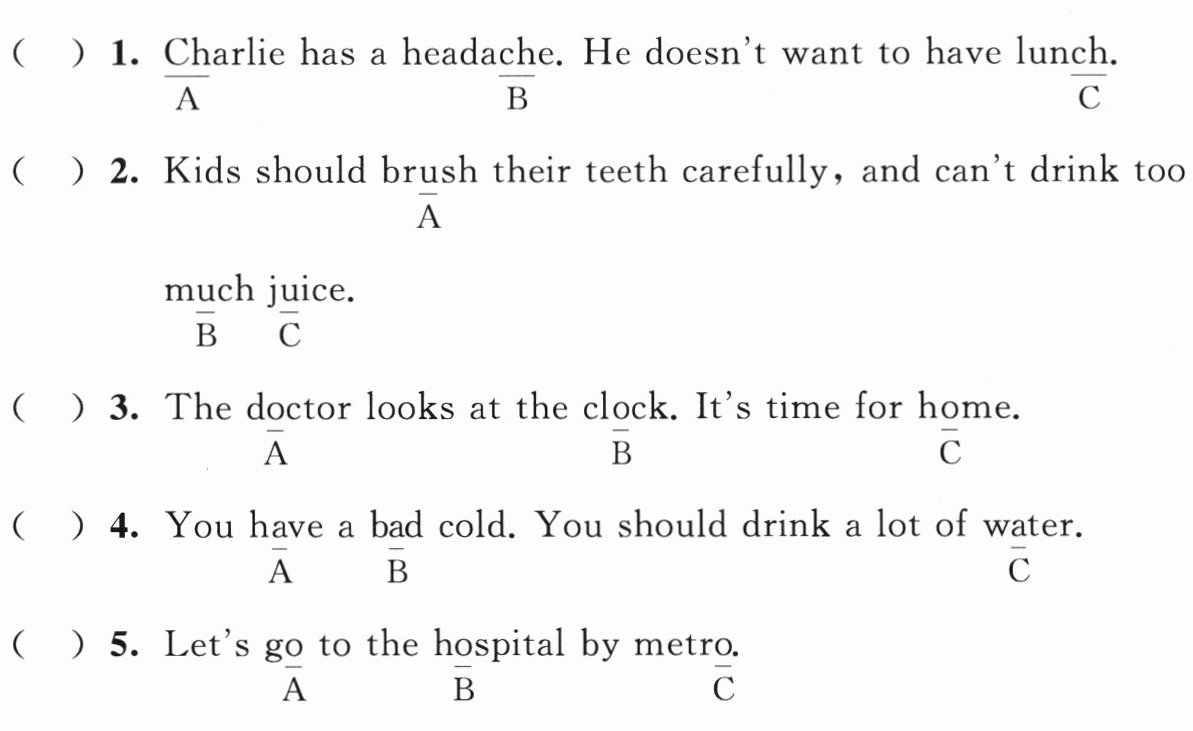
一、语音辨析。(选出画线部分发音与其他不同的选项)
1. (
2. (
3. (
4. (
5. (
1. (
B
)2. (
C
)3. (
C
)4. (
C
)5. (
B
)答案
1. B
2. C
3. C
4. C
5. B
2. C
3. C
4. C
5. B
解析
1. A选项Charlie中Ch发音为/tʃ/,B选项headache中ch发音为/k/,C选项lunch中ch发音为/tʃ/,B发音不同。
2. A选项brush中u发音为/ʌ/,B选项much中u发音为/ʌ/,C选项juice中u发音为/uː/,C发音不同。
3. A选项doctor中o发音为/ɒ/,B选项clock中o发音为/ɒ/,C选项home中o发音为/əʊ/,C发音不同。
4. A选项have中a发音为/æ/,B选项bad中a发音为/æ/,C选项water中a发音为/ɔː/,C发音不同。
5. A选项go中o发音为/əʊ/,B选项hospital中o发音为/ɒ/,C选项metro中o发音为/əʊ/,B发音不同。
2. A选项brush中u发音为/ʌ/,B选项much中u发音为/ʌ/,C选项juice中u发音为/uː/,C发音不同。
3. A选项doctor中o发音为/ɒ/,B选项clock中o发音为/ɒ/,C选项home中o发音为/əʊ/,C发音不同。
4. A选项have中a发音为/æ/,B选项bad中a发音为/æ/,C选项water中a发音为/ɔː/,C发音不同。
5. A选项go中o发音为/əʊ/,B选项hospital中o发音为/ɒ/,C选项metro中o发音为/əʊ/,B发音不同。
二、学贯中西。(根据中文提示完成句子)
1. —I
—You should see the doctor.
2. You shouldn’t
3. —When do you go to bed every day?
—I go to bed
4. You should go to bed and
5. —
—I feel ill.
6. I’m ill. I
7. Tim has a toothache. He goes to
8. We should
9. He
10. Bobby is kind. He
1. —I
have a bad cold
(患了重感冒). What should I do?—You should see the doctor.
2. You shouldn’t
eat too many sweets
(吃太多糖果).3. —When do you go to bed every day?
—I go to bed
before ten o'clock
(在十点前).4. You should go to bed and
have a good rest
(好好休息).5. —
What's wrong with you
(你怎么了), Jim?—I feel ill.
6. I’m ill. I
don't want to eat anything
(不想吃任何东西).7. Tim has a toothache. He goes to
see the dentist
(看牙医).8. We should
brush our teeth
(刷牙)twice a day.9. He
points at
(指着)the apple on the tree.10. Bobby is kind. He
is ready to help them
(乐意帮助他们).答案
1. have a bad cold
2. eat too many sweets
3. before ten o'clock
4. have a good rest
5. What's wrong with you
6. don't want to eat anything
7. see the dentist
8. brush our teeth
9. points at
10. is ready to help them
2. eat too many sweets
3. before ten o'clock
4. have a good rest
5. What's wrong with you
6. don't want to eat anything
7. see the dentist
8. brush our teeth
9. points at
10. is ready to help them
解析
1. “患了重感冒”对应单元短语have a bad cold,主语为I,用动词原形have。
2. “吃太多糖果”对应短语eat too many sweets,shouldn't后接动词原形,sweets是可数名词复数,用too many修饰。
3. “在十点前”对应介词短语before ten o'clock,用于表达时间节点之前。
4. “好好休息”对应短语have a good rest,与go to bed并列,用动词原形。
5. “你怎么了”是询问身体状况的固定句型What's wrong with you?,符合本单元知识点。
6. “不想吃任何东西”译为don't want to eat anything,主语I的否定句用don't,anything用于否定句表“任何东西”。
7. “看牙医”对应短语see the dentist,go to后接动词原形构成go to do sth结构,表去做某事。
8. “刷牙”对应短语brush our teeth,主语为we,用our指代,teeth是tooth的复数,should后接动词原形。
9. “指着”对应短语point at,主语He是第三人称单数,一般现在时动词用points。
10. “乐意帮助他们”对应is ready to help them,be ready to do sth表“乐意做某事”,主语He是第三人称单数,be动词用is。
2. “吃太多糖果”对应短语eat too many sweets,shouldn't后接动词原形,sweets是可数名词复数,用too many修饰。
3. “在十点前”对应介词短语before ten o'clock,用于表达时间节点之前。
4. “好好休息”对应短语have a good rest,与go to bed并列,用动词原形。
5. “你怎么了”是询问身体状况的固定句型What's wrong with you?,符合本单元知识点。
6. “不想吃任何东西”译为don't want to eat anything,主语I的否定句用don't,anything用于否定句表“任何东西”。
7. “看牙医”对应短语see the dentist,go to后接动词原形构成go to do sth结构,表去做某事。
8. “刷牙”对应短语brush our teeth,主语为we,用our指代,teeth是tooth的复数,should后接动词原形。
9. “指着”对应短语point at,主语He是第三人称单数,一般现在时动词用points。
10. “乐意帮助他们”对应is ready to help them,be ready to do sth表“乐意做某事”,主语He是第三人称单数,be动词用is。
