

 登录
登录
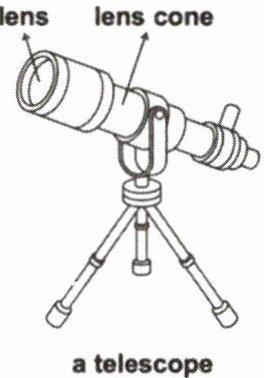
Ma Junhe, a 14-year-old student from a middle school in Henan, recently made a telescope. Costing only 70 yuan to make, the telescope allows him to see the craters(环形山)on the moon.
His interest in physics encouraged him to make this telescope. After learning about Newtonian reflector telescopes(牛顿式反射望远镜)in his physics class, he decided to make one himself.
As he didn't have a lot of money, he came up with some clever ideas to find what he needed to make the telescope. He bought lenses online, and collected other materials on his own. “I used an old plastic pipe(管)for the lens cone, and it was held by my drum stand,” Ma said.
Ma faced many difficulties along the way. First, he used cardboard to make a lens cone, as taught in class, but it didn't work well. With his teacher's advice, he used a plastic pipe. When he set up the eyepiece(目镜), he found it was much smaller than the pipe's opening. He had to try many times to make sure it fit.
After failing 10 times, Ma finally succeeded. His telescope has a magnification(放大率)of 90 times, allowing him to clearly see the moon's craters.
“Seeing the moon's craters through my telescope made me feel so excited and good about myself,” said Ma. “With enough drive and hard work, even with little money, anyone can do something so amazing.”
(
A. ¥70. B. ¥170. C. ¥700. D. ¥1,700.
(
A. His interest in the moon. B. His interest in physics.
C. His love of making things. D. His love of making money.
(
A. It was too heavy. B. It broke during testing.
C. It didn't fit the pipe's size. D. It was not clear enough.
(
A. A plastic pipe. B. Lenses.
C. His drum stand. D. Cardboard.
(
A. We need a lot of money to make things.
B. Teachers are important for making things.
C. Telescopes must be made with expensive materials.
D. Keep trying and we can do great things with little money.
His interest in physics encouraged him to make this telescope. After learning about Newtonian reflector telescopes(牛顿式反射望远镜)in his physics class, he decided to make one himself.
As he didn't have a lot of money, he came up with some clever ideas to find what he needed to make the telescope. He bought lenses online, and collected other materials on his own. “I used an old plastic pipe(管)for the lens cone, and it was held by my drum stand,” Ma said.
Ma faced many difficulties along the way. First, he used cardboard to make a lens cone, as taught in class, but it didn't work well. With his teacher's advice, he used a plastic pipe. When he set up the eyepiece(目镜), he found it was much smaller than the pipe's opening. He had to try many times to make sure it fit.
After failing 10 times, Ma finally succeeded. His telescope has a magnification(放大率)of 90 times, allowing him to clearly see the moon's craters.
“Seeing the moon's craters through my telescope made me feel so excited and good about myself,” said Ma. “With enough drive and hard work, even with little money, anyone can do something so amazing.”
(
A
)1. How much did Ma Junhe spend making his telescope in the passage?A. ¥70. B. ¥170. C. ¥700. D. ¥1,700.
(
B
)2. What encouraged Ma to make the telescope?A. His interest in the moon. B. His interest in physics.
C. His love of making things. D. His love of making money.
(
C
)3. What problem did Ma face when setting up the eyepiece?A. It was too heavy. B. It broke during testing.
C. It didn't fit the pipe's size. D. It was not clear enough.
(
A
)4. What material did Ma use to make the lens cone finally?A. A plastic pipe. B. Lenses.
C. His drum stand. D. Cardboard.
(
D
)5. What can we learn from Ma's story?A. We need a lot of money to make things.
B. Teachers are important for making things.
C. Telescopes must be made with expensive materials.
D. Keep trying and we can do great things with little money.
答案
1.A 2.B 3.C 4.A 5.D
解析
【分析】做这类英语阅读理解题,需先通读原文把握大意,再针对每个题目定位原文对应信息句,逐一比对选项得出答案。第1题找制作望远镜的花费,第2题找鼓励他制作望远镜的原因,第3题找安装目镜遇到的问题,第4题找最终镜筒的制作材料,第5题提炼文章主旨,均通过原文细节和主旨句判断。
【解析】
1. 细节理解题:根据原文第一段第二句“Costing only 70 yuan to make”,可知制作望远镜花费70元,对应选项A。
2. 细节理解题:根据原文第二段第一句“His interest in physics encouraged him to make this telescope”,可知是对物理的兴趣鼓励他制作望远镜,对应选项B。
3. 细节理解题:根据原文第四段“When he set up the eyepiece, he found it was much smaller than the pipe's opening”,可知目镜尺寸与管子不匹配,对应选项C。
4. 细节理解题:根据原文第四段“First, he used cardboard to make a lens cone...but it didn't work well. With his teacher's advice, he used a plastic pipe”,可知最终用塑料管制作镜筒,对应选项A。
5. 主旨大意题:根据原文最后一段“With enough drive and hard work, even with little money, anyone can do something so amazing”,可知文章传达坚持努力、少花钱也能成就大事的道理,对应选项D。
【答案】1.A 2.B 3.C 4.A 5.D
【知识点】英语阅读理解,细节理解,主旨大意
【点评】本文是记叙文,讲述了马俊和用70元制作望远镜的故事,题目以细节理解和主旨理解为主,难度适中,考查学生快速定位原文信息、把握文章主旨的能力。
【难度系数】0.8
【解析】
1. 细节理解题:根据原文第一段第二句“Costing only 70 yuan to make”,可知制作望远镜花费70元,对应选项A。
2. 细节理解题:根据原文第二段第一句“His interest in physics encouraged him to make this telescope”,可知是对物理的兴趣鼓励他制作望远镜,对应选项B。
3. 细节理解题:根据原文第四段“When he set up the eyepiece, he found it was much smaller than the pipe's opening”,可知目镜尺寸与管子不匹配,对应选项C。
4. 细节理解题:根据原文第四段“First, he used cardboard to make a lens cone...but it didn't work well. With his teacher's advice, he used a plastic pipe”,可知最终用塑料管制作镜筒,对应选项A。
5. 主旨大意题:根据原文最后一段“With enough drive and hard work, even with little money, anyone can do something so amazing”,可知文章传达坚持努力、少花钱也能成就大事的道理,对应选项D。
【答案】1.A 2.B 3.C 4.A 5.D
【知识点】英语阅读理解,细节理解,主旨大意
【点评】本文是记叙文,讲述了马俊和用70元制作望远镜的故事,题目以细节理解和主旨理解为主,难度适中,考查学生快速定位原文信息、把握文章主旨的能力。
【难度系数】0.8
