

 登录
登录
六、阅读理解。
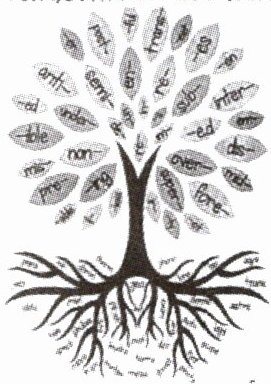
①A tree has roots(根). People have roots, too. If you get to *Prefix, Suffix & Root Words* the root of a problem, you will solve it. It's the same thing as words. Dig deeply into a big, unfamiliar word and you will understand where it came from.
②As readers, especially those reading in a second language, we need to deal with the text as if we were detectives(侦探)looking for information to deal with the unknown. The first thing to do when meeting a new and difficult word is to know the situation, to look at everything that is known and see if it helps us to understand what *it* means.
③As you know, prefixes and suffixes(前缀和后缀)can be added to the beginning or the end of words to change the meaning. Know them, and you will have the word building ability. But root words are the key. Take time to learn a few of them, put them in your memory, and you will become a master word detective.
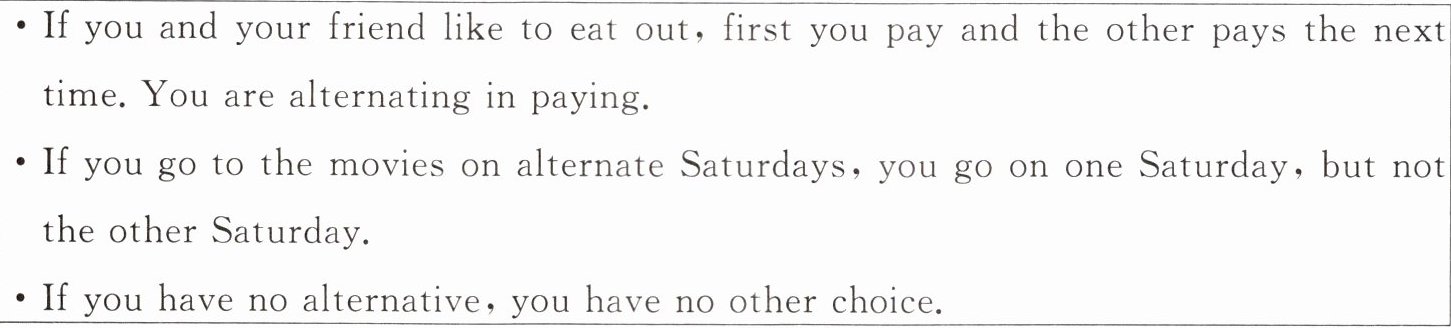
④Let's look at one common root word used in English. “Alter” from the Latin word means “other”. When you meet this root word, you know that the bigger word has something to do with “other”. Look at the word “alternate”. Can you find the Latin root in it?
⑤Learn as many root words as possible in the language you are studying. Then use your “rooting for words” skills. Like any new skill, practice and hard work are always paid back.
(
A. The situation.
B. The crime scene.
C. A new and difficult word.
D. Everything that is known.
(
A. giving a fact
B. taking an example
C. telling a story
D. having a discussion
(
A. My brother is my senior by two years.
B. He was ill so he was absent from school.
C. The man was sentenced to death by law.
D. 60 students were present at the sports meeting.
(

①A tree has roots(根). People have roots, too. If you get to *Prefix, Suffix & Root Words* the root of a problem, you will solve it. It's the same thing as words. Dig deeply into a big, unfamiliar word and you will understand where it came from.
②As readers, especially those reading in a second language, we need to deal with the text as if we were detectives(侦探)looking for information to deal with the unknown. The first thing to do when meeting a new and difficult word is to know the situation, to look at everything that is known and see if it helps us to understand what *it* means.
③As you know, prefixes and suffixes(前缀和后缀)can be added to the beginning or the end of words to change the meaning. Know them, and you will have the word building ability. But root words are the key. Take time to learn a few of them, put them in your memory, and you will become a master word detective.
④Let's look at one common root word used in English. “Alter” from the Latin word means “other”. When you meet this root word, you know that the bigger word has something to do with “other”. Look at the word “alternate”. Can you find the Latin root in it?
⑤Learn as many root words as possible in the language you are studying. Then use your “rooting for words” skills. Like any new skill, practice and hard work are always paid back.
(
C
)41. What does the underlined word “it” in Paragraph 2 refer to?A. The situation.
B. The crime scene.
C. A new and difficult word.
D. Everything that is known.
(
B
)42. The writer explains his ideas about root words in Paragraph 4 byB
.A. giving a fact
B. taking an example
C. telling a story
D. having a discussion
(
A
)43. “Sen” from the Latin word means “old”. Which word in the following sentences uses this Latin root?A. My brother is my senior by two years.
B. He was ill so he was absent from school.
C. The man was sentenced to death by law.
D. 60 students were present at the sports meeting.
(
B
)44. Which of the following shows the RIGHT structure of the passage?答案
41—44.CBAB
