

 登录
二、请参考以下对话框框架,和同学们谈一谈规则的重要性,并为校园安全和班级秩序制定规则。
A:Hello,...! Do you think our class needs more rules?
B:Hmm,maybe. But why are rules so important?
A:Well,rules help... For example,“...” prevent accidents.
B:That's true. And rules also make things fair,like...
A:Right! What rules should we add for our class?
B:How about“...”and“...”?...
答案
参考示例对话:
A: Hello, Li Tao! Do you think our class needs more rules?
B: Hmm, maybe. But why are rules so important?
A: Well, rules help us stay away from danger and keep our class in good order. For example, "Don't chase and run in the hallway after class" prevent accidents.
B: That's true. And rules also make things fair, like everyone must hand in their homework on time, no one can copy others' homework to get a good mark unfairly.
A: Right! What rules should we add for our class?
B: How about "Never bring dangerous things to school" and "Don't speak loudly during the self-study class"? These rules can make our campus much safer and help us build a better learning environment.
解析
本题是八年级英语口语开放类习题,要求依托给定对话框架,用已学的词汇表达规则的重要性,同时制定符合校园安全、班级秩序的合理规则,内容贴合日常校园场景即可,答案不唯一。
语法 聚焦五
一、朗读并观察下列句子。
1. I got on the train to go home.
2. I went to a quiet area in order to read.
3. I covered my ears in order to block the noise coming from Rock Girl.
4. I held my breath so as to reduce the smell coming from Mr Smelly Food.
5. I turned around so as to see the other passengers' faces.
二、动词不定式作目的状语。
除了作宾语补足语,动词不定式还可以在句子中作目的状语,表示行为动作的目的。作目的状语时,动词不定式既可以放在句首,也可以放在句尾。除了直接使用“to do sth.”,还可以用“in order to do sth.”和“so as to do sth.”来表示行为动作的目的。用法如下:
| 目的状语 | 作用 | 在句子中的位置 | 否定式 |
| --- | --- | --- | --- |
| to do sth. | 表示目的 | 句首:To...,主语+谓语...
句尾:主语+谓语(+...)+to... | not to do sth. |
| in order to do sth. | 强调目的,较正式 | 句首:In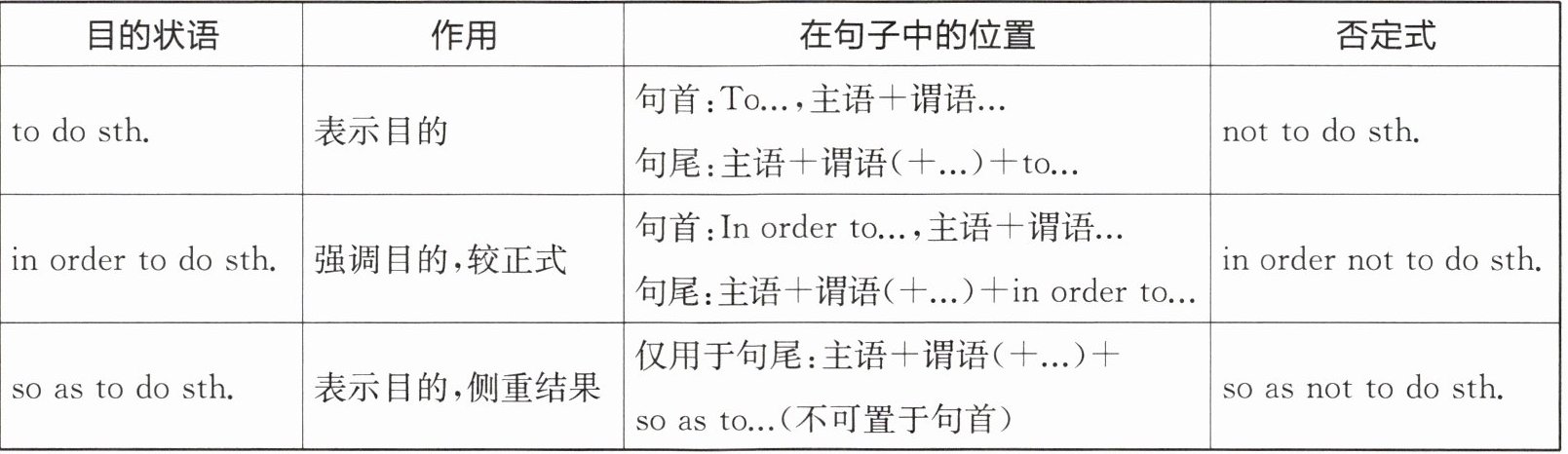 der to...,主语+谓语...
句尾:主语+谓语(+...)+in order to... | in order not to do sth. |
| so as to do sth. | 表示目的,侧重结果 | 仅用于句尾:主语+谓语(+...)+so as to...(不可置于句首) | so as not to do sth. |
三、用to、in order to或so as to改写句子。
1. He studies hard. He wants to pass the exam.
2. He needs to stay healthy. He exercises daily.
3. We arrived early. We hope to get good seats.
聚焦五一、朗读并观察下列句子。
1. I got on the train to go home.
2. I went to a quiet area in order to read.
3. I covered my ears in order to block the noise coming from Rock Girl.
4. I held my breath so as to reduce the smell coming from Mr Smelly Food.
5. I turned around so as to see the other passengers' faces.
二、动词不定式作目的状语。
除了作宾语补足语,动词不定式还可以在句子中作目的状语,表示行为动作的目的。作目的状语时,动词不定式既可以放在句首,也可以放在句尾。除了直接使用“to do sth.”,还可以用“in order to do sth.”和“so as to do sth.”来表示行为动作的目的。用法如下:
| 目的状语 | 作用 | 在句子中的位置 | 否定式 |
| --- | --- | --- | --- |
| to do sth. | 表示目的 | 句首:To...,主语+谓语...
句尾:主语+谓语(+...)+to... | not to do sth. |
| in order to do sth. | 强调目的,较正式 | 句首:In
der to...,主语+谓语...句尾:主语+谓语(+...)+in order to... | in order not to do sth. |
| so as to do sth. | 表示目的,侧重结果 | 仅用于句尾:主语+谓语(+...)+so as to...(不可置于句首) | so as not to do sth. |
三、用to、in order to或so as to改写句子。
1. He studies hard. He wants to pass the exam.
He studies hard to / in order to / so as to pass the exam.
2. He needs to stay healthy. He exercises daily.
To / In order to stay healthy, he exercises daily.
3. We arrived early. We hope to get good seats.
We arrived early to / in order to / so as to get good seats.
答案
1. He studies hard to / in order to / so as to pass the exam.
2. To / In order to stay healthy, he exercises daily.
3. We arrived early to / in order to / so as to get good seats.
