

 登录
登录
My Pet’s Feelings
Read & answer: How does Lucky express his feelings?
I have a lovely cat named Lucky. He shows his feelings in many cute ways every day.
When he is hungry, he always walks around my feet and meows loudly. He looks at me and asks for yummy food.
If he feels happy, he rubs my legs and swings his tail. He likes to stay beside me and enjoy quiet time together.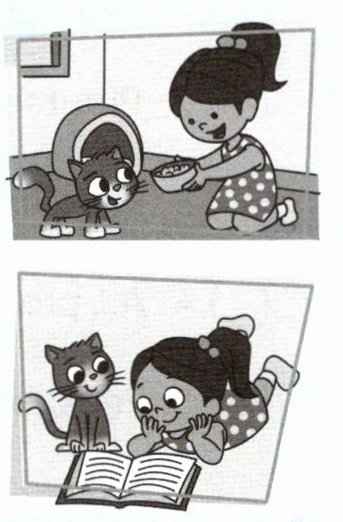
He gets excited when he sees toy balls. He jumps high and runs around the living room happily. He looks so active and funny.
But he gets angry when I wake him up. His ears go back and his tail moves quickly. Then he hides under the bed.
Lucky can’t say any words, but he can “say” a lot with his body.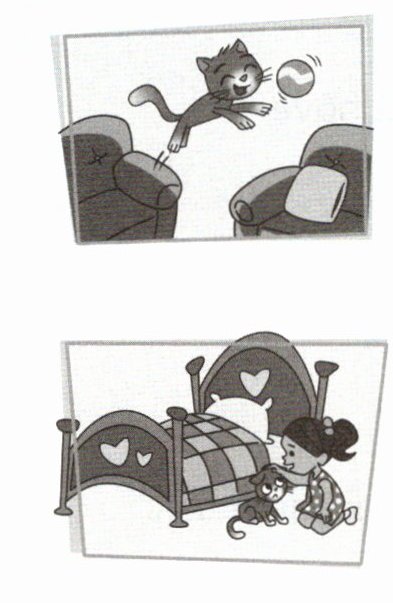
Sometimes I feel sad or worried. Lucky knows it. He comes over quietly and shares his toys with me. He tries to cheer me up.
We always care about each other’s feelings. Playing and sharing together make our lives warm and sweet.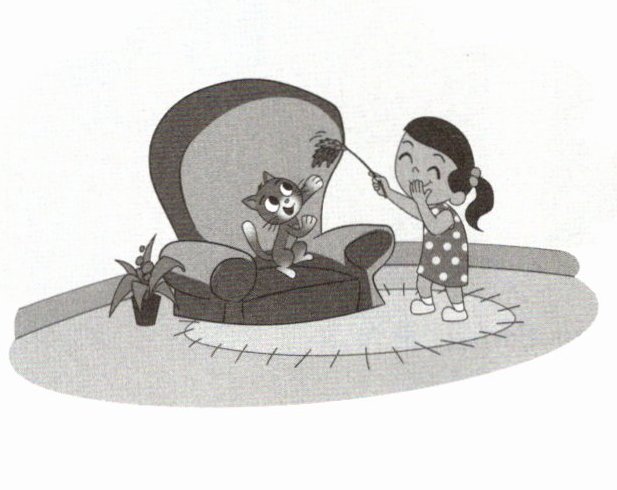
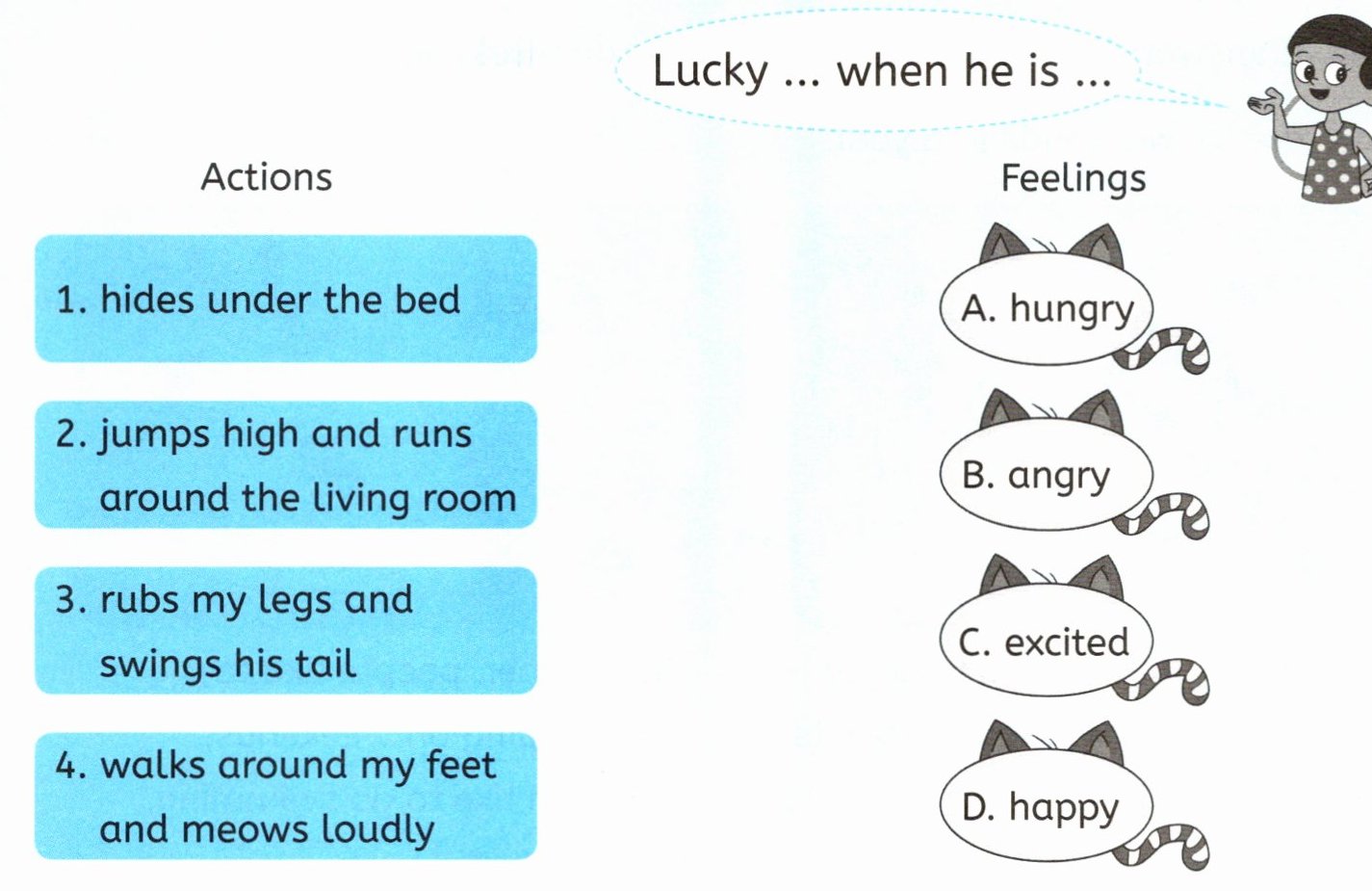
Ⅰ. Read and match. 读一读,将小猫的行为与心情配对。
Ⅱ. Read and tick or cross. 读一读,判断正(√)误(×)。
(
(
(
(
(

Word bank
rub /rʌb/ v. 摩擦
swing /swɪŋ/ v. 摇摆
enjoy /ɪn'dʒɔɪ/ v. 享受
active /'æktɪv/ adj. 活跃的
wake ... up 唤醒……
cheer ... up 使……振作
Read & answer: How does Lucky express his feelings?
I have a lovely cat named Lucky. He shows his feelings in many cute ways every day.
When he is hungry, he always walks around my feet and meows loudly. He looks at me and asks for yummy food.
If he feels happy, he rubs my legs and swings his tail. He likes to stay beside me and enjoy quiet time together.
He gets excited when he sees toy balls. He jumps high and runs around the living room happily. He looks so active and funny.
But he gets angry when I wake him up. His ears go back and his tail moves quickly. Then he hides under the bed.
Lucky can’t say any words, but he can “say” a lot with his body.
Sometimes I feel sad or worried. Lucky knows it. He comes over quietly and shares his toys with me. He tries to cheer me up.
We always care about each other’s feelings. Playing and sharing together make our lives warm and sweet.
Ⅰ. Read and match. 读一读,将小猫的行为与心情配对。
Ⅱ. Read and tick or cross. 读一读,判断正(√)误(×)。
(
√
)1. Lucky likes to play with toy balls.(
×
)2. Lucky’s ears go back when he is excited.(
√
)3. Lucky can express feelings with his body.(
√
)4. I often play and share with Lucky.(
×
)5. Lucky shares his toys with me when I am happy.Word bank
rub /rʌb/ v. 摩擦
swing /swɪŋ/ v. 摇摆
enjoy /ɪn'dʒɔɪ/ v. 享受
active /'æktɪv/ adj. 活跃的
wake ... up 唤醒……
cheer ... up 使……振作
答案
1. B 2. C 3. D 4. A
1. √ 2. × 3. √ 4. √ 5. ×
1. √ 2. × 3. √ 4. √ 5. ×
解析
【分析】
本题为英语阅读理解题,包含信息匹配与判断正误两类题型。解题思路:先通读全文,梳理小猫Lucky不同情绪(饥饿、开心、兴奋、生气等)对应的具体行为;针对信息匹配题,将行为与对应情绪一一对应;针对判断正误题,需回到原文定位每个句子的表述,核对与原文是否一致,避免混淆不同情绪的行为细节。
【解析】
一、信息匹配题:
1. 对应原文“饥饿时绕脚叫”的行为,匹配选项B;
2. 对应原文“开心时蹭腿摇尾巴”的行为,匹配选项C;
3. 对应原文“兴奋时玩玩具球跳跑”的行为,匹配选项D;
4. 对应原文“生气时耳朵后躲床”的行为,匹配选项A;
二、判断正误题:
1. 原文提到“看到玩具球会兴奋”,说明Lucky喜欢玩玩具球,故正确(√);
2. 原文提到“生气时耳朵向后”,并非兴奋时,故错误(×);
3. 原文提到“Lucky用身体表达感受”,故正确(√);
4. 原文提到“一起玩和分享让生活温暖”,说明常一起玩,故正确(√);
5. 原文提到“我难过担心时,Lucky分享玩具”,并非我开心时,故错误(×);
【答案】
1. B 2. C 3. D 4. A;1. √ 2. × 3. √ 4. √ 5. ×
【知识点】
英语阅读理解,细节理解,信息匹配
【点评】
本题考查学生对英语短文的细节提取与理解能力,需精准区分不同情绪对应的行为,判断正误时要紧扣原文依据,整体难度适中,适合巩固英语阅读基础。
【难度系数】
0.6
本题为英语阅读理解题,包含信息匹配与判断正误两类题型。解题思路:先通读全文,梳理小猫Lucky不同情绪(饥饿、开心、兴奋、生气等)对应的具体行为;针对信息匹配题,将行为与对应情绪一一对应;针对判断正误题,需回到原文定位每个句子的表述,核对与原文是否一致,避免混淆不同情绪的行为细节。
【解析】
一、信息匹配题:
1. 对应原文“饥饿时绕脚叫”的行为,匹配选项B;
2. 对应原文“开心时蹭腿摇尾巴”的行为,匹配选项C;
3. 对应原文“兴奋时玩玩具球跳跑”的行为,匹配选项D;
4. 对应原文“生气时耳朵后躲床”的行为,匹配选项A;
二、判断正误题:
1. 原文提到“看到玩具球会兴奋”,说明Lucky喜欢玩玩具球,故正确(√);
2. 原文提到“生气时耳朵向后”,并非兴奋时,故错误(×);
3. 原文提到“Lucky用身体表达感受”,故正确(√);
4. 原文提到“一起玩和分享让生活温暖”,说明常一起玩,故正确(√);
5. 原文提到“我难过担心时,Lucky分享玩具”,并非我开心时,故错误(×);
【答案】
1. B 2. C 3. D 4. A;1. √ 2. × 3. √ 4. √ 5. ×
【知识点】
英语阅读理解,细节理解,信息匹配
【点评】
本题考查学生对英语短文的细节提取与理解能力,需精准区分不同情绪对应的行为,判断正误时要紧扣原文依据,整体难度适中,适合巩固英语阅读基础。
【难度系数】
0.6
