

 登录
登录
What are we?
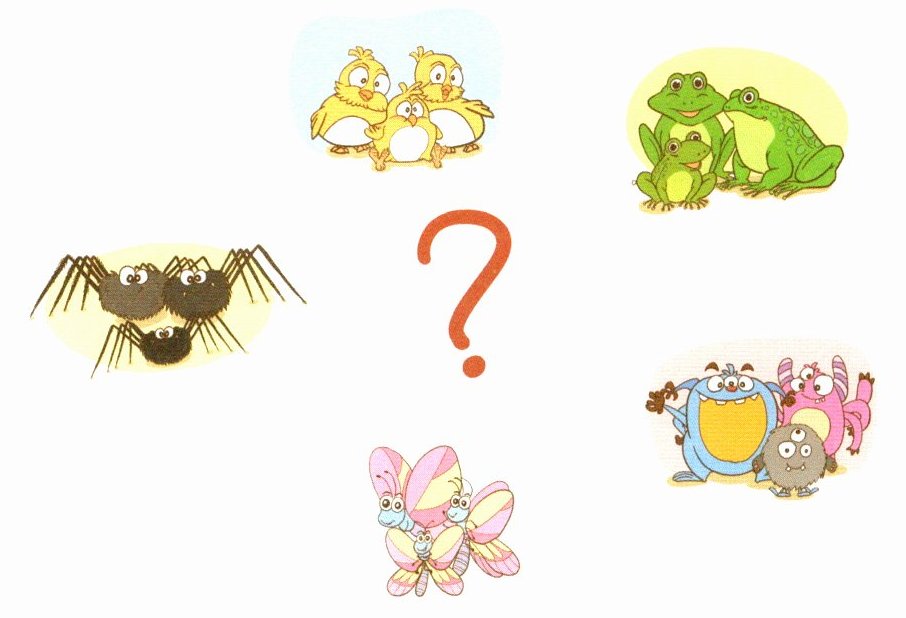
In my family, we three have three small heads, six big eyes, six short legs and six wings. We can fly. What are we?
In my family, we three have three small heads, eighteen thin and short legs and twelve wings. We can fly too. What are we?
In my family, we three have three big heads, six big eyes and twelve long legs. We can jump. What are we?
In my family, we three have three small heads, twenty-four small eyes and twenty-four long legs. We can spin webs. What are we?
In my family, we three have three big heads, nine big eyes and fifteen long legs. We can fly too. What are we?
Look! We are birds, butterflies, frogs, spiders and monsters.
Word Bank
spin /spɪn/ v. 吐丝;纺线 web /web/ n. 网
butterfly /'bʌtəflaɪ/ n. 蝴蝶 frog /frɒg/ n. 青蛙
spider /'spaɪdə/ n. 蜘蛛
Exercises
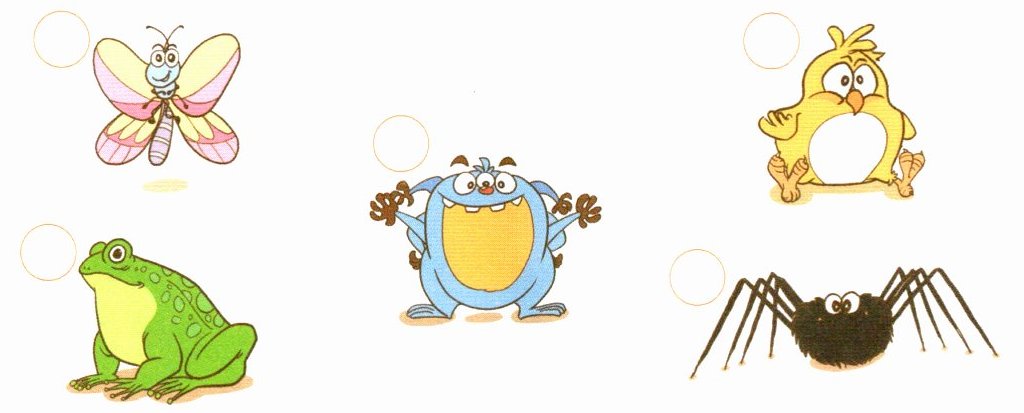
I Read and number.根据短文中动物出现的顺序,给下列图片排序。
Ⅱ.Read and judge.根据短文内容,判断下列句子正(T)误(F)。
(
(
(
(
Ⅲ.Draw and write.模仿短文,写一个类似的谜语并画一画谜底。
I have a

I have
I have
I am
In my family, we three have three small heads, six big eyes, six short legs and six wings. We can fly. What are we?
In my family, we three have three small heads, eighteen thin and short legs and twelve wings. We can fly too. What are we?
In my family, we three have three big heads, six big eyes and twelve long legs. We can jump. What are we?
In my family, we three have three small heads, twenty-four small eyes and twenty-four long legs. We can spin webs. What are we?
In my family, we three have three big heads, nine big eyes and fifteen long legs. We can fly too. What are we?
Look! We are birds, butterflies, frogs, spiders and monsters.
Word Bank
spin /spɪn/ v. 吐丝;纺线 web /web/ n. 网
butterfly /'bʌtəflaɪ/ n. 蝴蝶 frog /frɒg/ n. 青蛙
spider /'spaɪdə/ n. 蜘蛛
Exercises
I Read and number.根据短文中动物出现的顺序,给下列图片排序。
Ⅱ.Read and judge.根据短文内容,判断下列句子正(T)误(F)。
(
F
) 1. The butterfly has two wings.(
T
) 2. The bird has short legs.(
F
) 3. The spider has a big head.(
T
) 4. The monster can fly.Ⅲ.Draw and write.模仿短文,写一个类似的谜语并画一画谜底。
I have a
small
head.I have
two
big
eyes.I have
short
legs
.I am
a
dog
.答案
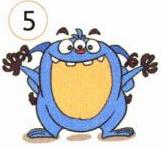
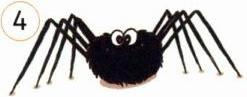
I. 2
1
3
II. 1.F 2.T 3.F 4.T
*III. A possible version: small, two big, short legs, a dog
解析
【分析】
首先梳理清晰解题思路:1. 做排序题时,先定位短文末尾明确给出的谜底出现顺序:鸟、蝴蝶、青蛙、蜘蛛、怪物,对照题干插图对应排序即可。2. 做判断题时,逐题回到对应谜语的描述中,结合简单计算+生活常识判断句子正误。3. 仿写题结合常见动物的外形常识,填入符合语法和逻辑的内容即可,答案不唯一。
【解析】
I. 短文最后明确说明五个谜底的出现顺序为birds、butterflies、frogs、spiders、monsters,对照题干给出的插图按该顺序排序,即可得到对应序号。
II.
1. 第二个谜语提到3只蝴蝶共有12只翅膀,计算可得单只蝴蝶有4只翅膀,和题干“蝴蝶有2只翅膀”表述不符,判断为F。
2. 第一个谜语提到3只鸟共有6条短腿,说明鸟的腿是短的,和题干表述一致,判断为T。
3. 第四个谜语提到蜘蛛的头部描述为small heads(小脑袋),和题干“蜘蛛有大脑袋”表述不符,判断为F。
4. 最后一个谜语明确说明怪物"We can fly too",和题干“怪物会飞”表述一致,判断为T。
III. 本题为开放性仿写题,只要填入的内容符合动物外形常识、语法通顺即可,给出参考示例供参考。
【答案】
I. 2
1
3
II. 1.F 2.T 3.F 4.T
*III. A possible version: small, two big, short legs, a dog
【知识点】
英语阅读理解
常识推理
英语语句仿写
【点评】
本题以趣味动物谜语为载体,兼顾基础阅读排序、细节判断和创意输出题型,既考察学生从文本提取信息的能力,又结合生活常识降低理解门槛,能有效激发低年龄段学生的英语学习兴趣。
【难度系数】
0.6
首先梳理清晰解题思路:1. 做排序题时,先定位短文末尾明确给出的谜底出现顺序:鸟、蝴蝶、青蛙、蜘蛛、怪物,对照题干插图对应排序即可。2. 做判断题时,逐题回到对应谜语的描述中,结合简单计算+生活常识判断句子正误。3. 仿写题结合常见动物的外形常识,填入符合语法和逻辑的内容即可,答案不唯一。
【解析】
I. 短文最后明确说明五个谜底的出现顺序为birds、butterflies、frogs、spiders、monsters,对照题干给出的插图按该顺序排序,即可得到对应序号。
II.
1. 第二个谜语提到3只蝴蝶共有12只翅膀,计算可得单只蝴蝶有4只翅膀,和题干“蝴蝶有2只翅膀”表述不符,判断为F。
2. 第一个谜语提到3只鸟共有6条短腿,说明鸟的腿是短的,和题干表述一致,判断为T。
3. 第四个谜语提到蜘蛛的头部描述为small heads(小脑袋),和题干“蜘蛛有大脑袋”表述不符,判断为F。
4. 最后一个谜语明确说明怪物"We can fly too",和题干“怪物会飞”表述一致,判断为T。
III. 本题为开放性仿写题,只要填入的内容符合动物外形常识、语法通顺即可,给出参考示例供参考。
【答案】
I. 2
1
3
II. 1.F 2.T 3.F 4.T
*III. A possible version: small, two big, short legs, a dog
【知识点】
英语阅读理解
常识推理
英语语句仿写
【点评】
本题以趣味动物谜语为载体,兼顾基础阅读排序、细节判断和创意输出题型,既考察学生从文本提取信息的能力,又结合生活常识降低理解门槛,能有效激发低年龄段学生的英语学习兴趣。
【难度系数】
0.6
