

 登录
登录
B
体裁: 说明文
主题: 科学技术
难度: ★★★★★
建议用时: 9 min
正确率: /4
新素养·学习能力 ①AI tools, like ChatGPT, are becoming very popular for learning languages and doing translation(翻译) work.
②Some teachers, students, and translators think these AI tools are very useful. Wang Huashu, a teacher at Beijing Foreign Studies University, says AI is changing the way teachers teach and students learn languages, even the way translators work.
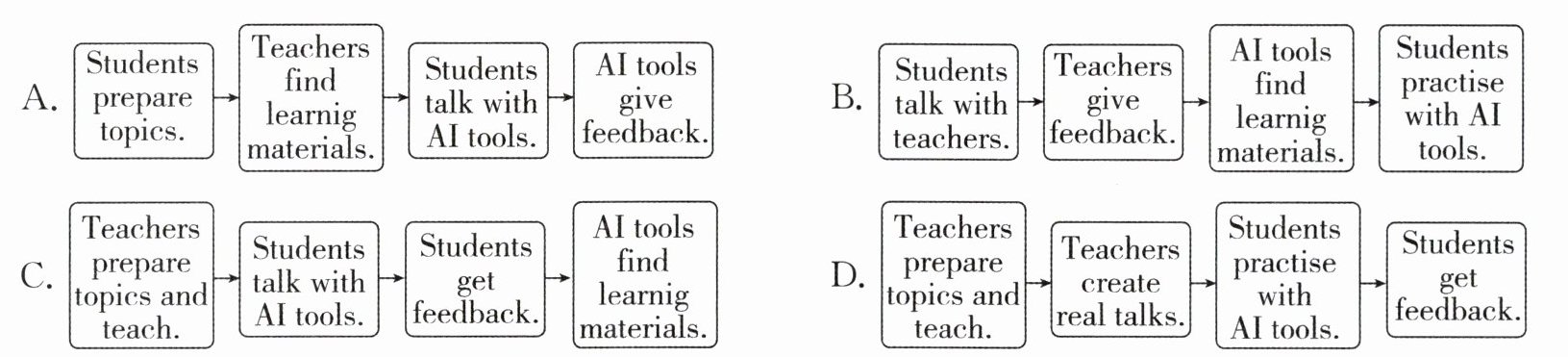
③Teachers can use AI to create real talks for students to practise. Teachers first prepare some topics and then teach students some important sentences. After that, students can practise what they have learned with the AI tools in real life situations. After talking, AI tools will give quick feedback(反馈) on students' speaking. At last, AI can help to find good reading and listening materials(材料).
④AI also brings a new way to test language skills. In the past, we often used paper tests or talked to someone face to face. But now, because of AI, we can use online tests to see how good someone is at speaking, listening, reading, and writing.
⑤For example, an English test app can test your English on your own computer or phone. You get your results right away, and it tells you what you did well and what you need to improve.
⑥What's more, AI tools can translate different languages very quickly, saving people a lot of time. This is very helpful in today's world. Whether for work, school, or other reasons, AI tools can help people talk to each other in different languages easily.
⑦As AI is used more and more, some translators worry these AI tools will take the place of their jobs. However, Wang Huashu says they don't need to be too afraid. Because translation is not just about changing words from one language to another. It's also about sharing culture and creating new understanding. Wang also says AI tools can't do the creative(创造性的) and caring work that human translators can.
1. Who may be the most interested in this passage?
A. Doctors.
B. Maths teachers.
C. Language learners.
D. Scientists.
2. 新趋势·图示理解 Which of the following can match the information in Paragraph 3?
3. Wang Huashu thinks AI tools are .
A. useful and caring
B. helpful and creative
C. smart but not helpful
D. useful but not caring
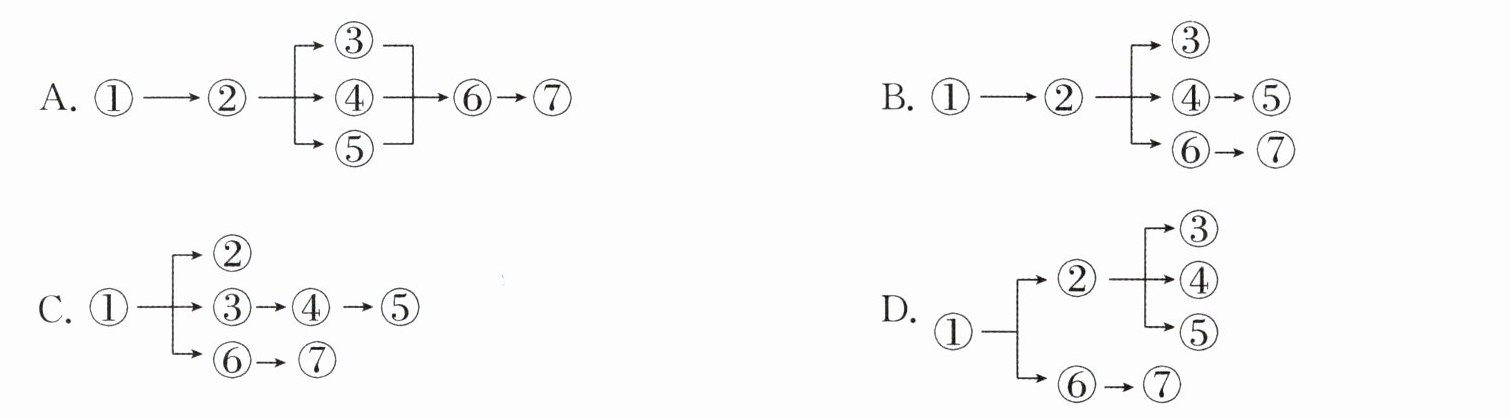
4. 新趋势·篇章结构 Which of the following shows the structure(结构) of this passage?
体裁: 说明文
主题: 科学技术
难度: ★★★★★
建议用时: 9 min
正确率: /4
新素养·学习能力 ①AI tools, like ChatGPT, are becoming very popular for learning languages and doing translation(翻译) work.
②Some teachers, students, and translators think these AI tools are very useful. Wang Huashu, a teacher at Beijing Foreign Studies University, says AI is changing the way teachers teach and students learn languages, even the way translators work.
③Teachers can use AI to create real talks for students to practise. Teachers first prepare some topics and then teach students some important sentences. After that, students can practise what they have learned with the AI tools in real life situations. After talking, AI tools will give quick feedback(反馈) on students' speaking. At last, AI can help to find good reading and listening materials(材料).
④AI also brings a new way to test language skills. In the past, we often used paper tests or talked to someone face to face. But now, because of AI, we can use online tests to see how good someone is at speaking, listening, reading, and writing.
⑤For example, an English test app can test your English on your own computer or phone. You get your results right away, and it tells you what you did well and what you need to improve.
⑥What's more, AI tools can translate different languages very quickly, saving people a lot of time. This is very helpful in today's world. Whether for work, school, or other reasons, AI tools can help people talk to each other in different languages easily.
⑦As AI is used more and more, some translators worry these AI tools will take the place of their jobs. However, Wang Huashu says they don't need to be too afraid. Because translation is not just about changing words from one language to another. It's also about sharing culture and creating new understanding. Wang also says AI tools can't do the creative(创造性的) and caring work that human translators can.
1. Who may be the most interested in this passage?
A. Doctors.
B. Maths teachers.
C. Language learners.
D. Scientists.
2. 新趋势·图示理解 Which of the following can match the information in Paragraph 3?
3. Wang Huashu thinks AI tools are .
A. useful and caring
B. helpful and creative
C. smart but not helpful
D. useful but not caring
4. 新趋势·篇章结构 Which of the following shows the structure(结构) of this passage?
答案
【语篇解读】本文是一篇说明文。文章主要介绍了人工智能工具,如ChatGPT,在学习语言和做翻译工作方面变得非常流行。
1. C 【解析】细节理解题。根据第二段“Some teachers,students,and translators think these AI tools are very useful.”可知,一些老师、学生和翻译员认为这些人工智能工具非常有用,他们都是语言学习者。故选C。
2. C 【解析】图示理解题。根据第三段“Teachers first prepare some topics and then teach ... After that,students can practise what they have learned with the AI tools ... After talking,AI tools will give quick feedback on students' speaking. At last,AI can help to find good reading and listening materials.”可知,老师先准备一些话题,然后教学生;之后学生可以使用人工智能工具练习他们所学到的知识;人工智能工具会对学生的口语进行快速反馈;最后人工智能可以帮助找到好的阅读和听力材料。故选C。
3. D 【解析】推理判断题。根据第二段“Some teachers,students,and translators think these AI tools are very useful. Wang Huashu,a teacher at Beijing Foreign Studies University ...”可知,王认为人工智能工具是有用的。根据最后一段“Wang also says AI tools can't do the creative and caring work that human translators can.”可知,王认为人工智能工具无法完成人类翻译员所能做的创造性和关怀性的工作,由此可知,人工智能工具是不够具备关怀性的。故选D。 >>观点态度题
4. B 【解析】篇章结构题。结合文章内容可知,第一、二段总述人工智能工具在学习语言和做翻译工作方面变得非常流行,改变了教师教授语言、学生学习语言以及翻译的工作方式;第三段介绍人工智能工具帮助教师教授语言;第四、五段介绍人工智能工具用于语言技能测试;第六、七段介绍人工智能工具改变翻译的工作方式。故选B。
1. C 【解析】细节理解题。根据第二段“Some teachers,students,and translators think these AI tools are very useful.”可知,一些老师、学生和翻译员认为这些人工智能工具非常有用,他们都是语言学习者。故选C。
2. C 【解析】图示理解题。根据第三段“Teachers first prepare some topics and then teach ... After that,students can practise what they have learned with the AI tools ... After talking,AI tools will give quick feedback on students' speaking. At last,AI can help to find good reading and listening materials.”可知,老师先准备一些话题,然后教学生;之后学生可以使用人工智能工具练习他们所学到的知识;人工智能工具会对学生的口语进行快速反馈;最后人工智能可以帮助找到好的阅读和听力材料。故选C。
3. D 【解析】推理判断题。根据第二段“Some teachers,students,and translators think these AI tools are very useful. Wang Huashu,a teacher at Beijing Foreign Studies University ...”可知,王认为人工智能工具是有用的。根据最后一段“Wang also says AI tools can't do the creative and caring work that human translators can.”可知,王认为人工智能工具无法完成人类翻译员所能做的创造性和关怀性的工作,由此可知,人工智能工具是不够具备关怀性的。故选D。 >>观点态度题
4. B 【解析】篇章结构题。结合文章内容可知,第一、二段总述人工智能工具在学习语言和做翻译工作方面变得非常流行,改变了教师教授语言、学生学习语言以及翻译的工作方式;第三段介绍人工智能工具帮助教师教授语言;第四、五段介绍人工智能工具用于语言技能测试;第六、七段介绍人工智能工具改变翻译的工作方式。故选B。
解析
【分析】
本题为科技类说明文阅读理解,共4道题,分别考查细节理解、图示理解、推理判断、篇章结构能力。解题思路如下:
1. 第1题:定位原文提及对AI工具感兴趣的群体,匹配选项;
2. 第2题:梳理第三段AI辅助教学的步骤顺序,对应图示信息;
3. 第3题:抓取王教授对AI工具的评价语句,提炼其态度;
4. 第4题:划分文章段落层次,归纳各段主旨,确定篇章结构。
【解析】
1. 细节理解题:根据第二段“Some teachers, students, and translators think these AI tools are very useful.”可知,教师、学生、翻译员对AI工具感兴趣,对应选项C(语言学习者),故选C。
2. 图示理解题:第三段明确AI辅助教学的步骤:教师先准备话题→教学生重要句子→学生用AI练习→AI反馈口语→AI找材料,匹配选项C,故选C。
3. 推理判断题:根据第二段王教授提到AI有用,最后一段指出AI无法完成人类翻译的创造性和关怀性工作,可知AI有用但缺乏关怀性,对应选项D,故选D。
4. 篇章结构题:文章1-2段总述AI在语言学习和翻译中的应用;3段讲AI辅助语言教学;4-5段讲AI用于语言技能测试;6-7段讲AI对翻译的影响,结构为“总-分”,对应选项B,故选B。
【答案】
1.C 2.C 3.D 4.B
【知识点】
说明文阅读、细节理解题、篇章结构题
【点评】
本文聚焦AI在语言领域的应用,题型覆盖阅读核心考点,注重考查学生信息定位与逻辑分析能力,符合新趋势的题型设计,有助于提升学生对科技类文本的理解能力。
【难度系数】
0.5
本题为科技类说明文阅读理解,共4道题,分别考查细节理解、图示理解、推理判断、篇章结构能力。解题思路如下:
1. 第1题:定位原文提及对AI工具感兴趣的群体,匹配选项;
2. 第2题:梳理第三段AI辅助教学的步骤顺序,对应图示信息;
3. 第3题:抓取王教授对AI工具的评价语句,提炼其态度;
4. 第4题:划分文章段落层次,归纳各段主旨,确定篇章结构。
【解析】
1. 细节理解题:根据第二段“Some teachers, students, and translators think these AI tools are very useful.”可知,教师、学生、翻译员对AI工具感兴趣,对应选项C(语言学习者),故选C。
2. 图示理解题:第三段明确AI辅助教学的步骤:教师先准备话题→教学生重要句子→学生用AI练习→AI反馈口语→AI找材料,匹配选项C,故选C。
3. 推理判断题:根据第二段王教授提到AI有用,最后一段指出AI无法完成人类翻译的创造性和关怀性工作,可知AI有用但缺乏关怀性,对应选项D,故选D。
4. 篇章结构题:文章1-2段总述AI在语言学习和翻译中的应用;3段讲AI辅助语言教学;4-5段讲AI用于语言技能测试;6-7段讲AI对翻译的影响,结构为“总-分”,对应选项B,故选B。
【答案】
1.C 2.C 3.D 4.B
【知识点】
说明文阅读、细节理解题、篇章结构题
【点评】
本文聚焦AI在语言领域的应用,题型覆盖阅读核心考点,注重考查学生信息定位与逻辑分析能力,符合新趋势的题型设计,有助于提升学生对科技类文本的理解能力。
【难度系数】
0.5
