

 登录
登录
三、 阅读七选五 跨学科·地理
阅读下面短文,从短文后的选项中选出可以填入空白处的最佳选项。选项中有两项为多余选项。
体裁: 说明文
主题: 季节
难度: ★★★★
建议用时: 7 min
正确率: /5
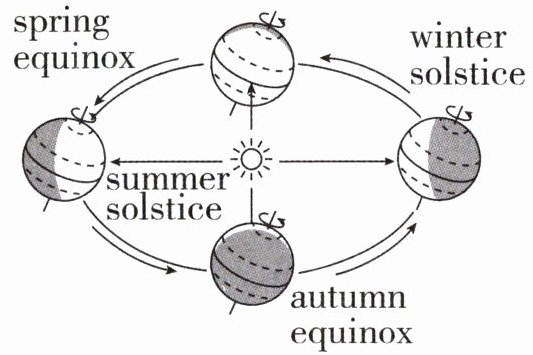
Everybody knows that there are usually four seasons in a year.
As our planet moves around the sun, the light from the sun falls on the earth from different directions. This helps create the seasons. At different times of the year, there is more sunlight in some places and less sunlight in others. More sunlight means longer days and warmer weather.
The seasons fall at different times of the year around the world. For example, China is to the north of the equator(赤道). Here, we experience(经历) summer from June to August.
A. This is why we have spring and summer
B. This is because spring and summer are long
C. But do you know the colours of the four seasons
D. People will never experience winter in these areas
E. Not all places in the world have four seasons like ours
F. But do you know how the four seasons are formed
G. To the south of the equator, June, July and August are winter months
1.
2.
3.
4.
5.
阅读下面短文,从短文后的选项中选出可以填入空白处的最佳选项。选项中有两项为多余选项。
体裁: 说明文
主题: 季节
难度: ★★★★
建议用时: 7 min
正确率: /5
Everybody knows that there are usually four seasons in a year.
F
1?As our planet moves around the sun, the light from the sun falls on the earth from different directions. This helps create the seasons. At different times of the year, there is more sunlight in some places and less sunlight in others. More sunlight means longer days and warmer weather.
A
2. It gets colder in autumn and winter because the days are shorter, and we get less light from the sun.The seasons fall at different times of the year around the world. For example, China is to the north of the equator(赤道). Here, we experience(经历) summer from June to August.
G
3. In Australia, it is summer from December to February, and Australians have their spring when we have our autumn.E
4. The hottest and the coldest parts of the world usually have only two seasons. It is always hot in places close to the equator. These places are called the tropics(热带地区). Instead of our four seasons, many parts of the tropics have a rainy season and a dry season. D
5. Around the North and South Poles, there are only two seasons, too: a very, very cold winter and a somewhat less cold summer.A. This is why we have spring and summer
B. This is because spring and summer are long
C. But do you know the colours of the four seasons
D. People will never experience winter in these areas
E. Not all places in the world have four seasons like ours
F. But do you know how the four seasons are formed
G. To the south of the equator, June, July and August are winter months
1.
F
2.
A
3.
G
4.
E
5.
D
答案
1. F 【解析】根据下文“As our planet moves around the sun, the light from the sun falls on the earth from different directions. This helps create the seasons.”解释季节形成的原因,可知此处应询问如何形成四季。故选F。
2. A 【解析】根据上文“At different times of the year, there is more sunlight in some places and less sunlight in others. More sunlight means longer days and warmer weather.”可知有些地方阳光较多,更多的阳光意味着更长的白天和更温暖的天气,即春天和夏天;A项“这就是为什么我们有春天和夏天”符合语境。故选A。
3. G 【解析】根据上文“The seasons fall at different times of the year around the world.”并结合本段内容可知,此处介绍南北半球季节的不同;G项“在赤道以南,六月、七月和八月是冬季”符合语境。故选G。
4. E 【解析】根据下文“The hottest and the coldest parts of the world usually have only two seasons.”可知有些地方只有两个季节;E项“并不是世界上所有的地方都有像我们这样的四季”符合语境。故选E。
5. D 【解析】根据上文“These places are called the tropics. Instead of our four seasons, many parts of the tropics have a rainy season and a dry season.”可知此处应与热带地区的季节有关;D项“在这些地区,人们永远不会经历冬天”符合语境。故选D。
2. A 【解析】根据上文“At different times of the year, there is more sunlight in some places and less sunlight in others. More sunlight means longer days and warmer weather.”可知有些地方阳光较多,更多的阳光意味着更长的白天和更温暖的天气,即春天和夏天;A项“这就是为什么我们有春天和夏天”符合语境。故选A。
3. G 【解析】根据上文“The seasons fall at different times of the year around the world.”并结合本段内容可知,此处介绍南北半球季节的不同;G项“在赤道以南,六月、七月和八月是冬季”符合语境。故选G。
4. E 【解析】根据下文“The hottest and the coldest parts of the world usually have only two seasons.”可知有些地方只有两个季节;E项“并不是世界上所有的地方都有像我们这样的四季”符合语境。故选E。
5. D 【解析】根据上文“These places are called the tropics. Instead of our four seasons, many parts of the tropics have a rainy season and a dry season.”可知此处应与热带地区的季节有关;D项“在这些地区,人们永远不会经历冬天”符合语境。故选D。
解析
【分析】
本题是跨学科的英语七选五题型,需结合文章逻辑和地理知识解题。第1空后解释四季形成的原因,故此处应询问四季形成的方式;第2空前说明阳光多对应温暖天气,需衔接春夏的由来;第3空前后围绕南北半球季节差异展开,需补充南半球的季节情况;第4空后提到部分地区只有两季,需总述并非所有地方都有四季;第5空围绕热带地区的季节特点,需衔接热带地区无冬季的内容。
【解析】
1. 第1空:下文“As our planet moves around the sun...This helps create the seasons.”解释了四季形成的原因,因此此处应是询问四季如何形成,F选项“但你知道四季是如何形成的吗?”符合语境,故选F。
2. 第2空:上文“More sunlight means longer days and warmer weather.”说明更多阳光对应温暖天气,A选项“这就是为什么我们有春天和夏天”衔接自然,符合逻辑,故选A。
3. 第3空:本段主题是南北半球季节不同,前文提到北半球夏季为6-8月,后文提到澳大利亚(南半球)夏季为12-2月,因此此处需说明南半球6-8月的季节,G选项“在赤道以南,六月、七月和八月是冬季”符合,故选G。
4. 第4空:下文“The hottest and the coldest parts of the world usually have only two seasons.”举例说明部分地区只有两季,E选项“并不是世界上所有的地方都有像我们这样的四季”总起该内容,符合语境,故选E。
5. 第5空:上文提到热带地区有雨季和旱季,没有四季,D选项“在这些地区,人们永远不会经历冬天”衔接热带地区的季节特点,符合逻辑,故选D。
【答案】
1.F 2.A 3.G 4.E 5.D
【知识点】
英语七选五、季节形成与分布、上下文逻辑衔接
【点评】
本题结合英语阅读与地理知识,考查学生对文章逻辑关系的理解及地理常识的运用,需通过上下文语境和跨学科知识匹配选项,整体难度适中。
【难度系数】
0.5
本题是跨学科的英语七选五题型,需结合文章逻辑和地理知识解题。第1空后解释四季形成的原因,故此处应询问四季形成的方式;第2空前说明阳光多对应温暖天气,需衔接春夏的由来;第3空前后围绕南北半球季节差异展开,需补充南半球的季节情况;第4空后提到部分地区只有两季,需总述并非所有地方都有四季;第5空围绕热带地区的季节特点,需衔接热带地区无冬季的内容。
【解析】
1. 第1空:下文“As our planet moves around the sun...This helps create the seasons.”解释了四季形成的原因,因此此处应是询问四季如何形成,F选项“但你知道四季是如何形成的吗?”符合语境,故选F。
2. 第2空:上文“More sunlight means longer days and warmer weather.”说明更多阳光对应温暖天气,A选项“这就是为什么我们有春天和夏天”衔接自然,符合逻辑,故选A。
3. 第3空:本段主题是南北半球季节不同,前文提到北半球夏季为6-8月,后文提到澳大利亚(南半球)夏季为12-2月,因此此处需说明南半球6-8月的季节,G选项“在赤道以南,六月、七月和八月是冬季”符合,故选G。
4. 第4空:下文“The hottest and the coldest parts of the world usually have only two seasons.”举例说明部分地区只有两季,E选项“并不是世界上所有的地方都有像我们这样的四季”总起该内容,符合语境,故选E。
5. 第5空:上文提到热带地区有雨季和旱季,没有四季,D选项“在这些地区,人们永远不会经历冬天”衔接热带地区的季节特点,符合逻辑,故选D。
【答案】
1.F 2.A 3.G 4.E 5.D
【知识点】
英语七选五、季节形成与分布、上下文逻辑衔接
【点评】
本题结合英语阅读与地理知识,考查学生对文章逻辑关系的理解及地理常识的运用,需通过上下文语境和跨学科知识匹配选项,整体难度适中。
【难度系数】
0.5
