

 登录
Ⅳ. 阅读理解
The world is full of possibilities, so stay open to all creative ideas. You might just be the next person to change the world!
New washing machine
Remya Jose, from a small Indian village, created her first invention at the age of 14: a pedal-powered washing machine. She came up with the idea when she and her sister were doing housework. Instead of washing clothes by hand in the river, Jose designed this machine. It works without electricity and even helps people get some exercise while washing clothes.
New blanket (毯子)
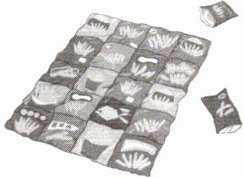
Alyssa got the idea to make the blanket from a social media story. She collects chip bags. For each bag, she starts by opening and washing it. Then she sticks all the bags together and turns them into nice blankets. So far she has turned thousands of chip bags into blankets. She has also given them away to homeless people all over Wales.
New armour (盔甲)
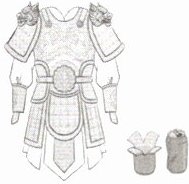
He Yanhong, an imaginative young woman from Chengdu, believes that nothing should go to waste. In February 2022, millions of people watched a video of her creating a suit of armour. The armour looked fantastic and was made out of everyday objects. She feels proud to show traditional Chinese culture to the world through her creative works.
New artwork
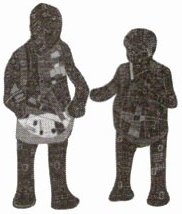
An African artist Koffi made his artworks by using old phones. He took down the parts of old phones and turned them into colourful paintings. Koffi hoped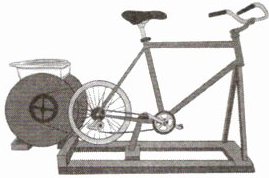
to help people pay more attention to recycling (回收利用).
1. Who invented the pedal-powered washing machine?
A. Koffi.
B. He Yanhong.
C. Alyssa.
D. Remya Jose.
2. What is the order of making the blankets?
a. sticking chip bags together
b. opening chip bags
c. washing chip bags
d. collecting chip bags
A. d→b→c→a
B. a→b→c→d
C. b→a→c→d
D. c→a→b→d
3. How can we describe He Yanhong?
A. Open-minded.
B. Imaginative.
C. Funny.
D. Friendly.
4. Why did Koffi make artworks with old phones?
A. To get some exercise.
B. To make money.
C. To help homeless people.
D. To encourage recycling.
5. Where is the passage probably from?
A. A storybook.
B. A newspaper.
C. A novel.
D. A guidebook.
The world is full of possibilities, so stay open to all creative ideas. You might just be the next person to change the world!
New washing machine
Remya Jose, from a small Indian village, created her first invention at the age of 14: a pedal-powered washing machine. She came up with the idea when she and her sister were doing housework. Instead of washing clothes by hand in the river, Jose designed this machine. It works without electricity and even helps people get some exercise while washing clothes.
New blanket (毯子)
Alyssa got the idea to make the blanket from a social media story. She collects chip bags. For each bag, she starts by opening and washing it. Then she sticks all the bags together and turns them into nice blankets. So far she has turned thousands of chip bags into blankets. She has also given them away to homeless people all over Wales.
New armour (盔甲)
He Yanhong, an imaginative young woman from Chengdu, believes that nothing should go to waste. In February 2022, millions of people watched a video of her creating a suit of armour. The armour looked fantastic and was made out of everyday objects. She feels proud to show traditional Chinese culture to the world through her creative works.
New artwork
An African artist Koffi made his artworks by using old phones. He took down the parts of old phones and turned them into colourful paintings. Koffi hoped
to help people pay more attention to recycling (回收利用).
1. Who invented the pedal-powered washing machine?
A. Koffi.
B. He Yanhong.
C. Alyssa.
D. Remya Jose.
2. What is the order of making the blankets?
a. sticking chip bags together
b. opening chip bags
c. washing chip bags
d. collecting chip bags
A. d→b→c→a
B. a→b→c→d
C. b→a→c→d
D. c→a→b→d
3. How can we describe He Yanhong?
A. Open-minded.
B. Imaginative.
C. Funny.
D. Friendly.
4. Why did Koffi make artworks with old phones?
A. To get some exercise.
B. To make money.
C. To help homeless people.
D. To encourage recycling.
5. Where is the passage probably from?
A. A storybook.
B. A newspaper.
C. A novel.
D. A guidebook.
答案
1.D 2.A 3.B 4.D 5.B
解析
【分析】
本题为阅读理解题,共5道小题,主要考查学生从文章中提取细节信息、理解文章主旨的能力。解题思路为:先通读全文了解文章大意,再针对每道题的关键词(如人名、物品、顺序、原因等)定位到原文对应段落,找到相关语句后与选项逐一对比,排除错误选项得出正确答案。
【解析】
1. 定位到文章“New washing machine”段落第一句:“Remya Jose, from a small Indian village, created her first invention at the age of 14: a pedal-powered washing machine.”,可知踏板动力洗衣机的发明者是Remya Jose,对应选项D。
2. 定位到文章“New blanket”段落:“She collects chip bags. For each bag, she starts by opening and washing it. Then she sticks all the bags together and turns them into nice blankets.”,制作顺序为收集薯片袋(d)→打开(b)→清洗(c)→粘在一起(a),即d→b→c→a,对应选项A。
3. 定位到文章“New armour”段落第一句:“He Yanhong, an imaginative young woman from Chengdu...”,可知何艳红的特点是富有想象力,对应选项B。
4. 定位到文章“New artwork”段落最后一句:“Koffi hoped to help people pay more attention to recycling (回收利用).”,可知他用旧手机创作艺术品的原因是鼓励回收利用,对应选项D。
5. 文章介绍了四位有创意的人的发明/作品,属于新闻资讯类内容,最可能出自报纸,对应选项B。
【答案】
1.D 2.A 3.B 4.D 5.B
【知识点】
阅读理解、细节理解、推理判断
【点评】
本题围绕创意发明展开,侧重考查学生提取原文细节信息的能力,题目难度适中,需学生精准定位原文内容即可解答。
【难度系数】
0.6
Ⅴ. 完形填空
Chewing gum (口香糖) may be one of your favourite sweets. But do you know who 1 it? The inventor of chewing gum is an American scientist called Thomas Adams. He made it completely 2.
In 1869, one of Adams’s friends showed him an interesting kind of sap (汁). His friend told him 3 people in Central America liked to chew (咀嚼) on it for fun. Hundreds of years passed. People didn’t do that any longer. 4 Adams was interested in the sap. He wanted to use it to create some new 5. Adams,
however, failed to create the products he wanted. He felt 6 and angry and happened to chew on the sap. 7, the sap tasted great. Adams then 8 his own flavours (调味品) to the sap and started selling it.
In 1888, Adams gave a 9 to the invention “chewing gum”. Over the years, new kinds have been developed. Now, chewing gum is popular 10 many people.
1. A. ate B. bought
C. painted D. invented
2. A. in public B. by accident
C. for free D. on purpose
3. A. ancient B. poor
C. famous D. sick
4. A. Although B. So
C. But D. And
5. A. products B. records
C. flowers D. fruits
6. A. interested B. shocked
C. bored D. excited
7. A. Usually B. Surprisingly
C. Slowly D. Clearly
8. A. compared B. returned
C. preferred D. added
9. A. plan B. name
C. prize D. menu
10. A. of B. from
C. among D. for
答案
1.D 2.B 3.A 4.C 5.A 6.C 7.B 8.D 9.B 10.C
解析
【分析】
做完形填空需遵循“先通读懂主旨,再逐空析语境,最后回读验逻辑”的思路:首先通读全文,明确本文是关于口香糖发明者托马斯·亚当斯的发明过程的记叙文;接着逐空分析,结合上下文提示、词汇词义辨析、固定搭配及逻辑关系选择答案;最后将所选答案代入全文,验证逻辑是否通顺。例如第1空后文明确提到“inventor”,可直接对应“发明”的动作;第2空需结合亚当斯的经历(想做产品失败后偶然发现sap可嚼)判断是“偶然”,以此类推。
【解析】
1. 选D。根据后文“The inventor of chewing gum is an American scientist...”可知此处询问“谁发明了口香糖”,invented(发明)符合语境。
2. 选B。根据后文亚当斯原本想制作其他产品失败,偶然发现sap可嚼的经历,可知他是偶然发明口香糖,by accident(偶然)符合。
3. 选A。根据后文“Hundreds of years passed. People didn’t do that any longer”可知此处指“古代中美洲人”,ancient(古代的)符合。
4. 选C。前文说人们不再嚼sap,后文说亚当斯对sap感兴趣,是转折关系,用But。
5. 选A。根据后文“failed to create the products he wanted”可知他想制作新产品,products(产品)符合。
6. 选C。制作产品失败,他感到厌烦且生气,bored(厌烦的)符合语境。
7. 选B。他偶然嚼sap,发现味道好,是令人惊讶的,Surprisingly(令人惊讶地)符合。
8. 选D。add...to...是固定搭配,意为“把……加入……”,此处指他给sap加调味品,符合。
9. 选B。根据后文“chewing gum”是发明的名称,可知他给发明起了名字,name(名字)符合。
10. 选C。be popular among是固定搭配,意为“在……中受欢迎”,符合语境。
【答案】
1.D 2.B 3.A 4.C 5.A 6.C 7.B 8.D 9.B 10.C
【知识点】
完形填空、词义辨析、固定搭配
【点评】
本文是一篇关于口香糖发明的记叙文完形填空,主要考查学生对词汇词义、固定搭配及上下文逻辑的理解,需结合文章语境逐一分析选项,难度适中,是初中阶段常见的完形填空题型。
【难度系数】
0.6
