

 登录
登录
四、单元项目(Day 1)。
在这个单元的学习期间,你将完成一个关于你最喜欢的中国传统故事的读书报告。
Step 1:选择一个你最喜欢的中国传统故事,并按要求用英语写下基本信息。
e.g., The name of the story: Chang'e Flew to the Moon
The name of the story:
Writer:
Year of the book:
Step 2:用英语写出该故事其中三个要素的内容。
Time:
Place:
Characters:
在这个单元的学习期间,你将完成一个关于你最喜欢的中国传统故事的读书报告。
Step 1:选择一个你最喜欢的中国传统故事,并按要求用英语写下基本信息。
e.g., The name of the story: Chang'e Flew to the Moon
The name of the story:
Writer:
Year of the book:
Step 2:用英语写出该故事其中三个要素的内容。
Time:
Place:
Characters:
答案
The name of the story: The Foolish Old Man Removes the Mountains
Writer: Unknown
Year of the book: Unknown
Time: Ancient times
Place: Near Taihang Mountain and Wangwu Mountain
Characters: Yu Gong, his family and the Wise Old Man
Writer: Unknown
Year of the book: Unknown
Time: Ancient times
Place: Near Taihang Mountain and Wangwu Mountain
Characters: Yu Gong, his family and the Wise Old Man
解析
Step 1 选择中国传统故事《愚公移山》,其英文名为"The Foolish Old Man Removes the Mountains",传统故事通常无明确作者和具体成书年份,故Writer和Year of the book处可填"Unknown"。Step 2 根据故事内容,时间为古代(Ancient times),地点为太行山和王屋山附近(Near Taihang Mountain and Wangwu Mountain),人物包括愚公、他的家人和智叟(Yu Gong, his family and the Wise Old Man)。
一、听录音,跟读下列单词,并选出画线字母的正确发音。每组单词读两遍。
A. /f/ B. /tʃ/ C. /θ/ D. /ʃ/ E. /w/
()1. chair which rich child
()2. physics photo elephant phone
()3. ship fish she fashion
()4. thank thin tooth fifth
()5. why where whistle when
A. /f/ B. /tʃ/ C. /θ/ D. /ʃ/ E. /w/
()1. chair which rich child
()2. physics photo elephant phone
()3. ship fish she fashion
()4. thank thin tooth fifth
()5. why where whistle when
答案
B A D C E
解析
1. 单词chair, which, rich, child中画线字母组合ch均发/tʃ/,对应选项B。
2. 单词physics, photo, elephant, phone中画线字母组合ph均发/f/,对应选项A。
3. 单词ship, fish, she, fashion中画线字母组合sh均发/ʃ/,对应选项D。
4. 单词thank, thin, tooth, fifth中画线字母组合th均发/θ/,对应选项C。
5. 单词why, where, whistle, when中画线字母组合wh均发/w/,对应选项E。
2. 单词physics, photo, elephant, phone中画线字母组合ph均发/f/,对应选项A。
3. 单词ship, fish, she, fashion中画线字母组合sh均发/ʃ/,对应选项D。
4. 单词thank, thin, tooth, fifth中画线字母组合th均发/θ/,对应选项C。
5. 单词why, where, whistle, when中画线字母组合wh均发/w/,对应选项E。
二、大声朗读下面的单词,根据画线部分的发音将它们正确分类。
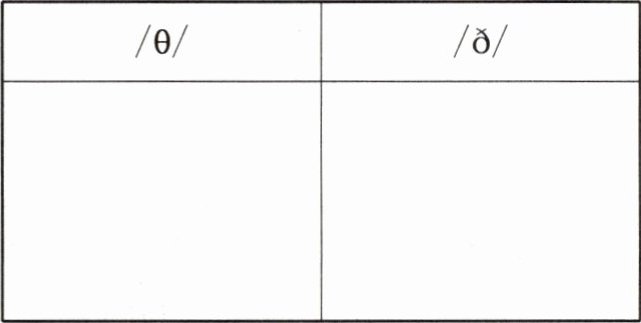
1. through then with throw these maths that three
2. why who whose white while whole what whom
1. through then with throw these maths that three
2. why who whose white while whole what whom
答案
1. /θ/: through, throw, maths, three; /ð/: then, with, these, that
2. /w/: why, white, while, what; /h/: who, whose, whole, whom
2. /w/: why, white, while, what; /h/: who, whose, whole, whom
解析
1. 先明确/θ/和/ð/的发音规则,/θ/是清辅音,发音时舌尖轻触上齿背,送气;/ð/是浊辅音,发音时舌尖轻触上齿背,振动声带。
through中th发/θ/;then中th发/ð/;with中th发/ð/;throw中th发/θ/;these中th发/ð/;maths中th发/θ/;that中th发/ð/;three中th发/θ/。
2. 明确wh在单词中的发音,wh后接o时通常发/h/,其他情况通常发/w/。
why中wh发/w/;who中wh发/h/;whose中wh发/h/;white中wh发/w/;while中wh发/w/;whole中wh发/h/;what中wh发/w/;whom中wh发/h/。
through中th发/θ/;then中th发/ð/;with中th发/ð/;throw中th发/θ/;these中th发/ð/;maths中th发/θ/;that中th发/ð/;three中th发/θ/。
2. 明确wh在单词中的发音,wh后接o时通常发/h/,其他情况通常发/w/。
why中wh发/w/;who中wh发/h/;whose中wh发/h/;white中wh发/w/;while中wh发/w/;whole中wh发/h/;what中wh发/w/;whom中wh发/h/。
三、请仿照示例在下面对话中找出其他3组需要同化的部分,并画横线,然后听录音有感情地跟读。对话读两遍。
A: Would you like to tell me your favourite story?
B: Sure. I like The Lion and the Mouse best. The small mouse helped the strong lion.
A: Sounds interesting. How did the mouse help the lion?
B: Didn't you read it before?
A: Yes, but I forgot the details(细节). Could you tell me more?
B: OK. The lion was caught in a net. The mouse bit through the net.
Don't you think the mouse was very clever?
A: Yes, I do. Even small animals can be helpful. And we should be kind to others.
Tip: /j/前面如果遇到/t/和/d/,我们读的时候要读成/tʃ/和/dʒ/。
A: Would you like to tell me your favourite story?
B: Sure. I like The Lion and the Mouse best. The small mouse helped the strong lion.
A: Sounds interesting. How did the mouse help the lion?
B: Didn't you read it before?
A: Yes, but I forgot the details(细节). Could you tell me more?
B: OK. The lion was caught in a net. The mouse bit through the net.
Don't you think the mouse was very clever?
A: Yes, I do. Even small animals can be helpful. And we should be kind to others.
Tip: /j/前面如果遇到/t/和/d/,我们读的时候要读成/tʃ/和/dʒ/。
答案
Didn't you; Could you; Don't you
解析
根据提示,/j/前遇/t/读/tʃ/,遇/d/读/dʒ/。在对话中寻找含/t/+/j/或/d/+/j/的组合。
1. "Didn't you" 中 "didn't" 以/d/结尾,"you" 以/j/开头,符合/d/+/j/→/dʒ/。
2. "Could you" 中 "could" 以/d/结尾,"you" 以/j/开头,符合/d/+/j/→/dʒ/。
3. "Don't you" 中 "don't" 以/t/结尾,"you" 以/j/开头,符合/t/+/j/→/tʃ/。
1. "Didn't you" 中 "didn't" 以/d/结尾,"you" 以/j/开头,符合/d/+/j/→/dʒ/。
2. "Could you" 中 "could" 以/d/结尾,"you" 以/j/开头,符合/d/+/j/→/dʒ/。
3. "Don't you" 中 "don't" 以/t/结尾,"you" 以/j/开头,符合/t/+/j/→/tʃ/。
