

 登录
登录
五、根据句意,写出括号内所给单词的适当形式(8 分)
1. If you don't have a deep love for something,don't be (satisfy) until you find one.
2. As we know,Huawei technology has been developing (rapid).
3. Mr. Jiang's robot irons his business suit (smooth) every morning.
4. A hen on my farm (lay) a green egg yesterday.
5. You should get your parents' (agree) before you leave for London.
6. You'd better think twice to avoid (regret) your decision later.
7. British people are polite enough to behave (proper) in public.
8. If you are (sure) of the spelling of the word,look it up in the dictionary.
1. If you don't have a deep love for something,don't be (satisfy) until you find one.
2. As we know,Huawei technology has been developing (rapid).
3. Mr. Jiang's robot irons his business suit (smooth) every morning.
4. A hen on my farm (lay) a green egg yesterday.
5. You should get your parents' (agree) before you leave for London.
6. You'd better think twice to avoid (regret) your decision later.
7. British people are polite enough to behave (proper) in public.
8. If you are (sure) of the spelling of the word,look it up in the dictionary.
答案
1. satisfied
2. rapidly
3. smoothly
4. laid
5. agreement
6. regretting
7. properly
8. unsure
2. rapidly
3. smoothly
4. laid
5. agreement
6. regretting
7. properly
8. unsure
六、动词填空(10 分)
1. Nothing (satisfy) George—he is always complaining.
2. (compare) with traditional cars,electric cars are more environment-friendly.
3. The president promised he himself (attend) the opening ceremony.
4. Nearly 10% of the Earth's surface (cover) by ice.
5. —Linda,what would you like to make for our party?
—A delicious pancake. In fact,I (finish) making it.
6. —Have you got all your money back?
—Not yet. We (expect) the reply from the Customer Service Centre.
7. Don't let your pride stop you from (make) more progress.
8. Please (put) me through to your boss.
9. The boy (play) a waiting game. He'll keep on as long as possible.
10. The operation (carry) out as soon as the patient was sent into the operating theatre.
1. Nothing (satisfy) George—he is always complaining.
2. (compare) with traditional cars,electric cars are more environment-friendly.
3. The president promised he himself (attend) the opening ceremony.
4. Nearly 10% of the Earth's surface (cover) by ice.
5. —Linda,what would you like to make for our party?
—A delicious pancake. In fact,I (finish) making it.
6. —Have you got all your money back?
—Not yet. We (expect) the reply from the Customer Service Centre.
7. Don't let your pride stop you from (make) more progress.
8. Please (put) me through to your boss.
9. The boy (play) a waiting game. He'll keep on as long as possible.
10. The operation (carry) out as soon as the patient was sent into the operating theatre.
答案
1. satisfies
2. Compared
3. would attend
4. is covered
5. have finished
6. are expecting/have been expecting
7. making
8. put
9. is playing
10. was carried
2. Compared
3. would attend
4. is covered
5. have finished
6. are expecting/have been expecting
7. making
8. put
9. is playing
10. was carried
解析
1. 根据句意“没有什么能让乔治满意——他总是抱怨”,这里需要用一般现在时,nothing作主语,谓语动词用第三人称单数形式。所以填satisfies。
2. “Electric cars”和“compare”之间是被动关系,用过去分词作状语,句首字母要大写,所以填Compared。
3. “promise”后接宾语从句,从句中“attend”这个动作还未发生,用一般过去时表将来,所以填would attend。
4. “Nearly 10% of the Earth's surface”和“cover”之间是被动关系,且陈述的是客观事实,用一般现在时的被动语态,所以填is covered。
5. 根据“A delicious pancake. In fact”可知已经做完了,对现在造成的影响是可以提供煎饼,用现在完成时,所以填have finished。
6. 根据“Not yet. We...the reply from the Customer Service Centre.”可知还在等待回复,用现在进行时或现在完成进行时,所以填are expecting/have been expecting。
7. “from”是介词,后接动词 - ing形式,所以填making。
8. 这是祈使句,用动词原形,所以填put。
9. 根据“He'll keep on as long as possible.”可知男孩正在采取等待策略,用现在进行时,所以填is playing。
10. “The operation”和“carry out”之间是被动关系,“was sent”表明用一般过去时的被动语态,所以填was carried。
2. “Electric cars”和“compare”之间是被动关系,用过去分词作状语,句首字母要大写,所以填Compared。
3. “promise”后接宾语从句,从句中“attend”这个动作还未发生,用一般过去时表将来,所以填would attend。
4. “Nearly 10% of the Earth's surface”和“cover”之间是被动关系,且陈述的是客观事实,用一般现在时的被动语态,所以填is covered。
5. 根据“A delicious pancake. In fact”可知已经做完了,对现在造成的影响是可以提供煎饼,用现在完成时,所以填have finished。
6. 根据“Not yet. We...the reply from the Customer Service Centre.”可知还在等待回复,用现在进行时或现在完成进行时,所以填are expecting/have been expecting。
7. “from”是介词,后接动词 - ing形式,所以填making。
8. 这是祈使句,用动词原形,所以填put。
9. 根据“He'll keep on as long as possible.”可知男孩正在采取等待策略,用现在进行时,所以填is playing。
10. “The operation”和“carry out”之间是被动关系,“was sent”表明用一般过去时的被动语态,所以填was carried。
七、阅读表达(10 分)
The Classical Gardens of Suzhou,which are also called Suzhou Gardens,are a group of beautiful gardens in the city of Suzhou in Jiangsu Province of China. The first classical garden was created during the Spring and Autumn Period in the 6th century BC. More gardens were built in the following centuries and most of them were private gardens of scholars (学者) and officials of that time. During the Ming and Qing dynasties,the construction (建设) of the gardens came to its prime time because of the prosperity (繁荣) of Suzhou in that period. It is said that there were more than 200 gardens all over the city and Suzhou was famous as the "paradise on earth" and the "City of Gardens".
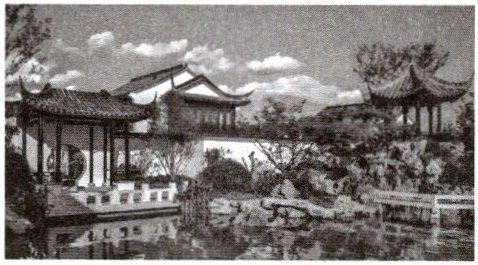
Nowadays,19 of the 69 well-protected gardens are open to the public as tourist attractions. Among them,some famous gardens are regarded as typical examples of Suzhou Gardens,such as Humble Administrator's Garden,Lingering Garden,Master of the Nets Garden and so on.
Suzhou Gardens in many ways explain the ideas behind classic Chinese garden design. Their owners were not just interested in having a pleasing arrangement of plants and flowers:they used history,philosophy,art and architecture (建筑学) in their designs. Each element (要素) of a classical Chinese garden—each hill,pond,plant and rock—is filled with meaning. Although every element was carefully designed,the end goal was always to have a garden which looked like it was created by nature,without the help of human hands.
Suzhou Gardens represent the development and maturity (成熟) of Chinese garden design of more than two thousand years. They are national 5A tourist attractions in China and two groups of them were added to UNESCO World Cultural Heritage List (世界文化遗产名录) in 1997 and 2000.
1. When was the first classical Suzhou garden built?
2. Who were most of the gardens in Suzhou built for in the past?
3. How many well-protected gardens are there in Suzhou in all?
4. What does the third paragraph mainly tell us?
5. What do you think of Suzhou Gardens?
The Classical Gardens of Suzhou,which are also called Suzhou Gardens,are a group of beautiful gardens in the city of Suzhou in Jiangsu Province of China. The first classical garden was created during the Spring and Autumn Period in the 6th century BC. More gardens were built in the following centuries and most of them were private gardens of scholars (学者) and officials of that time. During the Ming and Qing dynasties,the construction (建设) of the gardens came to its prime time because of the prosperity (繁荣) of Suzhou in that period. It is said that there were more than 200 gardens all over the city and Suzhou was famous as the "paradise on earth" and the "City of Gardens".
Nowadays,19 of the 69 well-protected gardens are open to the public as tourist attractions. Among them,some famous gardens are regarded as typical examples of Suzhou Gardens,such as Humble Administrator's Garden,Lingering Garden,Master of the Nets Garden and so on.
Suzhou Gardens in many ways explain the ideas behind classic Chinese garden design. Their owners were not just interested in having a pleasing arrangement of plants and flowers:they used history,philosophy,art and architecture (建筑学) in their designs. Each element (要素) of a classical Chinese garden—each hill,pond,plant and rock—is filled with meaning. Although every element was carefully designed,the end goal was always to have a garden which looked like it was created by nature,without the help of human hands.
Suzhou Gardens represent the development and maturity (成熟) of Chinese garden design of more than two thousand years. They are national 5A tourist attractions in China and two groups of them were added to UNESCO World Cultural Heritage List (世界文化遗产名录) in 1997 and 2000.
1. When was the first classical Suzhou garden built?
2. Who were most of the gardens in Suzhou built for in the past?
3. How many well-protected gardens are there in Suzhou in all?
4. What does the third paragraph mainly tell us?
5. What do you think of Suzhou Gardens?
答案
1. During the Spring and Autumn Period in the 6th century BC.
2. Scholars and officials.
3. 69.
4. The ideas behind classic Chinese garden design of Suzhou Gardens.
5. They are beautiful and represent the development and maturity of Chinese garden design of more than two thousand years.
2. Scholars and officials.
3. 69.
4. The ideas behind classic Chinese garden design of Suzhou Gardens.
5. They are beautiful and represent the development and maturity of Chinese garden design of more than two thousand years.
